Sex offenses at KU: More dangerous or more aware?
University saw more sex offenses than all but one other Big 12 school, comparison of crime reports shows

In this file photo from Sept. 16, 2014, demonstrators sit outside Strong Hall to protest Kansas University's handling of sexual assault investigations.
There were more sex offenses reported at Kansas University than any other Big 12 school except the mega-sized University of Texas, according to a comparison of the schools’ most recent Clery reports.
Despite having one of the smaller main campus enrollments in the Big 12, KU had more sex offenses reported than eight of the conference’s 10 schools — many more, a Journal-World analysis shows.
KU had 32 forcible sex offenses, defined as rape or fondling, on or near its main campus reported to law enforcement or university officials in 2014, according to the university’s 2015 Clery report.
Following KU were the University of Oklahoma with 18, Iowa State University with 17 and Kansas State University with 16, according to their respective 2015 Clery reports.
Texas, where enrollment more than doubles KU’s, had 51 forcible sex offenses, according to its 2015 Clery report.
Some say numbers like those indicate KU is more dangerous than other schools. The university contends that’s not the case.
Rather, heightened awareness on campus and rigorous efforts to educate about sexual assault have led to more victims coming forward, KU spokeswoman Erinn Barcomb-Peterson said.
“We know from national data that sexual violence is underreported,” she said. “These numbers show that KU’s ongoing efforts to increase reporting are working.”
Lawsuits say KU is dangerous
Last month a former KU student athlete, who said she was raped in Jayhawker Towers in 2014, and her parents sued the university.

Daisy Tackett
Daisy Tackett’s civil suit claims KU did not properly handle her rape report and also failed to take “reasonable steps” to prevent sexual assaults from occurring at Jayhawker Towers. A separate suit filed by her parents, James and Amanda Tackett, under the Kansas Consumer Protection Act accuses KU of misleading the public by representing campus housing as safe.
Both lawsuits say sex offense statistics from KU’s 2015 Clery report are evidence the university and its campus housing facilities are unsafe — increasingly unsafe, because reported sex offenses have gone up the past three years.
“KU has repeatedly represented to Plaintiffs and other prospective or current students or their family members that KU’s residence halls are safe and secure,” James and Amanda Tackett’s lawsuit states. “These representations are false. In truth, KU’s residence halls have for years been home to a known, persistent and growing problem of instances of sexual assault.”
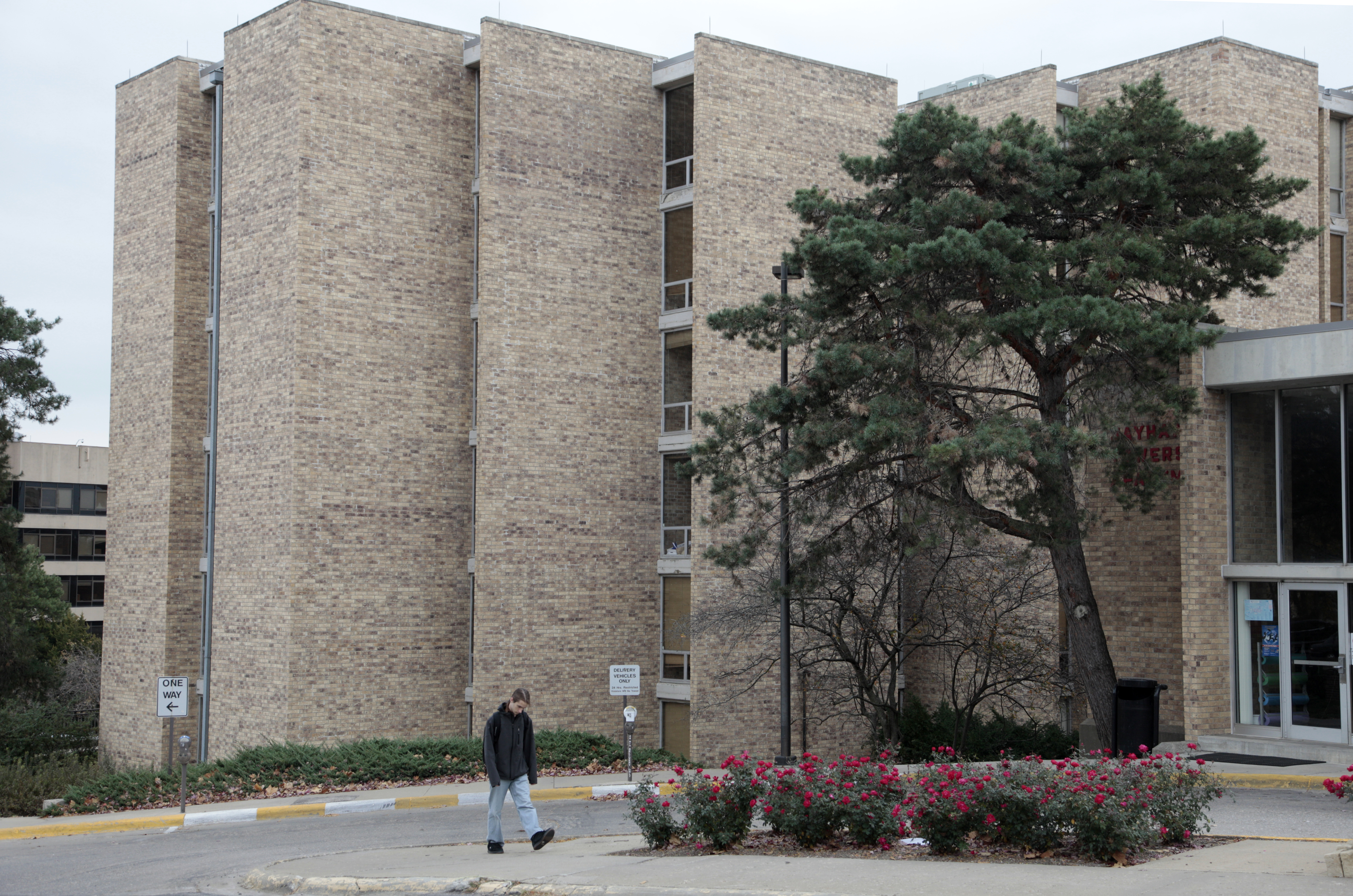
The Jayhawker Towers on the Kansas University campus are pictured on Thursday, Nov. 9, 2010.
Universities’ Clery reports break out how many of the total sex offenses happened in campus housing, at other on-campus locations or off campus.
At KU 16 of 24 on-campus sex offenses in 2014 occurred in residential facilities, according to KU’s 2015 Clery report. Another eight sex offenses occurred off campus.
The percentage of sex offenses reported in campus housing versus other locations varies widely among Big 12 schools.
All 10 sex offenses reported at Texas Christian University in 2014 occurred in on-campus housing, according to the school’s 2015 Clery report. At Texas, only six of 51 total sex offenses reported in 2014 occurred in on-campus housing, according to its Clery report.
Clery reports supposed to be comprehensive
The federal Jeanne Clery Disclosure of Campus Security Policy and Campus Crime Statistics Act requires postsecondary institutions to track and annually report crime reported on their campuses.
Clery reports tally crimes reported to campus police, other law enforcement and university officials — such as KU’s Office of Institutional Opportunity and Access, which investigates reports of sexual violence separately from police. They include crimes reported on campus proper, public property adjacent to campus and non-campus properties such as fraternities, sororities or buildings used for university purposes that aren’t necessarily contiguous to the campus.
At KU for example, while the school’s Clery report shows there were 32 sex offenses in 2014, only seven sex crimes were reported to KU police that year, according to the KU Office of Public Safety’s 2014 crime statistics.
In Lawrence, the Lawrence Police Department handles criminal reports that occur off-campus — including Greek houses or houses and apartments near campus — but many victims may choose not to report sexual violence to law enforcement at all, turning to the KU Office of Institutional Opportunity and Access instead.
Abigail Boyer is associate executive director of programs at the Pennsylvania-based Clery Center for Security on Campus, whose mission is working with schools to create safer campuses.
Boyer said it’s by design that Clery requires reporting from a broader scope of people, including campus leaders such as coaches, Greek advisors or the dean of students.
“These individuals are trusted on campus and a student or employee is often more likely to disclose sexual violence to them because of their existing relationship,” Boyer said. “As a result, the institution has a better picture of what incidents are affecting the campus community, even if a person chooses not to report to the police.”
‘Look beyond the numbers’
When interpreting Clery crime statistics, context is important, Boyer said.
“We frequently encourage parents and students to look beyond the numbers,” Boyer said. “An institution that is intentionally implementing thoughtful prevention and response programs may be more likely to receive reports because individuals may be more comfortable coming forward.”
Some schools nationwide have been accused of covering up sex crime reports or punished for failing to comply with Clery requirements.
The U.S. Department of Education enforces colleges’ compliance with the Clery Act, and its Federal Student Aid office can issue fines up to $35,000 per violation of Clery provisions, according to information provided by a USDE spokesperson.
Violations include “substantial misrepresentation of the number, location or nature of the crimes required to be reported,” according to the USDE. The largest fine ever given to a school was $357,500, assessed against Eastern Michigan University in 2007 for Clery violations.
Reports up six-fold at KU
KU’s reported sex offenses have increased six-fold in three years, which university officials have consistently attributed to increased reporting.
There were five sex offenses reported in 2012, 15 in 2013 and 32 in 2014, according to KU’s 2015 Clery report.
While some Big 12 universities saw similar spikes, the trend wasn’t across the board. Other schools’ sex offense numbers went up less dramatically or stayed about even over the same three-year period.
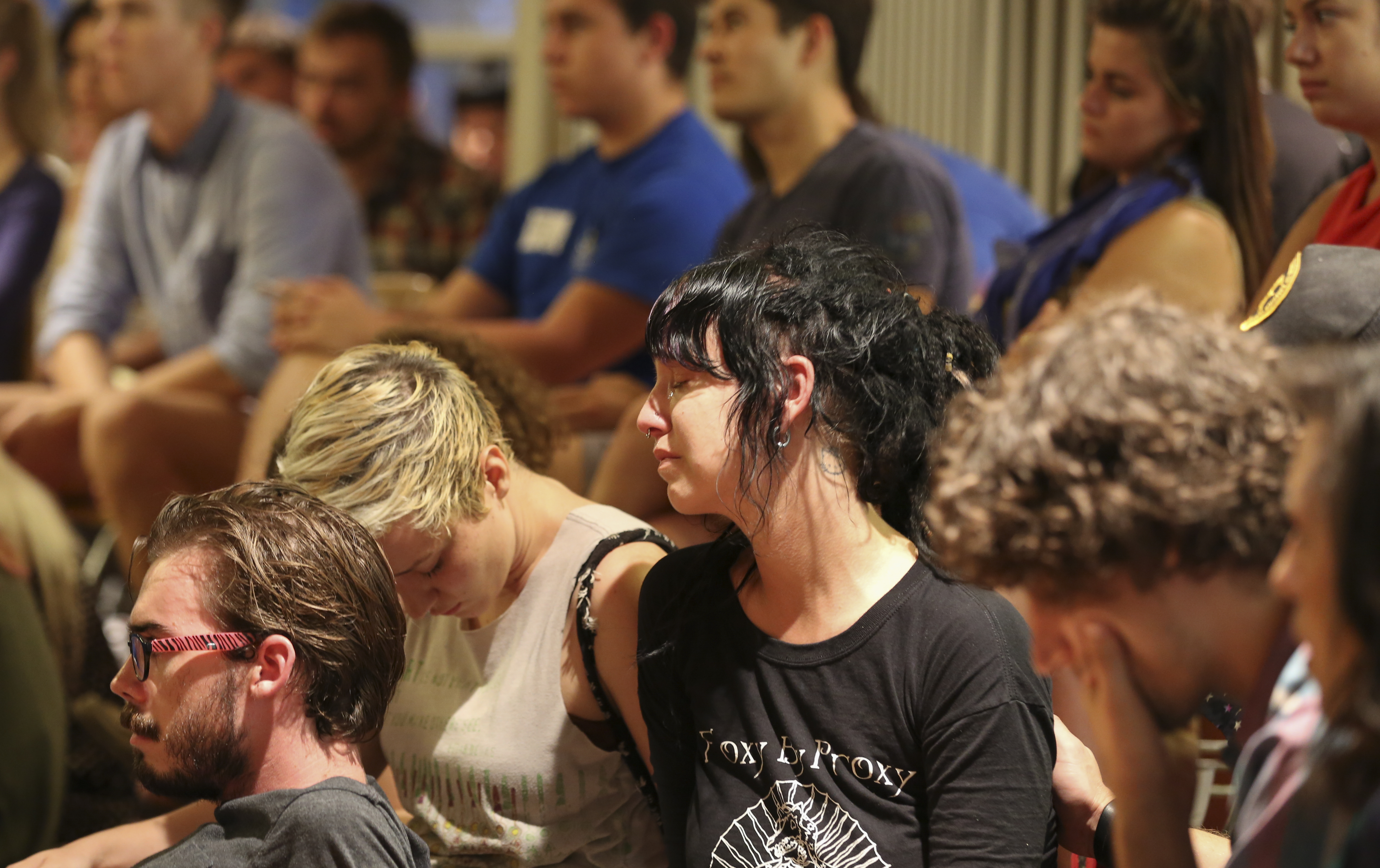
Lawrence resident Lisa Roberts, center, listens to an account of rape from a victim during a forum on sexual assault, Tuesday, Sept. 9, 2014 at the Ecumenical Campus Ministries building. A crowd of about 200 people comprised of students, community members and university faculty attended and listened as several people voiced their frustrations with what they believe is the university's mishandling of reported sexual assaults.
In January 2014 President Barack Obama announced the White House Task Force to Protect Students from Sexual Assault, followed by requirements for universities nationwide.
KU had a lot of media attention — much of it negative — over sexual violence in 2014.
A KU student who said a male student she knew raped her in Lewis Hall, twice, went public with her story that summer.
She claimed KU mishandled her case and failed to adequately punish her attacker, and also filed a complaint with the USDE that added KU to a national list of schools being investigated for their approach to sexual violence on campus. Student protests followed.
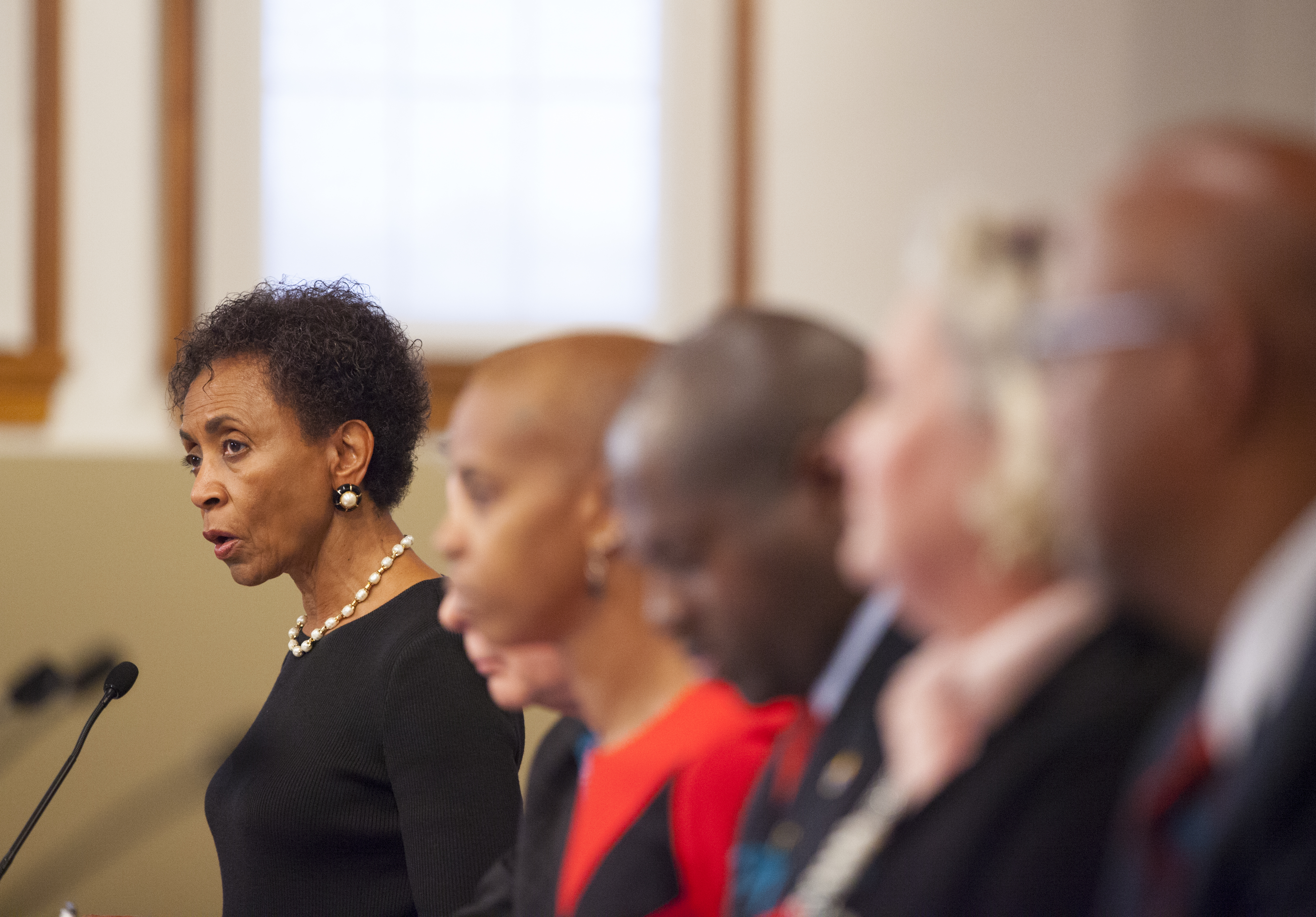
In this file photo from September 2014, Kansas University chancellor Bernadette Gray Little speaks during a panel discussion on addressing the issue of sexual assault and prevention at KU. KU officials listened to students and members of the public who voiced their concerns about the processes by which the University handles and investigates reported sexual assaults.
KU Chancellor Bernadette Gray-Little formed a Sexual Assault Task Force that met throughout the 2014-15 school year and made recommendations, including establishing the new KU Sexual Assault Prevention and Education Center that launched this spring.
Even before that, KU had sexual violence education and prevention measures in place that many other schools did not, spokeswoman Barcomb-Peterson said.
“Since 2012, KU has had an office dedicated to investigating Title IX violations, including sexual violence,” she said. “The university has been talking about sexual violence since before it became a topic of national conversation.”
Spurred by a variety of complaints and lawsuits, a number of other universities have received negative media attention — and continue to — over sexual violence on their campuses.
Nationwide, there are now a total of 173 postsecondary institutions under investigation by the USDE for their handling of sexual violence investigations, according to the most recent list.
KU is one of four Big 12 universities on that list, joining K-State, Iowa State and Oklahoma State.
“There’s certainly a national conversation,” Boyer said. “There’s increased awareness of these laws and their requirements, not just by institutions but also by students, parents and other members of the public.”
Boyer said trends in reporting vary from school to school but that increased awareness could lead to increased reporting.
Resolutions unknown
What became of those 32 forcible sex crimes reported at KU and the more than 150 reported at other Big 12 schools in 2014?
Clery doesn’t require that kind of follow-up data.
It also doesn’t require a breakdown of how many offenses were reported to law enforcement — meaning they have the potential to lead to criminal charges — versus other university channels.
Clery does require universities to count “unfounded” crimes, but that’s also limited.
Only sworn law enforcement can “unfound” crimes, and only after an investigation finds the crime to be false or baseless, Boyer said. Some schools don’t have sworn law enforcement officers, and not all sex offenses are ever reported to police.
Few Big 12 universities listed any sex offenses as unfounded except West Virginia University, which said five of its 12 sex offenses reported in 2014 were unfounded, according to the school’s 2015 Clery report.
When it comes to university investigations and adjudications, while it does not include offense dates, KU does provide a list of sanctions imposed in sexual harassment, including sexual violence, cases on its Student Affairs website.
According to KU, from May 2012 through September 2015, the university expelled 13 students and disciplined 29 others in less severe ways, mostly suspensions and probations.
City Government
Lawrence City Commission to weigh whether Costco should be included in STAR bond district
As they approve bikes plan, Lawrence city leaders ask about data collection, Kentucky and Tennessee streets
Lawrence city leaders want to toughen tobacco licensing rules ‘sooner than later’
Algerian government invites Mayor Brad Finkeldei, Lawrence delegation for a visit
Construction on Wakarusa Drive to resume; city manager says KDOT’s secretary has apologized for delay