Douglas County Sheriff’s Office trains personnel on ‘Project Lifesaver’ tool to help bring home missing people quickly
When it comes to finding a missing person, time is the enemy.
With every minute that ticks by, the chances of recovering the missing individual reduces, according to Douglas County Sheriff’s Office spokeswoman Sgt. Kristen Dymacek.
So, to help shorten the time it takes to find a missing person in crisis, the sheriff’s office began participating in “Project Lifesaver,” a program designed for at-risk-of-wandering populations such as Alzheimer’s, dementia and autism patients who, if they wander away, may not be able to ask for help.
With Project Lifesaver, the at-risk patient wears a bracelet with a transmitter that emits a signal only the sheriff’s office can pick up with special equipment. When officers are within a certain distance of the person, their equipment begins to emit a high-pitched beep to indicate the bracelet-wearer is nearby.
The program came to Douglas County in 2010, and on Monday about 10 more members of the sheriff’s office began a two-day certification training to learn how to use Project Lifesaver equipment.
Unlike GPS systems, Project Lifesaver uses FM radio waves to track missing people. Each bracelet transmitter sends out its own unique signal. The law enforcement personnel on the other side then use a receiver to pick up the signal and follow it as it grows stronger, leading deputies to the missing person.
Project Lifesaver trainer and St. Croix County, Wis., Sheriff’s deputy Neil Johnson said Project Lifesaver uses radio frequencies rather than GPS or other, newer technologies because it is simple, has been around forever and is time-tested.
“If everything were to go black and there were no power in the United States, I could take any one of these transmitters and receivers and locate (a person),” Johnson said, “because it’s just batteries. There’s no satellites, no Internet.”
The Douglas County Sheriff’s Office currently owns two receivers, and five county residents have Project Lifesaver transmitter bracelets. Dymacek said that since 2010, the sheriff’s office has “fortunately” not had to use the program on anyone.
But that doesn’t mean no one has gone missing in that time. Dymacek said the sheriff’s office encourages caretakers and loved ones of at-risk wanderers to purchase a wristband because it would drastically reduce the amount of time spent on the locating process.
Dymacek said that Project Lifesaver has cost-savings potential, as well. Though a new receiver could cost upward of $1,000, Dymacek said it would pay for itself in use. That’s because when someone without a transmitter bracelet goes missing, it could cost the sheriff’s office a lot of money in resources and man hours to track down the person.
“It definitely pays off if we were to have a long, extensive search,” Dymacek said. “That alone could cost $1,000-plus.”
Johnson said that nationwide, Project Lifesaver has been used in 3,000 searches, with a 100 percent success rate. The average time to find a person with Project Lifesaver is about 30 minutes.
The sheriff’s office’s current two receivers were purchased with funding from the Pilot Club of Lawrence, Dymacek said. The local Pilot Club puts some of its proceeds from its biannual antique show toward the sheriff’s office’s Project Lifesaver each year.
Dymacek said the family of one of the county’s five current bracelet-wearers got him the band after he’d gone missing and the sheriff’s office found him the old-fashioned way. Dymacek said the family realized the risk after having a firsthand scare, and purchasing the bracelet gave them an added peace of mind for the future.
“One person on it had wandered, but luckily we were able to find him. We talked to the family afterward, and they thought it was a good idea (to buy a bracelet),” Dymacek said. “(Project Lifesaver) can help keep people at home as long as possible.”
Johnson, who has a son with autism, said that as much as the bracelet benefits potential wanderers, it can help caretakers, too.
“Caregivers never have a chance to take a breath. It’s always, ‘Gotta watch (the patient), gotta watch (the patient),'” Johnson said. “So if you have something that can help a loved one, it’s a no-brainer.”
The Douglas County Sheriff’s Office offers Project Lifesaver bracelets for $300 for the first year, then a $10 monthly charge for a battery change and support after that. The sheriff’s office asks the families to purchase their own bracelets, but some funding and grant money may be available.
For more information or to purchase a bracelet, call the sheriff’s office at 841-0007.
City Government
Opinion: Environmentally conscious Lawrence is not focused on the biggest problem with electric vehicles

Locust Street apartments, Holcom housing development among this year’s applicants for $700K in Affordable Housing Trust Fund money
Business owners hurting from Wakarusa Drive closure say they’re getting no answers, no signs, no accountability
Planning Commission recommends adding more layers to approval process for data centers in Lawrence
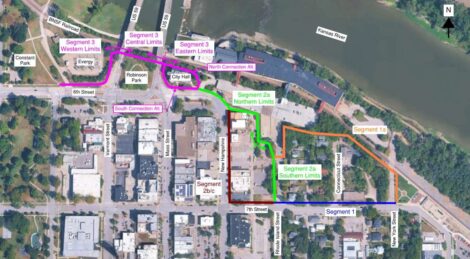
Lawrence Loop trail may go along busy downtown street; city wants to steer clear of Riverfront for development reasons