

Revenue secretary eyes Kansas tax changes
Topeka ? Kansas’ top revenue official said Monday that Gov. Sam Brownback will receive recommendations by the end of the year aimed at modifying the state’s tax code and putting more money in state residents’ pockets.
Revenue Secretary Nick Jordan told The Associated Press that a task force is nearing completion of the proposal that will take a broad approach at reducing taxes.
“We’re looking at tax policy in a very comprehensive way. We’re not just focusing on business or individual incomes,” Jordan said. “I don’t know that we are targeting numbers. We’re targeting what is the best economic growth policy for the state.”
Jordan, a former Republican state senator from Shawnee, declined to say specifically which taxes would be reduced. He said the task force was working on a recommendation that Brownback “could feel comfortable with” advocating to the Republican-controlled Legislature.
Options include removing regulations that inhibit business growth, increasing disposable income for families and increasing the flow of capital into Kansas that will help businesses invest.
The secretary said the Kansas economy remains fragile despite six consecutive months of revenue growth. On Friday, the agency reported that September revenue collections beat expectations by $27 million for the month.
Through the first quarter of the state’s fiscal year the figure is more than $66 million, putting Kansas on track to have an ending budget balance next summer of close to $200 million, when factoring in cuts in state spending.
“We’re looking long-term. We’re looking about 10 years as to where we can go,” Jordan said.
Jordan said the tax plan will come before the 2012 Legislature convenes in January. Legislators are meeting through the fall to discuss their own tax policy changes, including a bill that the House passed in 2011 that would have begun phasing out the state’s income tax.
“We’re not trying to affect anything that would affect local governments’ revenue sources,” Jordan said.
Senate Minority Leader Anthony Hensley, a Topeka Democrat, said he hopes the changes in tax policy help restore the three-legged balance in Kansas between income, property and sales taxes.
“You don’t ever want any of them to be too out of whack,” Hensley said. “The closest we’ve ever been to parity was the year 2000. Over the past 10 years, property taxes have taken more of the load because of what we’ve done to local units of government.”
He said as the state has eliminated revenue-sharing programs with cities and counties it has forced those governments to either raise their sales tax rates or increase property taxes to fund services, including public school districts.
Kansas currently collects about $225 million annually in corporate taxes, down from more than $400 million in better economic times. Jordan said that whichever tax is modified or reduced it will have to be balanced with the other obligations of the state and in the face of declining federal support for programs.
Kansas is predicted to collect close to $6 billion in the current fiscal year in taxes and fees.
State Government
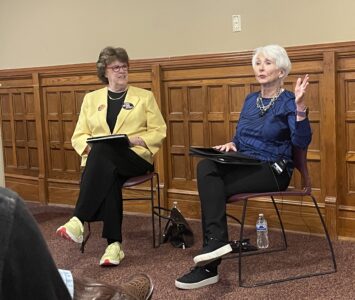
‘If it ain’t broke, don’t fix it’: Retired Judge Sally Pokorny tells residents why she opposes electing Supreme Court justices
KU professors would be limited in how they could present the idea of systemic racism in future classes
State legislators push back against federal energy regulators ending competitive bids
TOPEKA — Two Kansas legislators asked federal energy regulators to ensure competitive bidding occurs on ...
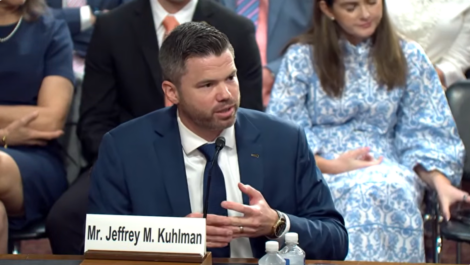
Senate confirms 1st of 3 Kansas nominees to U.S. District Court
Corporate income tax collections falling sharply in Kansas; Republican, Democratic leaders disagree on what it means
TOPEKA — Corporate income tax collections in Kansas have almost halved since last year, while other sources trend ...
Candidate’s campaign manager created website with documents used to attack rival
TOPEKA — Kansas U.S. Senate candidate Patrick Schmidt’s campaign manager left his digital footprint on ...