

Farmer donating 1,700 acres to remain as wildlife habitat
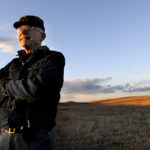
Wallace Weber is in the process of donating 1,700 acres of land to Pheasants Forever, a national nonprofit conservation organization. Weber, pictured in a pasture on his land near Dubuque on Jan. 29, said he feels the “same connection” to the land as the American Indians felt for the wilderness and grasslands.
Dubuque ? Knowing he won’t live forever, Russell County farmer Wallace Weber wants his land to be cared for, nurtured as he has nurtured it.
The retired U.S. Army colonel is in the process of donating 1,700 acres of land, and eventually money to manage it, to Pheasants Forever.
Worth more than $1 million, it is the largest single donation in Pheasants Forever’s 26-year history, according to a news release from the organization.
Based in St. Paul, Minn., Pheasants Forever is a national nonprofit conservation organization that works with farmers, ranchers, hunters and others who care about creating habitat for wildlife, spokesman Bob St. Pierre said.
“I was born at this place. My first conscious memories, inside and outside, are on this place. It’s so much a part of your life,” Weber said.
“I feel the same connection to this that Native Americans feel to the wilderness and the grasslands.”
The goal is to maintain the farm as a unit, manage it with conservation practices and maintain it as a wildlife habitat demonstration unit. Weber, 65, picked a beneficiary with a “common mission,” to preserve and maintain it as land in harmony with nature.
Weber and his sister, Cheryl Weber, Topeka, “had been kicking this over for years,” Wallace Weber said. His sister isn’t legally tied to the land, he said, “but she grew up here, just as I did.”
They asked for proposals from several organizations, including state colleges and universities, but none fit with Weber’s goals. Pheasants Forever shares his passion for the farm in the Dubuque community in southeastern Russell County. Weber said his grandfather, Nicholas Weber, founded the town. All that’s left of the town is a church and cemetery, he said.
The first half-section of land, 320 acres, was transferred to Pheasants Forever in December. “I am incrementally sending over the land as I need additional tax benefits,” he said.
Upon Weber’s death, the remainder will go to the organization, Weber said, along with a trust to be used for management expenses. The land will remain private, with hunting by written permission only.
“Once he passes, it’s our intention to open it up to public hunting,” St. Pierre said.
Weber said the gift requires that a full-time resident foreman live on the land and manage it for wildlife habitat and sustainable agriculture. Other goals are opening the property for tours and youth field trips.
Commodities will be produced with no-till farming practices that will trap carbon in the soil and reduce soil erosion. Livestock is included in the plan, but Weber isn’t sure whether they will be cattle, goats, sheep, some other critter or a combination.
Weber calls himself an avid hunter who has gone through different stages as a sportsman. As a youngster, he marveled at the act of shooting a firearm and killing game. Later, he harvested game and became more selective.
Today, his approach to hunting is more for a good walk, to commune with nature.
“You hunt with your dad’s gun. Other times, you take a gun out and walk without any shells,” he said. “I’m at a stage of really enjoying the land and wanting to pass it on to young people. Now I know, this place is going beyond me.”
State Government
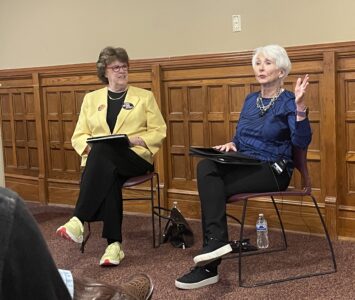
‘If it ain’t broke, don’t fix it’: Retired Judge Sally Pokorny tells residents why she opposes electing Supreme Court justices
KU professors would be limited in how they could present the idea of systemic racism in future classes
State legislators push back against federal energy regulators ending competitive bids
TOPEKA — Two Kansas legislators asked federal energy regulators to ensure competitive bidding occurs on ...
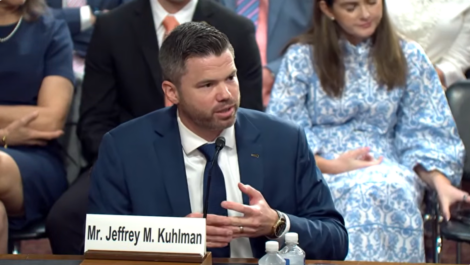
Senate confirms 1st of 3 Kansas nominees to U.S. District Court
Corporate income tax collections falling sharply in Kansas; Republican, Democratic leaders disagree on what it means
TOPEKA — Corporate income tax collections in Kansas have almost halved since last year, while other sources trend ...
Candidate’s campaign manager created website with documents used to attack rival
TOPEKA — Kansas U.S. Senate candidate Patrick Schmidt’s campaign manager left his digital footprint on ...