‘Eye-opening event’ to discuss uprooted American Indians
The expedition Meriwether Lewis and William Clark made across the United States in the early 1800s is a common history lesson, but a lesser known subject, the cultural aftermath of the journey, will be up for discussion during the Kansas Lewis and Clark Symposium on Friday at the Dole Institute of Politics.
“I think this is one of the biggest eye-opening events you could possibly go to in the area,” said Greg Hurd, a co-organizer of the event led by the Kansas Lewis and Clark Bicentennial Commission.
Lawrence is the last stop in the three-year, 11-state symposium focusing on diplomatic relations between American Indian tribes and the U.S. government since the expedition.
Chris Howell, chief operating officer of the Kansas Lewis and Clark Bicentennial Commission and coordinator of the events, said numerous ramifications followed for American Indians including policies involving relocation and assimilation.
“Tribes were uprooted where they had traditional homelands and placed into other areas they were not suited for,” Howell said. “They had to adapt; a lot of tribal members died off. There were devastating impacts on tribes after Lewis and Clark came through.”
The symposium has focused on issues relevant to the area where it stops. In Lawrence, a large focus will be placed on American Indian boarding schools. The boarding schools aimed to assimilate American Indian children into U.S. society.
Lawrence filmmaker and Kansas University associate film professor Kevin Willmott along with actor Wes Studi, known for his roles in “The Last of the Mohicans” and “Geronimo: An American Legend,” will discuss and show clips of their new film, “The Only Good Indian.” Producers Hurd and Scott Richardson also will participate in the discussion.
In the film, which remains in postproduction, a young boy is taken away from his family and forced into a boarding school, where they aren’t allowed to speak their native language or wear their native dress. It takes place in Kansas in the early 1900s.
“I think that people will be shocked at how the boarding schools worked,” Willmott said. “You are standing in front of your home and suddenly someone comes and grabs you and takes you away. : It was an amazingly insane, horrible policy. It was brutal, and it destroyed families and it was very difficult for people to live through this.”
“It’s one of those hidden parts of our history,” he said.
Dan Wildcat, director of the Haskell Environmental Research Studies Center and of the American Studies program at Haskell Indian Nations University, will talk about the current state of American Indian education. Todd Fuller, president of Pawnee Nation College in Oklahoma, also will discuss education.
The symposium has drawn between 300 and 500 people in each state, Howell said. Interaction and discussion between the audience and speakers has been “fantastic,” he said.
“People tell us: ‘I really wasn’t aware that’s what happened,’ or ‘I never learned that from my textbook,'” Howell said.
Not only does it arouse discussion but also the symposium puts a spotlight on tribal members and allows people to hear their personal stories and history. Howell said he’d like to make the program an annual event locally.
In 2003, the Lewis and Clark Midwest Trail States formed an alliance to host the series of events and the Kansas Lewis and Clark Bicentennial Commission has been the lead organization in the project.
This event is from 8:30 a.m. to 4:30 p.m. and is free and open to the public. It is also sponsored by a National Park Service Challenge Cost Share Grant, Kansas Historical Society, Prairie Band Potawatomi Nation and the Kickapoo Tribe in Kansas and the Dole Institute of Politics.
City Government
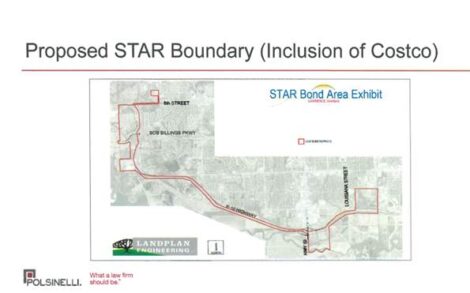
STAR Bond project is proposing $1.3B of development in Lawrence, including an arena geared toward ‘international cycling competitions’
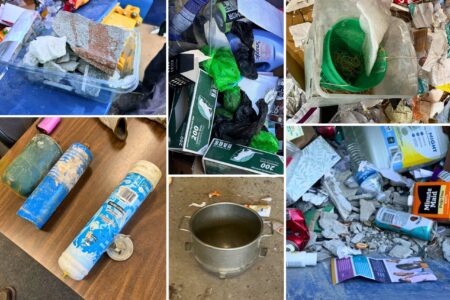
Contamination in Lawrence’s recycling has risen to 17.5%, audit finds; that means city will continue paying more for processing
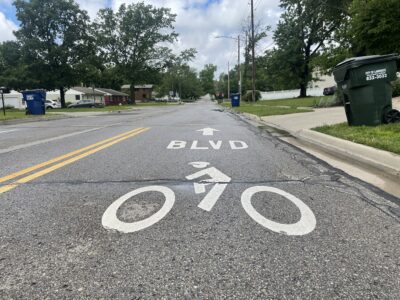
City of Lawrence seeking public feedback on its bike infrastructure plan

City to keep Community Building open through end of 2026; leaders want more data before deciding on 2027
City leaders approve incentive for 131-unit housing development near Wakarusa and Queens