

Drug companies slash work force
Sales reps lose jobs as businesses project fewer sales
Wichita ? Pharmaceutical rep Alisha Ontiberos works in her office, the front seat of her van parked near a Wichita medical facility.
In early June, she learned in a conference call that she was losing her job as a pharmaceuticals sales representative.
That put the Wichitan among thousands of sales reps who’ve been laid off this year.
This month, GlaxoSmith-Kline said it was cutting its U.S. sales force by 1,000. Novartis announced a cut of 550 sales jobs in October.
Earlier this year, Merck eliminated about 1,200 sales positions.
Bristol-Myers Squibb Co., Wyeth and Pfizer Inc. also have cut sales forces this year, and many drug companies made major cuts in 2007, too.
“Our companies are feeling many of the same effects as companies all across the country are feeling,” said Ken Johnson, a senior vice president at Pharmaceutical Research and Manufacturers of America, which represents pharmaceutical companies.
The economy is “front and center” responsible for the layoffs, he said.
A secondary factor, he said, is the number of companies with major drugs going off patent “and they’re making the necessary adjustments, recognizing there will be a drop-off in sales.”
When drugs go off patent, they’re copied and sold at lower prices by generics manufacturers.
Ontiberos, whose job ended in July, sees other factors at work as well.
“Industry standards changed,” she said. “We’re up against managed care issues. We’re fighting for (prescription drug) tier status, which is put upon us by insurance.”
Demands on physicians mean they no longer have as much time to learn about new drugs from pharmaceutical representatives, she said.
“It makes our jobs much more difficult,” Ontiberos said. “We truly have 30 to 90 seconds to get out what we need to get out.”
Ontiberos now is a sales rep with another company. Because of agreements with her employers, she asked that neither be named.
About 250 pharmaceutical representatives work in the Wichita area.
The reductions by pharmaceutical companies are expected to continue, industry analysts say, as the companies adjust to health care reform efforts, patent expirations and other market forces.
Johnson agrees: “It’s safe to say, generally speaking, that the business model is evolving. We’re moving away from an era of blockbuster medicines to an era of more personalized medicines.”
Ontiberos and Johnson said recent revisions in PhRMA’s marketing code have affected how sales representatives interact with physicians, which may have an effect on sales forces.
As of Jan. 1, the reps no longer will be able to offer pens, coffee mugs and similar merchandise to those they talk with. Product samples for patient use and materials deemed to be educational for patients or health professionals still are acceptable.
“What it’s designed to do is to remove the cloud that unfortunately was attached to this issue by some of our critics,” Johnson said.
For sales reps, Ontiberos said, the change means, “You just have to become more creative. It’s not work harder, it’s work smarter.”
She sees a further threat to her profession from technology. Some pharmaceutical companies, she said, seem to be replacing human sales reps with Web-based sales pitches, such as e-mails to physicians or faxed forms asking them to check which drug samples they want.
Johnson said he hasn’t seen much evidence of online marketing but wouldn’t be surprised by it. “You go where the eyeballs are,” he said of the Web.
Still, he said, “Marketing requires personal interactions. … There’s always going to be a certain element of human interaction involved in marketing.”
State Government
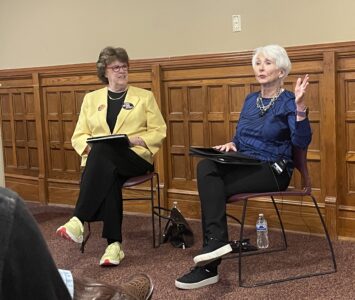
‘If it ain’t broke, don’t fix it’: Retired Judge Sally Pokorny tells residents why she opposes electing Supreme Court justices

KU professors would be limited in how they could present the idea of systemic racism in future classes
State legislators push back against federal energy regulators ending competitive bids
TOPEKA — Two Kansas legislators asked federal energy regulators to ensure competitive bidding occurs on ...
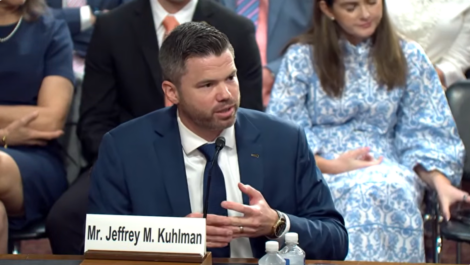
Senate confirms 1st of 3 Kansas nominees to U.S. District Court
Corporate income tax collections falling sharply in Kansas; Republican, Democratic leaders disagree on what it means
TOPEKA — Corporate income tax collections in Kansas have almost halved since last year, while other sources trend ...
Candidate’s campaign manager created website with documents used to attack rival
TOPEKA — Kansas U.S. Senate candidate Patrick Schmidt’s campaign manager left his digital footprint on ...