

Africa beckons American ‘home’
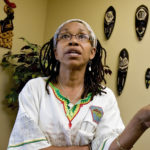
Shukura Sentwali talks about her wood carvings and masks from Ghana, where she plans to move next year. The government of the West African nation has set aside land for descendants of slaves.
Wichita ? Shukura Sentwali is going home – to Ghana, West Africa.
Sentwali, a Wichitan and longtime community activist, said she’s moving to Africa next year because two Ghanaian chiefs are offering free land to descendants of slaves.
The gesture means to atone for Ghana’s participation in the African slave trade, but the land holds deeper meaning for Sentwali because it provides her a way to fulfill a lifelong mission to improve life for black people.
In Wichita, she coordinated the black infant mortality program. She advocated for neighborhood schools over busing for integration. She taught black children in community recreation centers about their history.
But lately, Sentwali said she has wondered what she accomplished in the past 30 years.
She now concludes that the wrongs against African-Americans can’t be corrected because the nation won’t fully acknowledge them – even as a black man moves closer than ever before to the White House.
So she’s heading home.
She acquired her land in 2006 after attending a conference in Philadelphia presented by Fihankra International, which is overseeing the development.
“We shouldn’t waste any more time, energy or resources trying to convince the United States government or white people of what is wrong, and what has been wrong,” she said, her voice in staccato. “We need to use all of our energy and resources on building our own economic, political and social base.”
The 52-year-old said she’ll miss her friends and family in the U.S. Some may join her later.
She plans a return trip to Ghana later this year to see the progress on her three-bedroom, 1,901-square-foot home.
The plan for the house, along with the title to the property, rests in a folder overflowing with other papers about Ghana. Her annual site fees – similar to property taxes – cost about $750.
Her site rests in an area called Ye Fa Ogyamu, which means “We have passed through the fire.”
It’s nestled among scores of trees, the Volta Lake and steep mountains. Temperatures are tropical, and Sentwali said the people are welcoming. They’re almost relieved to find a black person who considers herself “an African born in America,” she said.
“I’m just one of those Africans who has a deep connection. Even before stepping foot on the continent, I wanted to go home, to Africa,” she said.
State Government
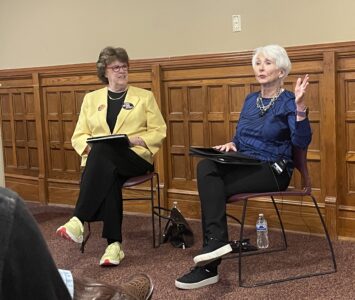
‘If it ain’t broke, don’t fix it’: Retired Judge Sally Pokorny tells residents why she opposes electing Supreme Court justices
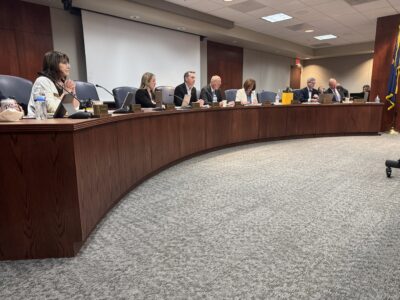
KU professors would be limited in how they could present the idea of systemic racism in future classes
State legislators push back against federal energy regulators ending competitive bids
TOPEKA — Two Kansas legislators asked federal energy regulators to ensure competitive bidding occurs on ...
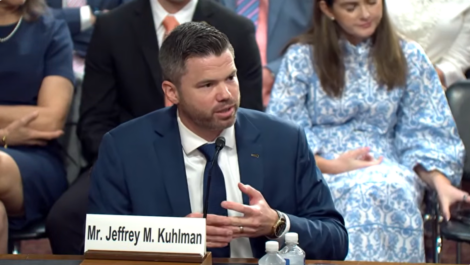
Senate confirms 1st of 3 Kansas nominees to U.S. District Court
Corporate income tax collections falling sharply in Kansas; Republican, Democratic leaders disagree on what it means
TOPEKA — Corporate income tax collections in Kansas have almost halved since last year, while other sources trend ...
Candidate’s campaign manager created website with documents used to attack rival
TOPEKA — Kansas U.S. Senate candidate Patrick Schmidt’s campaign manager left his digital footprint on ...