

Shoppers hesitant about clones
FDA ruling spawns consumer questions, concerns
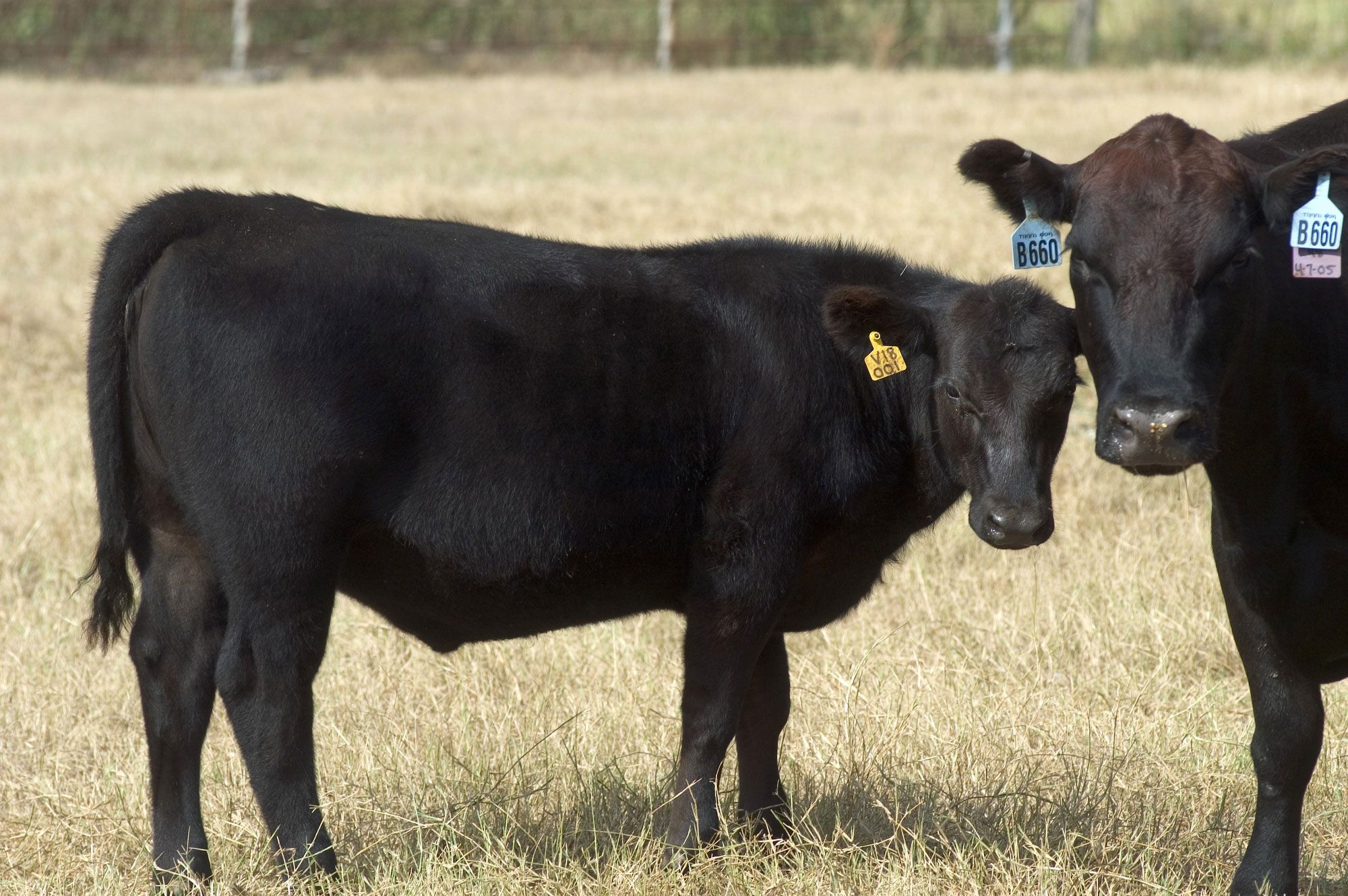
Priscilla, a cloned calf, left, is with her surrogate mother in a pasture near Austin, Texas, in this 2005 file photo. This week, the U.S. Food and Drug Administration said meat and milk from cloned animals is as safe as that from their counterparts bred the old-fashioned way.
Cloned animals
Approving meat products for human consumption is one thing.
Convincing shoppers and retailers to buy into the idea is quite another.
“I don’t know that I would purchase it until we have years of proof and testing that shows it’s safe,” said Lawrence shopper Ruth Townsend, a day after the U.S. Food and Drug Administration declared beef and dairy products safe to eat and drink. “It’s probably OK, but I’d be leery of trying it.”
The FDA’s ruling lifts barriers to offspring produced from cloned cows, goats or swine from eventually becoming regular meal items.
And that has some Lawrence residents anxious, especially because food produced from cloned offspring could land on shelves and into shopping bags without consumers even knowing. That’s because the FDA isn’t requiring such products to be stamped with special labels.
Theresa Smith, for one, wants to know if her food comes from a cloned animal or its offspring. The FDA sometimes approves things prematurely, Smith said.
“Just because they say it’s good doesn’t mean it’s not going to turn out to be bad later,” Smith said. “If I had my way, I’d let other people eat it first before I did. I’m kind of like that. When everyone ran to get a microwave, I waited. And when everyone ran to get a cell phone, I waited.
“I’d like to wait to see what happens before I try cloned food, and I should have that option.”
Citing marketing concerns, the FDA has asked stores to abide by an optional moratorium. Chris Friesleben, spokeswoman for Hy-Vee stores, said the Iowa-based chain – which has two stores in Lawrence – plans to uphold the voluntary ban.
The FDA and retailers are suggesting, but not requiring, that suppliers notify stores if products come from cloned animals, Friesleben said.
“The FDA’s position is that the food produced from cattle, pigs and goats is safe, but (the FDA) is still asking the industry to put a voluntary ban on putting cloned food into the food chain,” Friesleben said. “It’s our position to support the FDA’s recommendation and food manufacturers should abide by that voluntary ban, and let us know about any food (from cloned animals) slipping into the food chain. So far we have not been notified.”
Other stores are taking the same stance.
“Our approach is based on customer preference, and it’s our understanding that consumers want more information on this issue,” said Sheila Lowrie, spokeswoman for Dillons.
Most cloned animals are not going to be used for food, but to be used for breeding – so that prime animals can be replicated, giving producers the ability to get more top-quality offspring.
Aaron Atscison doesn’t plan on eating anything from a cloned animal – he’s a vegetarian – and considers the FDA’s approval a step in the wrong direction.
“I think it screws up our ecosystem, and we really don’t know what we’re doing,” Atscison said. “I think it’s unnatural and even unnecessary.”
State Government
‘If it ain’t broke, don’t fix it’: Retired Judge Sally Pokorny tells residents why she opposes electing Supreme Court justices
KU professors would be limited in how they could present the idea of systemic racism in future classes
State legislators push back against federal energy regulators ending competitive bids
TOPEKA — Two Kansas legislators asked federal energy regulators to ensure competitive bidding occurs on ...
Senate confirms 1st of 3 Kansas nominees to U.S. District Court
Corporate income tax collections falling sharply in Kansas; Republican, Democratic leaders disagree on what it means
TOPEKA — Corporate income tax collections in Kansas have almost halved since last year, while other sources trend ...
Candidate’s campaign manager created website with documents used to attack rival
TOPEKA — Kansas U.S. Senate candidate Patrick Schmidt’s campaign manager left his digital footprint on ...