

Ex-Kansan helps battle cancer
Wichita ? Childhood chemistry sets, Estes rockets and microscopes to look at Kansas lake water started Randy Scott down the scientific road.
A close friend’s colon cancer turned him in the direction he is pursuing now: tackling cancer at the molecular level, to individualize treatment and make it more effective.
Scott, 49, is co-founder and chief executive of Genomic Health, a biotechnology company in Redwood City, Calif. That puts him where he wanted to be as a fifth-grader in Augusta, writing in a school essay, “I want to grow up and be a chemist and live in California.”
Scott’s two sisters and his parents still live in the Wichita area, and he returns to his home state regularly, recently to also speak to area oncologists.
In part, he talked about Oncotype DX, a genetic test his company developed. It’s used on tissue removed during a lumpectomy, mastectomy or biopsy, to find the women in whom certain cases of breast cancer are likely to recur.
More than half of the major insurers, including Medicare, now cover the test in women for whom it’s appropriate, he said, and more than 33,000 women have made use of it as part of their diagnosis.
His company hopes to have a similar test for colon cancer on the market by the end of 2009 and is working on tests for prostate, lung, melanoma and renal cancers.
He got his start by way of the childhood scientific explorations, followed by Emporia State University, where he earned a chemistry degree, and Kansas University, where he got his doctorate in biochemistry. Summer jobs at Love Box Co. introduced him to the business side of life.
He worked for and helped found other biotechnology businesses after leaving KU. One of his professors at KU was Joffre Baker, who later became vice president for research discovery at Genentech, one of the pioneers in genetic engineering. In 2000, Baker joined Scott as a co-founder of Genomic Health.
Scott said Kansas has a strong – and growing – biotechnology presence, in agriculture as well as medicine. “I think we’re really in the early days of biotechnology,” he said. “This is just an incredibly exciting time in this field.”
State Government
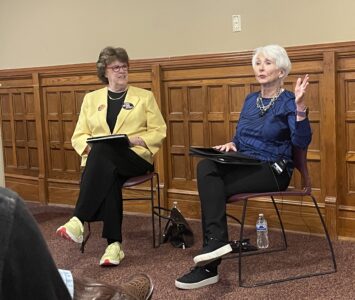
‘If it ain’t broke, don’t fix it’: Retired Judge Sally Pokorny tells residents why she opposes electing Supreme Court justices
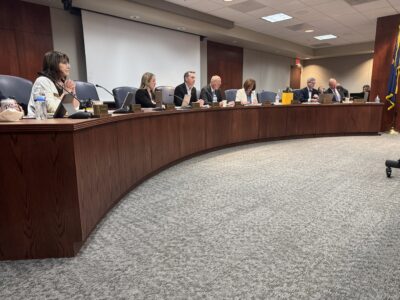
KU professors would be limited in how they could present the idea of systemic racism in future classes
State legislators push back against federal energy regulators ending competitive bids
TOPEKA — Two Kansas legislators asked federal energy regulators to ensure competitive bidding occurs on ...
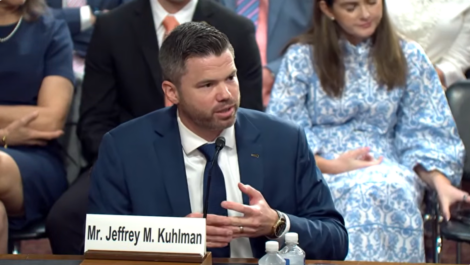
Senate confirms 1st of 3 Kansas nominees to U.S. District Court
Corporate income tax collections falling sharply in Kansas; Republican, Democratic leaders disagree on what it means
TOPEKA — Corporate income tax collections in Kansas have almost halved since last year, while other sources trend ...
Candidate’s campaign manager created website with documents used to attack rival
TOPEKA — Kansas U.S. Senate candidate Patrick Schmidt’s campaign manager left his digital footprint on ...