

Brigade to leave for Iraq as part of national surge
Fort Riley ? A year ago, the ranks of the Dragon Brigade were only one-sixth full, and it had only 5 percent of its equipment.
Now, fully manned and equipped, the 4th Brigade, 1st Infantry Division is leaving for Iraq in a few weeks.
Its soldiers are part of President Bush’s plan to increase the number of U.S. troops by 21,500 in coming months to stabilize Iraq, despite opposition to his strategy and questions about whether a brigade can be ready so quickly.
The Dragon Brigade’s 3,400 soldiers already were preparing to go to Iraq when Bush announced his latest plans. The president’s announcement meant the unit will leave three days earlier than planned.
‘Fire hose in the face’
Soldiers in one company hit Fort Riley’s training ranges at 7:30 a.m. Wednesday to practice searching and clearing. They were dressed in body armor and the military equivalent of long underwear to protect against the bitter cold. This week snow and ice covered the ground; soon, the troops will be walking on sand.
Typically, a brigade takes between 18 months and two years to organize and train for its mission, making the 4th Brigade’s experience more intense than usual.
“It’s like a fire hose in the face immediately,” said 1st Lt. Anthony Roffino, a 24-year-old Notre Dame graduate who is making his first deployment after two years in the Army.
Soldiers in the brigade said they had expected to go to Iraq. Its commander, Col. Ricky Gibbs, said his instincts told him it would be this year because of the number of soldiers the Army needs.
Command Sgt. Maj. Clifford Dockter, who left one unit after four months in Iraq for the new brigade, said: “It makes no sense to have a fully trained brigade and not deploy it. It’s insanity.”
The brigade became part of the 1st Infantry Division in 2006 in a move to rebuild the division’s presence at Fort Riley after 10 years in Germany. It is expected to grow to more than 18,000 soldiers in five years.
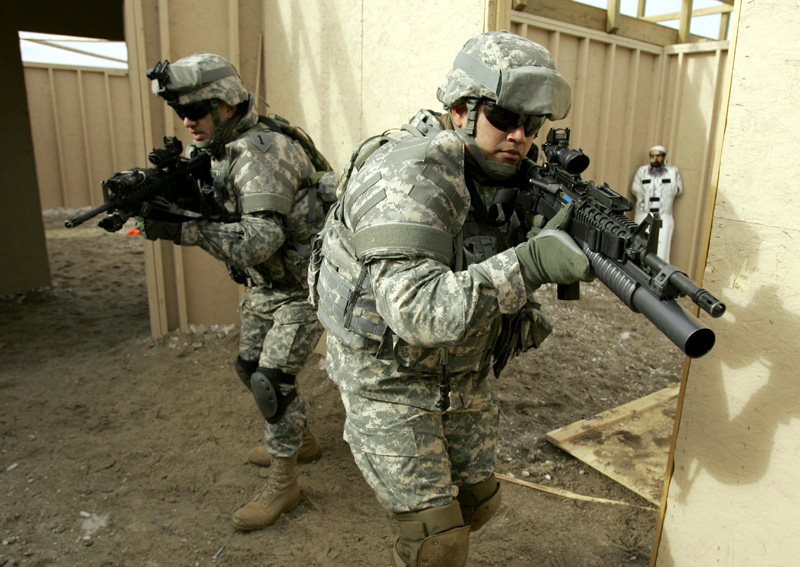
Pfc. Oscar Sauceda, right, and Staff Sgt. Walter Radick practice clearing a room as they train at Fort Riley. The Dragon Brigade is leaving for Iraq in a few weeks after a year of training and preparation.
A year’s growth
The bulk of the Dragon Brigade hasn’t seen combat. About 35 percent has been deployed, primarily the senior leaders of battalions, said Gibbs, a 46-year-old veteran of the first Gulf War.
“Knowing what I knew about Saddam Hussein, his practices, most of us thought we would be back in about 10 years, just because the way he was,” Gibbs said. “Frankly, none of it surprises me. You’re fighting an enemy that wants to win as bad as we do.”
The brigade’s transformation in a year, from some 600 soldiers and almost no equipment to full strength, illustrates the U.S. need to get fresh fighting forces to Iraq.
More recruits needed
The military wants to expand the Army and Marines, and most analysts believe that buildup will take five to 10 years with troops that haven’t yet been recruited.
Until then, deployments will continue to strain resources and readiness.
Dockter said the training schedule meant juggling staff to meet responsibilities to Fort Riley, such as providing security. Often, soldiers showed up dirty, straight from training, or went days without showers.
News came Wednesday that a fellow 1st Infantry soldier had been killed. Sgt. Gregory A. Wright of the 1st Engineer Battalion died Saturday in Balad, and a memorial service was Thursday at Fort Riley. More than 3,000 Americans have died in Iraq since 2003.
State Government
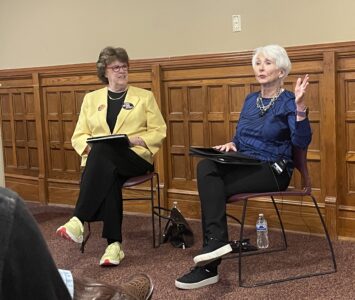
‘If it ain’t broke, don’t fix it’: Retired Judge Sally Pokorny tells residents why she opposes electing Supreme Court justices
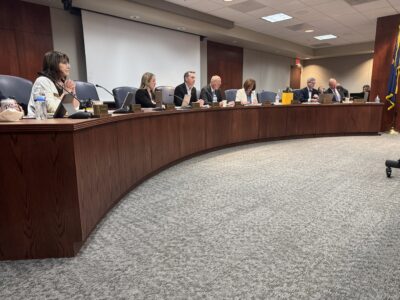
KU professors would be limited in how they could present the idea of systemic racism in future classes
State legislators push back against federal energy regulators ending competitive bids
TOPEKA — Two Kansas legislators asked federal energy regulators to ensure competitive bidding occurs on ...
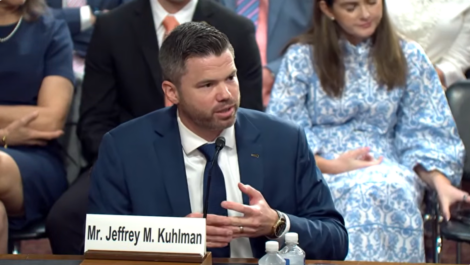
Senate confirms 1st of 3 Kansas nominees to U.S. District Court
Corporate income tax collections falling sharply in Kansas; Republican, Democratic leaders disagree on what it means
TOPEKA — Corporate income tax collections in Kansas have almost halved since last year, while other sources trend ...
Candidate’s campaign manager created website with documents used to attack rival
TOPEKA — Kansas U.S. Senate candidate Patrick Schmidt’s campaign manager left his digital footprint on ...