

Kansas issues new fish consumption advisories
Data show overall decrease in contaminants
The Kansas Department of Health and Environment (KDHE) and the Kansas Department of Wildlife and Parks (KDWP) are issuing annual fish consumption advisories for 2007. The advisories identify species of fish that should be eaten in limited quantities, or in some cases, avoided altogether because of contamination found in tested fish.
The advisories include guidelines for mercury and polychlorinated biphenyls (PCBs) in fish, perchlorate in fish and other aquatic life, and lead and cadmium in shellfish. Trend data from most Kansas long-term monitoring sites show a decrease in mercury and PCBs. PCBs have not been inuse in the U.S. since the 1970s and chlordane use was discontinued in 1988.Chlordane levels have declined dramatically statewide, and PCB levels areexpected to follow. PCBs and chlordane degrade slowly, so it takes decadesfor them to be completely removed from the environment, even after use isdiscontinued.
Kansas recommends not eating specified fish or aquatic life from thefollowing locations for the reasons stated:
(1) The Kansas River from Lawrence (below Bowersock Dam) downstream toEudora at the confluence of the Wakarusa River for bottom-feeding fishbecause of PCB levels;
(2) Horseshoe Lake located in units 22 and 23 of the Mined Lands WildlifeArea (Cherokee County) for all forms of aquatic life in addition to allfish because of perchlorate levels;
(3) The Spring River from the confluence of Center Creek to the
Kansas/Oklahoma border (Cherokee County) for shellfish (mussels, clams, and
crayfish) because of lead and cadmium levels;
(4) Shoal Creek from the Missouri/Kansas border to Empire Lake (Cherokee
County for shellfish because of lead and cadmium levels.
Bottom-feeding fish include: carp, blue catfish, channel catfish, flathead catfish, freshwater drum, bullheads, sturgeons, buffalos, carpsuckers and other sucker species.
In addition, Kansas recommends a limit of one 8-ounce serving per month, or twelve 8-ounce servings per year, on the consumption of bottom-feeding fish from the following locations due to PCBs:
(1) The Arkansas River from the Lincoln St. dam in Wichita downstream to the confluence with Cowskin Creek near Belle Plaine (Sedgwick and Sumner counties)
(2) Cow Creek in Hutchinson and downstream to the confluence with the Arkansas River (Reno County)
Due to the average levels of mercury, Kansas recommends a limit of one 8-ounce serving per week for adults or one 4-ounce serving per week for children 12 years of age or younger of any species of fish from the following locations:
(1) The Little Arkansas River from the Main Street Bridge immediately west of Valley Center to the confluence with the Arkansas River in Wichita (Sedgwick County).
(2) The main stem of the Blue River from U.S. 69 Highway to the Kansas/Missouri state line (Johnson County).
Kansas counties with current fish consumption advisories include: Cherokee, Douglas, Johnson, Leavenworth, Reno, Sedgwick and Sumner counties. Those that no longer have fish consumption advisories are Crawford, Lyon and Wyandotte counties.
The Environmental Protection Agency (EPA) has issued a national fish consumption advisory for mercury which recommends consuming no more than one 8-ounce serving per week of non-commercial (locally caught) fish. EPA bases this on nationwide average mercury levels in various species of fish and recommends first consideration be given to local advisories. Women who are pregnant or breast feeding should avoid eating large-sized predatory fish such as largemouth bass, or consult their physician. Additional testing for contaminants in fish and other aquatic life will continue on an annual basis.
The advisories assess cancer risk levels using EPA methods. Cancer risk assessment is a method to determine the added increase in cancer levels in a population if fish in the advisory areas are consumed regularly over a 70-year period. Assessments that estimate the increased risk of cancer as greater than one in 100,000 are determined to be unacceptably high-risk levels. Risk assessments for contaminants assessed as non-carcinogens (mercury, lead and cadmium) were based on 8-ounce serving size for adults and 4-ounce serving size for children 9 to 18 years of age.
State Government
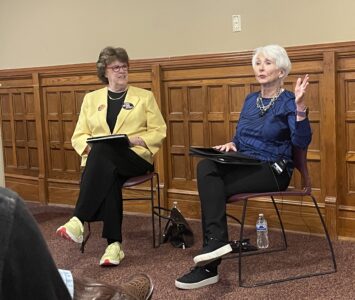
‘If it ain’t broke, don’t fix it’: Retired Judge Sally Pokorny tells residents why she opposes electing Supreme Court justices

KU professors would be limited in how they could present the idea of systemic racism in future classes
State legislators push back against federal energy regulators ending competitive bids
TOPEKA — Two Kansas legislators asked federal energy regulators to ensure competitive bidding occurs on ...
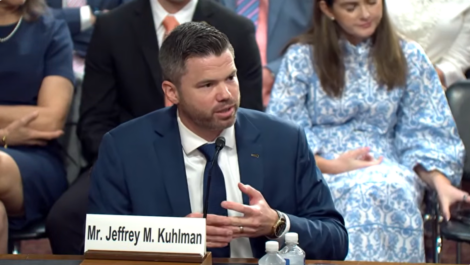
Senate confirms 1st of 3 Kansas nominees to U.S. District Court
Corporate income tax collections falling sharply in Kansas; Republican, Democratic leaders disagree on what it means
TOPEKA — Corporate income tax collections in Kansas have almost halved since last year, while other sources trend ...
Candidate’s campaign manager created website with documents used to attack rival
TOPEKA — Kansas U.S. Senate candidate Patrick Schmidt’s campaign manager left his digital footprint on ...