

New Lewis and Clark Center to house General Staff College
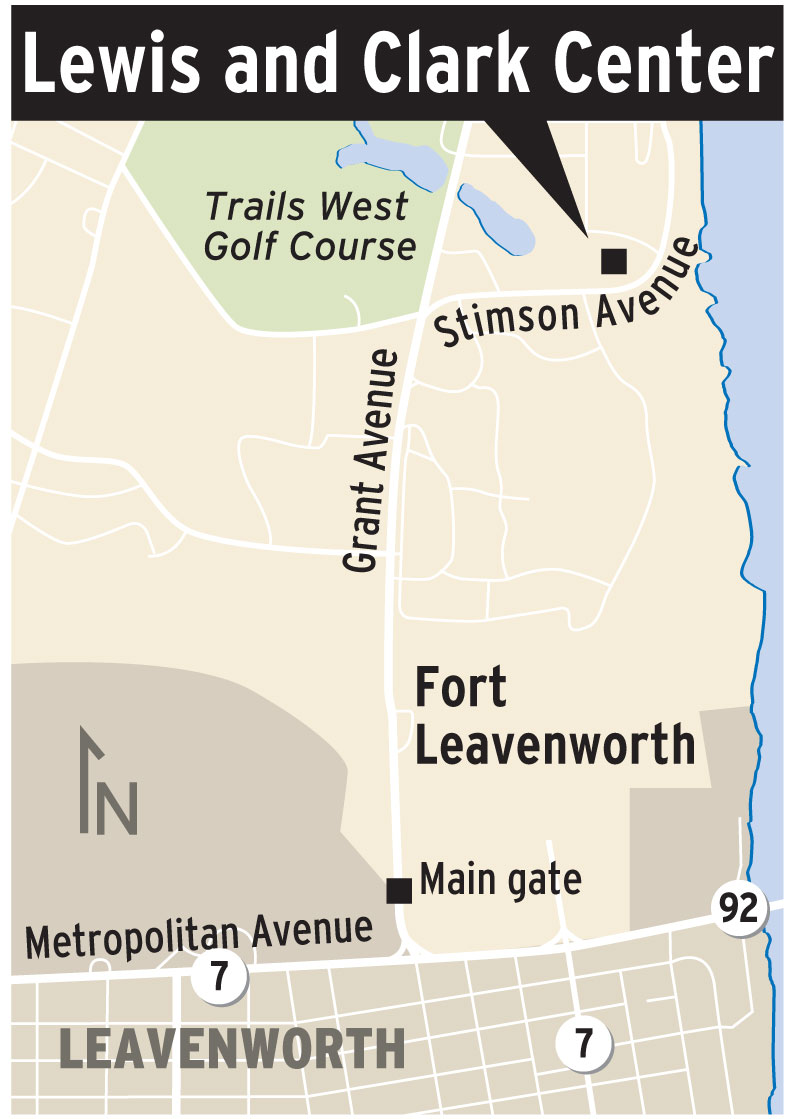
Fort Leavenworth ? More than 200 years after their expedition passed on the Missouri River below, heading into the unknown prospects of the Louisiana Purchase, explorers Lewis and Clark’s names are again linked to the future.
On Monday, Army officials dedicated the $115 million Lewis and Clark Center, home of the Army’s Command and General Staff College. Lt. Gen. William Caldwell IV also inducted Capts. Meriwether Lewis and William Clark in Fort Leavenworth’s hall of fame for their accomplishment, joining the ranks of leaders such as Gens. George Patton, Dwight Eisenhower, Creighton Abrams and Colin Powell.
Descendants of the explorers said they were humbled by the honors bestowed on Lewis and Clark, whose journey would have been visible from the center’s site as it went along the Missouri River and headed toward the Pacific Ocean. The expedition concluded in 1806.
“It think it’s a tremendous honor. It’s awesome,” said Laura Lewis Streich, a first cousin to Lewis four times removed from Madison, Wis.
Added her daughter, Janelle Streich, of San Francisco, “You learn that you are part of history.”
The new center stands in stark contrast to Bell Hall from the inside and out.
Classrooms and auditoriums are spacious, configured with interactive media, including giant plasma monitors. Two auditoriums, including one with seating for more than 2,000, allow for symposiums and large lectures.
A spacious atrium is lined with the banners of the Army’s divisions, stained-glass windows and portraits of hall of fame inductees. Students also have access to a food court on the lower level and bookstore.
Stephanie Raimer, an eighth cousin of Lewis from Hannibal, Mo., said the two captains didn’t know they were doing anything special by exploring the West for President Jefferson, nor did they imagine such an honor centuries later.
“They didn’t think they were doing a wonderful thing back then. They just went back home and didn’t give it another thought,” she said. “They went in to the great unknown and that’s what these leaders are doing, too. This college will prepare them to do that.”
The building replaces Bell Hall, which was showing its age and wear. U.S. Sen. Pat Roberts, a Kansas Republican, toured the old building and told officers Monday he took a piece of broken pipe back to Congress with him to lobby for a new facility. He loosely referred to the pipe as a “crack pipe.”
“Science and technology left it behind,” Roberts said of Bell’s condition. “That piece of pipe represented something very wrong and very broken.”
Roberts said the new center gives officers from the U.S. military and around the world access to education and technology not possible at the old facility. Each of the 96 classrooms are capable of linking students to other military installations, including commanders in Iraq and Afghanistan.
In addition, a functioning modern command post replicates the new means by which officers control troops and monitor movements in real-time without talking face to face.
“I think sometimes, we in Kansas are blessed with many fine universities and other educational success stories that we tend to overlook the intellectual center of the Army,” Roberts said. “That obviously is not the case now with this building.”
Ceremonies began early Monday outside the new center with 50 international officers planting their nation’s flag outside the new center. The new class of students begins their studies this week, concluding next spring.
One of those international students planting his nation’s colors was Lt. Col. Pablo Alfonso Bonilla Vasquez of the Columbian army. He said he was looking forward to the next year and learning more about how the United States and other countries are fighting counterinsurgencies. Bonilla cited Columbia’s own struggle with insurgents as experience he would be sharing.
Another, Maj. Muhammad Aamer Najam of Pakistan, was eager to get rare glimpses into how other militaries function, including talks with an officer from bordering Afghanistan.
“You don’t get many chances to hear how other people do things,” he said. One topic may be the threat of roadside bombs, one of the main threats to U.S. soldiers in Iraq and Afghanistan.
“We face them every day,” Najam said of the bombs.
While the mood was festive, a reminder of the war was present with flags flying at half staff for Spc. Matthew M. Murchison, 21, of Independence, Mo. The military policeman was killed Aug. 4 in Baghdad and was buried Monday afternoon at the Fort Leavenworth Cemetery. Workers, soldiers and family members lined the street leading to the cemetery to honor Murchison.
State Government

Over 100,000 Kansans yet to receive state tax refunds; Department of Revenue says staffing issues contribute to delays
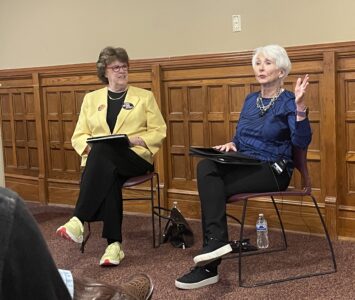
‘If it ain’t broke, don’t fix it’: Retired Judge Sally Pokorny tells residents why she opposes electing Supreme Court justices
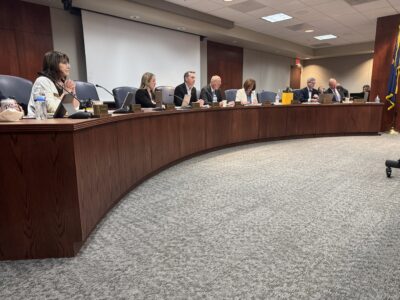
KU professors would be limited in how they could present the idea of systemic racism in future classes
State legislators push back against federal energy regulators ending competitive bids
TOPEKA — Two Kansas legislators asked federal energy regulators to ensure competitive bidding occurs on ...
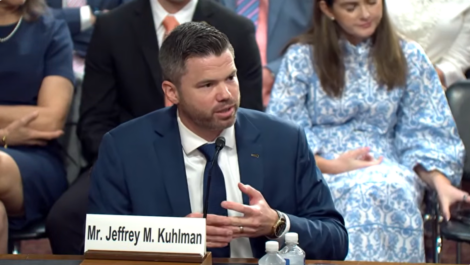
Senate confirms 1st of 3 Kansas nominees to U.S. District Court
Corporate income tax collections falling sharply in Kansas; Republican, Democratic leaders disagree on what it means
TOPEKA — Corporate income tax collections in Kansas have almost halved since last year, while other sources trend ...