

Displaced residents make ‘FEMA Land’ home
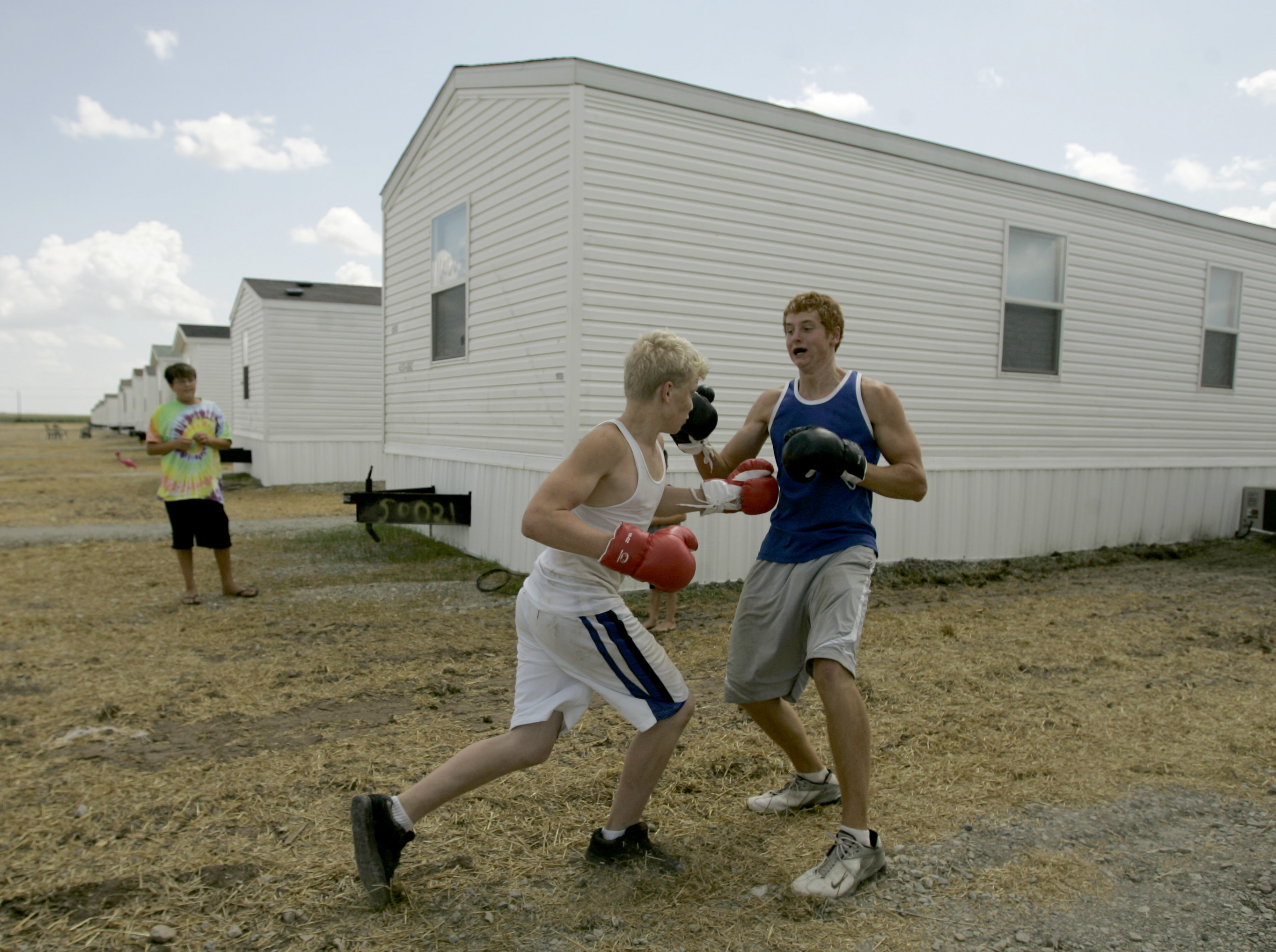
Shane Engelken, right, and Keith Beltz spar outside their temporary FEMA trailers in Greensburg set up after a tornado destroyed the town May 4. As many wonder if the town will survive, some believe that having residents stay in the government-issued trailers is a positive sign.
Greensburg ? Joan Hayse is trying hard to make her new house in Greensburg feel like a home.
“I had to get some curtains up!” she said after returning from Pratt with new drapes.
Joan and her husband, Carl, are two of the 383 people who have moved into a new mobile home park, assembled by the Federal Emergency Management Agency for Greensburg residents who lost their homes in the May 4 tornado.
“I see it kind of like I’m in a motel room when I wake up in the morning. It’s different,” she said.
The park is one of the most stark changes to the landscape of this western Kansas town that was almost whipped off the map by a tornado more than 2 miles wide.
Now that debris from homes and businesses has been trucked away to landfills, the park is giving some residents a feeling of community they haven’t had since before May 4.
According to FEMA spokesman Greg Hughes, 250 of the 60-foot-long white trailers line a few dirt and gravel roads just southeast of the city limits.
Making trailers home
There’s room for more homes, but Hughes said he thinks the 250 may meet the demand. Though they’re all new, dirt from the streets has left a thin film of dust on the homes. Straw is spread around each one to serve as a yard, helping to keep down the dust.
A lot of the families living in the park are like the Hayses, trying hard to make their new surroundings feel like home. Potted plants and satellite dishes adorn some of the wooden porches. Barbeque grills sit outside. Most of the cars parked out front are new, replacements for vehicles that were destroyed in the tornado. Even pink yard flamingos have made an appearance.
Residents of “FEMA Village” or “FEMA Land,” as they’ve come to call it, can live here 18 months while they rebuild or buy new homes.
‘We’re here to help’
On the other side of Greensburg, Michael Boyles was standing about 50 yards from where his grandparents’ home once stood. He spent nearly every Thanksgiving and Christmas of his life in their house. It’s also the home where his grandparents, his parents and an aunt and uncle held on for dear life May 4.
They survived, but the house is gone. The owner of CalMarc Construction in Wichita, Boyles is on a mission to help rebuild the town where he grew up. His parents’ home survived the storm, and he spends six nights a week sleeping on a couch there.
Earlier this week, he was overseeing a delivery of lumber near a site where he’s overseeing construction of a new home. He’s overseeing other home projects and is ready to begin several more. He says he’s worried that many residents will not return, but he also senses the excitement in people when they drive by and see his crews framing up a new house.
Action breeds action, he said. He cares deeply about these people, he said. “We’re here to help. Not just to build.”
Residents discuss rebuilding
On Thursday evening, under a big yellow and blue tent that did little to suppress summer’s heat and humidity, a couple hundred residents of Greensburg came out to consider the future of their town. While enjoying free barbecue, they studied boards that displayed descriptions and drawings of plans for a rebuilt Greensburg.
They looked over scenarios outlining downtown design, the U.S. 54 corridor, long-term economic sustainability; blueprints for a town about to be rebuilt from scratch. Steve Kastaner, with the FEMA Long Term Community Recovery Team, said the open house was held to present the vision of what the residents want for their community. The plans were based on ideas gathered from dozens of community meetings.
At the open house, officials encouraged residents to post feedback on the drawings with sticky notes. FEMA officials stressed that the plans were only preliminary and that it’s ultimately up to residents to determine what their town will look like.
Jamie Brown listened closely.
“Things going on around town are very encouraging,” he said. “Every time you see a new house, a new basement being poured or a new building going up, that’s been very encouraging.”
‘This is our hope’
Back at the FEMA park, Bob Mosier, 75, was taking his dog on an evening walk down the dusty street.
He talked about the past 90 days.
“After three months it’s still tough,” he said. “I still catch myself breaking into tears occasionally. The trauma was pretty heavy. Pretty hard to take.” But like a lot of residents, Mosier still feels the optimism expressed about their town right after the tornado.
“This is our hope,” he said, holding his arms wide, looking at the mobile homes all around him. “If all these people that have moved into these mobile homes are intent on staying here, then there’s hope that the town will survive.”
State Government
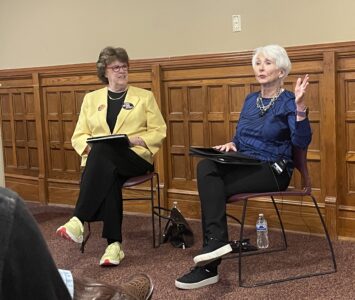
‘If it ain’t broke, don’t fix it’: Retired Judge Sally Pokorny tells residents why she opposes electing Supreme Court justices
KU professors would be limited in how they could present the idea of systemic racism in future classes
State legislators push back against federal energy regulators ending competitive bids
TOPEKA — Two Kansas legislators asked federal energy regulators to ensure competitive bidding occurs on ...
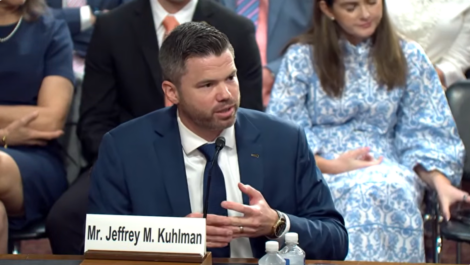
Senate confirms 1st of 3 Kansas nominees to U.S. District Court
Corporate income tax collections falling sharply in Kansas; Republican, Democratic leaders disagree on what it means
TOPEKA — Corporate income tax collections in Kansas have almost halved since last year, while other sources trend ...
Candidate’s campaign manager created website with documents used to attack rival
TOPEKA — Kansas U.S. Senate candidate Patrick Schmidt’s campaign manager left his digital footprint on ...