

Sebelius: School finance plans just ‘a baby step’
Topeka ? Both legislative chambers have approved plans to increase education spending, but Gov. Kathleen Sebelius said Friday their actions represented only “a baby step” because both plans covered only one year and provided no new revenues.
Some school superintendents also are displeased, viewing both the $113 million House plan and the Senate’s $145 million alternative as inadequate.
But House Speaker Doug Mays, R-Topeka, said legislators could adopt a plan that satisfied the Kansas Supreme Court without increasing taxes, a goal of GOP leaders.
Both proposals would tap existing revenues and cash reserves to finance the new spending for the fiscal year beginning July 1.
The House approved its plan Friday on a 78-44 vote. Senators approved their proposal Thursday, 29-10. The final version of an education funding bill will be drafted by negotiators, who are expected to begin their work next week.
“We don’t have a multiyear plan. We don’t have funding,” Sebelius told reporters before the House vote. “I think the fact that there are two plans out on the table is a step — it’s a baby step.”
Neither plan impressed Baldwin Supt. James White, who called them “ludicrous, laughable, comical, farcical and ridiculous.”
South Barber Supt. Bob Hightree said: “They can’t be serious, but the sad thing is, I am afraid they are.”
The Supreme Court has given legislators until April 12 to increase annual aid to schools beyond the current $2.7 billion and distribute the dollars more fairly.
“I don’t believe either of these plans are what the Supreme Court intended,” said Superintendent Gary Kraus of Pike Valley schools in Republic County. “The amount of new money is far from adequate.”
Both chambers’ measures increase spending on special education, bilingual education and programs for at-risk children, all concerns cited by the Supreme Court in a January ruling. Both plans also increase general aid to all school districts, though in differing amounts.
Mays also noted that the House measure contained provisions designed to increase spending on schools in future years.
One provision in the House proposal requires the state’s base aid per pupil, now set at $3,863, to increase by the rate of inflation each year. Another would give public schools first claim to state dollars, meaning other programs would be shorted if money ran out.
Mays said an improving economy would provide additional revenues and that House members would propose reductions in the state budget Sebelius submitted in January. He said House members would likely trim $100 million from her $11.3 billion spending plan for the next fiscal year.
“It is a multiyear plan, with the ‘education first’ portion of it,” Mays said during a news conference. “There’s nothing to say that we might not put extra dollars in later on, depending on how well the economy does.”
Sebelius and her fellow Democrats are skeptical the state can improve education funding without new revenues. Last year, Sebelius offered a plan raising sales and income taxes, allowing the state to take three years to phase in a $310 million increase in annual spending. Lawmakers rejected it.
State Government
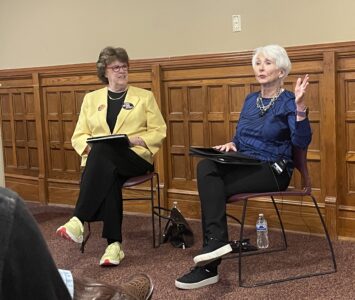
‘If it ain’t broke, don’t fix it’: Retired Judge Sally Pokorny tells residents why she opposes electing Supreme Court justices
KU professors would be limited in how they could present the idea of systemic racism in future classes
State legislators push back against federal energy regulators ending competitive bids
TOPEKA — Two Kansas legislators asked federal energy regulators to ensure competitive bidding occurs on ...
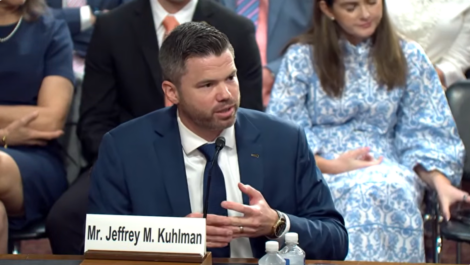
Senate confirms 1st of 3 Kansas nominees to U.S. District Court
Corporate income tax collections falling sharply in Kansas; Republican, Democratic leaders disagree on what it means
TOPEKA — Corporate income tax collections in Kansas have almost halved since last year, while other sources trend ...
Candidate’s campaign manager created website with documents used to attack rival
TOPEKA — Kansas U.S. Senate candidate Patrick Schmidt’s campaign manager left his digital footprint on ...