

Governor to juggle school, health care issues in 2005
Topeka ? Gov. Kathleen Sebelius and legislators already expect to tackle one huge, difficult issue next year: rewriting the state’s school finance law to distribute education dollars more fairly.
Sebelius also has been saying for weeks that she’ll have another major initiative for lawmakers to consider after their 2005 session convenes in January: She wants to attack rising medical costs and help more Kansans obtain affordable insurance.
With a major health care plan, Sebelius would address an issue many Kansans find important and deal with a source of stress on businesses and the economy. She also would have an opportunity to build a reputation as a problem solver.
But she could be asking legislators to tackle a technically demanding subject in a year in which they’ll also be fighting over which school districts deserve more money than they’re getting — and whether that requires an increase in taxes.
“It’s difficult to take on two major initiatives in a session,” House Speaker Doug Mays, R-Topeka, said during a recent interview. “The two most complicated issues I can think of are school finance and health care.”
The Democratic governor remains undaunted.
“Hopefully, it isn’t an either/or situation,” she said. “What I hear from people over and over again is, yes, they are wanting to make sure we have great schools in every area of the state, but they also want an opportunity to make sure that their health is protected.”
Health-care initiatives
Initiatives on health care have been percolating within the Sebelius administration for months. She formed an Office of Health Planning and Finance in October 2003, and she shuffled her Cabinet last month in advance of outlining a package.
Her health office confirmed to legislators last week that it had tried to create a discount drug card program for uninsured Kansans, but failed and had abandoned the idea. Clearly, something is coming.
Without a public debut of the plan, details remain sketchy. Sebelius has said she wants to encourage companies with from two to 50 employees to offer health insurance and has promised to attack administrative costs in the health care system. “It will be a multifaceted plan,” she said. “I think we need to begin the discussion, and it certainly is an issue I hear about.”
It’s also difficult to dispute that health care is a compelling issue.
A study released last week by the Kaiser Family Foundation and the Health Research and Educational Trust said premiums for employer-sponsored health coverage this spring were about 11 percent higher than in spring 2003. The study also said the number of people covered by such plans has dropped by 5 million over three years.
The state budget also has been squeezed by rising medical costs, as Kansas provides services to the needy.
“The biggest cause of bankruptcy is a health incident,” Sebelius said. “The single thing that people worry about most when they lose their job is also losing their health insurance.”
Schools a priority
But a big and contentious debate on school finance also seems inevitable.
A lawsuit challenging how the state distributes its $2.7 billion in education funding is before the Kansas Supreme Court, which could rule next month.
If the Supreme Court doesn’t order any changes in the finance formula, there is still the question of whether Kansas spends enough money on its schools. Sebelius and many legislators want to provide more dollars, which forces them to broach the idea of raising taxes.
But some legislators argue the Supreme Court is unlikely to uphold the entire formula and will demand changes.
Rewriting the formula means picking winners and losers: taking money from some schools and giving it to others deemed more deserving. To keep any districts from losing, legislators would have provide new dollars.
“We have to address the Supreme Court ruling,” Mays said. “That is our first priority.”
State Government
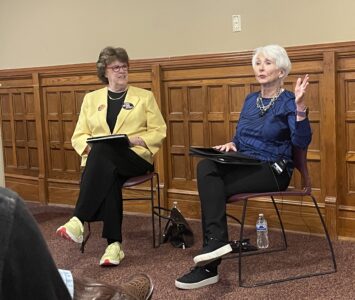
‘If it ain’t broke, don’t fix it’: Retired Judge Sally Pokorny tells residents why she opposes electing Supreme Court justices
KU professors would be limited in how they could present the idea of systemic racism in future classes
State legislators push back against federal energy regulators ending competitive bids
TOPEKA — Two Kansas legislators asked federal energy regulators to ensure competitive bidding occurs on ...
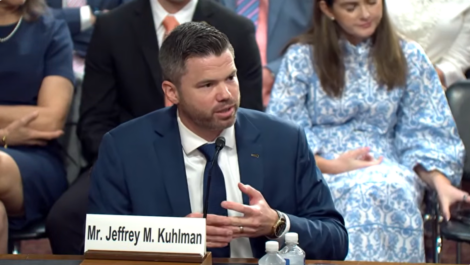
Senate confirms 1st of 3 Kansas nominees to U.S. District Court
Corporate income tax collections falling sharply in Kansas; Republican, Democratic leaders disagree on what it means
TOPEKA — Corporate income tax collections in Kansas have almost halved since last year, while other sources trend ...
Candidate’s campaign manager created website with documents used to attack rival
TOPEKA — Kansas U.S. Senate candidate Patrick Schmidt’s campaign manager left his digital footprint on ...