

Kansan rewarded for using environmentally friendly farming techniques
Wichita ? For more than four decades, Rod Arbuthnot has run his farm in a fashion many conservationists love.
He uses rotational grazing on his rangeland. Some 41 acres of native grass strips protect water quality on the streams that flow on the farm. Wildlife areas are left for deer, turkey and prairie chickens. In the late 1990s, Arbuthnot Farms switched to no-till farming on all its cropland.
“We believe in the land,” he said. “We live on the land, and we make our living from the land. … So we wanted to make it a nice environment for us, the wildlife and the livestock.”
He also is among the first farmers to get paid by the federal government for doing what has become habit. The Washington County farmer signed a 10-year Conservation Security Program contract, which pays him to protect the environment.
“CSP rewards folks for conservation measures we have already implemented,” Arbuthnot said.
Kansas was among the first proving grounds for the Conservation Security Program. More than 300 farmers in two of the state’s watersheds — the Lower Little Blue River and the Lower Salt Fork of the Arkansas River — signed up, receiving $2.45 million.
In November, the Agriculture Department added six more watersheds in Kansas. Farmers are expected to be able to start signing up for the program, and the $200 million allocated for it, later this winter or in early spring.
“We really look at this to be not a perfect program, but it is the first few steps of developing a new way to divert income to farmers for support that is different from traditional commodity supports,” said Jim French, educational coordinator for the Kansas Rural Center.
An estimated 7,003 Kansas farms covering 4.3 million acres are included in the watersheds, according to the Agriculture Department’s Natural Resources Conservation Service.
Last month’s expansion brings the conservation program to every state — encompassing 165 million acres of watersheds, according to the agency. The 208,000 farms and ranches within these watersheds cover more than 83 million acres, about the size of Missouri and Florida combined.
State Government
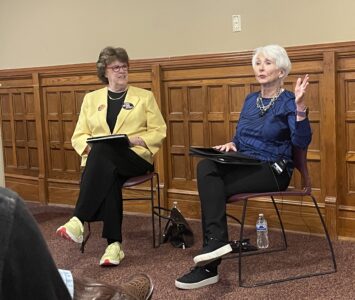
‘If it ain’t broke, don’t fix it’: Retired Judge Sally Pokorny tells residents why she opposes electing Supreme Court justices

KU professors would be limited in how they could present the idea of systemic racism in future classes
State legislators push back against federal energy regulators ending competitive bids
TOPEKA — Two Kansas legislators asked federal energy regulators to ensure competitive bidding occurs on ...
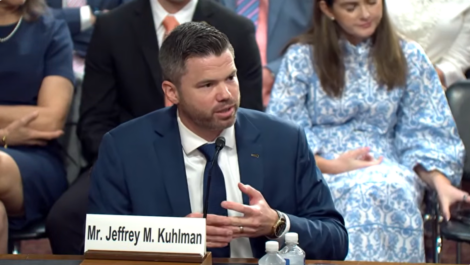
Senate confirms 1st of 3 Kansas nominees to U.S. District Court
Corporate income tax collections falling sharply in Kansas; Republican, Democratic leaders disagree on what it means
TOPEKA — Corporate income tax collections in Kansas have almost halved since last year, while other sources trend ...
Candidate’s campaign manager created website with documents used to attack rival
TOPEKA — Kansas U.S. Senate candidate Patrick Schmidt’s campaign manager left his digital footprint on ...