

Sales-tax system for cars needs repairs, audit finds
Topeka ? Kansas is missing out on millions of dollars in revenues because it fails to adequately collect sales taxes on motor vehicle sales and enforce action against dealerships and individuals who violate the law, according to a new state audit.
The report by the Legislative Division of Post Audit describes a Kansas vehicle sales-tax collection system that needs an overhaul.
“We have some big dollars that are being collected and are being pocketed by the dealers,” said state Sen. Jim Barnett, R-Emporia, who requested the audit. “We’re talking millions of dollars here.”
The new findings come as state leaders try to bridge a $230 million budget gap, reduce spending on frail and elderly Kansans, and maintain education funding.
While state coffers have been running dry, other recent audits have shown the state has been lax in collecting corporate income taxes and has not been doing a good job of attracting federal dollars.
On the vehicle tax report, auditors gave large franchise car dealerships a clean bill of health, but reported trouble with some small dealers and thousands of private car sales between individuals.
In one case, a car dealer had been allowed to operate without filing tax returns or paying sales taxes for the past five years. During that time, the dealer sold 500 vehicles.
Missing millions
The Kansas Department of Revenue reported it had $7 million in accounts receivable from 500 vehicle dealers. A sample of 11 dealerships that owe the most showed seven continued to sell vehicles and collect taxes while owing from $22,000 to $436,000 in sales taxes.
The audit found the revenue department was not doing enough audits to have a deterrent effect on dealers that may not be complying with the law. Of the 3,000 licensed vehicle dealers, the department has audited only 10 dealers in the past five years.
And the problems weren’t confined to dealers.
The audit found many individuals are cheating the state of millions of dollars in taxes.
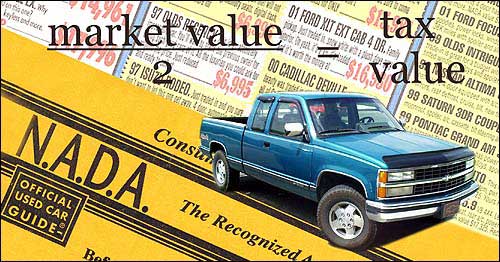
A random check of 80 private vehicle sales showed that half were reported as being sold for less than half their fair market value. The lower the sale price an individual reports to the county treasurer, the lower his tax bill. Some of the cars were reportedly sold for $1. Based on this sample, auditors concluded Kansas lost out on from $7.5 million to $13 million in taxes.
The check of private sales “suggest that people could be under-reporting the selling price,” the audit stated.
Big-ticket item
Collection of taxes on such sales is an important part of the state budget. In 2002, the state collected about $281 million in vehicle sales taxes. About 71 percent, or $200 million, was collected from dealers.

The rest of the taxes — $81 million or 29 percent — was collected by county treasurers. Kansans who buy from out-of-state dealers or through private sales pay the sales taxes they owe to the county treasurer when they register the vehicle.
The revenue department requires county treasurers to tax private sales at fair market value. But most county treasurers’ offices said it was difficult to follow that regulation because they had no way of knowing the fair market value on a vehicle, and did not want to question a buyer’s honesty.
Douglas County Treasurer Pat Wells said the procedure at her office was to take the word of the buyer, who reports how much was paid for the vehicle.
“Sometimes the price looks questionable, but we are not here to monitor that,” Wells said. “It’s not up to us to question the person when they come in. We just accept what they give us. We are here to provide a service — we don’t like to argue.”
Findings applauded
Additionally, the audit found that county treasurers sometimes were not applying taxes to rebates on out-of-state vehicle sales, which probably cost the state more than $200,000.
The findings were applauded by Kansas Department of Revenue Secretary Joan Wagnon, who took over the tax-collecting agency in January. She said many of the report’s recommendations were being followed.
“The goal is to ensure that all Kansas taxpayers pay their fair share in accordance with Kansas tax laws,” Wagnon said. “The analyses and recommendations contained in this report are very instructive and totally in concert with achieving our mission.”
The audit covered a period under former secretary Stephen Richards. Richards could not be reached for comment, but in previous audits that showed lack of tax collection under his tenure, he said agency budget shortfalls had constrained enforcement.
State Government
‘If it ain’t broke, don’t fix it’: Retired Judge Sally Pokorny tells residents why she opposes electing Supreme Court justices
KU professors would be limited in how they could present the idea of systemic racism in future classes
State legislators push back against federal energy regulators ending competitive bids
TOPEKA — Two Kansas legislators asked federal energy regulators to ensure competitive bidding occurs on ...
Senate confirms 1st of 3 Kansas nominees to U.S. District Court
Corporate income tax collections falling sharply in Kansas; Republican, Democratic leaders disagree on what it means
TOPEKA — Corporate income tax collections in Kansas have almost halved since last year, while other sources trend ...
Candidate’s campaign manager created website with documents used to attack rival
TOPEKA — Kansas U.S. Senate candidate Patrick Schmidt’s campaign manager left his digital footprint on ...