

Union promotes Farmland boycott
Union workers who lost their jobs when Farmland Industries Inc. closed its fertilizer plant near Lawrence are urging area shoppers to boycott the troubled company’s food products.
“We don’t think we’ve been treated fair,” said Joseph Deshazer, an elected officer in the Paper Allied-Industrial Chemical and Energy Workers International Union’s local chapter.
The disagreement is about severance packages. Deshazer said that while other workers received severances, union members hadn’t. And union efforts to negotiate a package with Farmland have stalled.
“We’ve been treated different because we’re union that’s not right,” Deshazer said. “All we want is to be treated like everybody else.”
The union called for the boycott in a quarter-page advertisement in the Sunday Journal-World.
Farmland Industries filed for Chapter 11 bankruptcy protection May 31, two weeks after it closed its fertilizer plant east of Lawrence, laying off 150 union and nonunion workers.
Many of the nonunion workers were given severance packages equal to two weeks’ pay for every year they had worked for the company. Payments were capped at 26 years of service.
Fifty-one union workers all of whom were terminated May 14, none of whom have been rehired say they, too, are entitled to a severance package. Company officials say they are not.
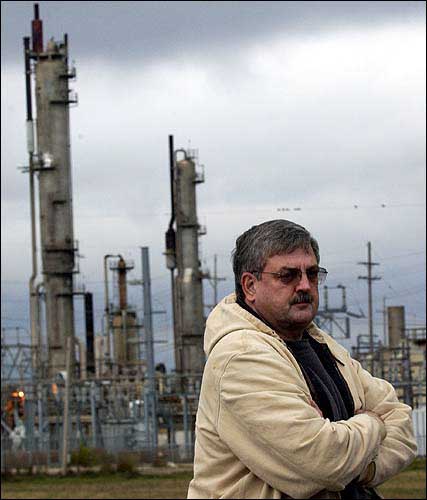
Joseph DeShazer, an officer in the Paper Allied-Industrial Chemical and Energy Workers International Union's local chapter, is one of the Farmland Industries Inc. workers who was laid off in May. The union members, who are complaining they did not receive the same severance packages as nonunion workers, are now encouraging local shoppers to boycott Farmland food products.
Also, the union workers say Farmland Industries purposely scuttled preclosure attempts to negotiate a severance package, knowing its bankruptcy would leave workers empty-handed. Company officials say that’s not true.
Agreements spelled out
Kevan Vick, general manager of nitrogen fertilizer manufacturing at Farmland Industries’ corporate office in Kansas City, Mo., said the company’s dealings with its union workers were spelled out in agreements between management and labor. Those agreements, he said, did not include provisions for a severance package.
“The agreements define our obligations, and they do not include a severance provision,” Vick said.
Union leaders said Farmland Industries’ characterization of the agreement was misleading because it was imposed in November 1999 after contract negotiations reached impasse.
“The agreement that’s in place does not presume a plant closure. It presumes the plant to be an ongoing affair,” said Mike Manley, a Kansas City, Mo., lawyer representing the union.

 Bankrupt Farmland granted filing extension (9-26-2002)
Farmland Industries, Manley argues, is obligated by law to “bargain over the effects of closure it may not have to bargain over whether to close, but there is an obligation to sit down with us on several issues relating to the effects of closure, one of them being severance.”
Grievances filed
Manley said the union had filed several grievances accusing the company of unfair labor practices in its mishandling of the layoffs and the plant’s closing.
“We’re not interested in getting into a 100-year war,” he said. “We’re just interested in justice for these folks, many of whom have put in two and three decades at the plant.”
Last month, Farmland Industries announced plans to sell its seven nitrogen fertilizer plants. Three of the plants are in Kansas: Lawrence, Coffeyville and Dodge City.
In its bankruptcy filing, Farmland Industries listed assets of $2.7 billion and liabilities of $1.9 billion.
Farmland Industries is the largest farmer-owned cooperative in North America. The company has blamed its troubles on a high debt-to-equity ratio incurred in the 1990s, adverse market conditions and a prolonged downturn in the nation’s nitrogen fertilizer industry.
The company reported third-quarter net loss of $189.5 million on July 15.
The union spokesmen said they doubted the boycott would cause Farmland much financial harm, but they hoped it would bring attention to their grievances.
State Government
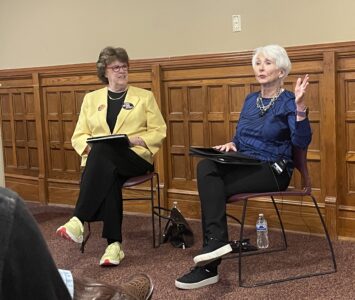
‘If it ain’t broke, don’t fix it’: Retired Judge Sally Pokorny tells residents why she opposes electing Supreme Court justices
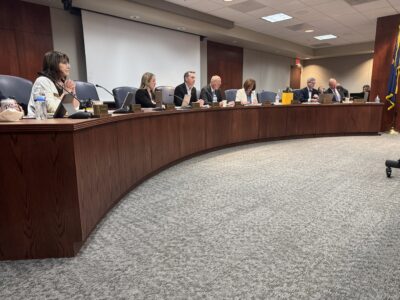
KU professors would be limited in how they could present the idea of systemic racism in future classes
State legislators push back against federal energy regulators ending competitive bids
TOPEKA — Two Kansas legislators asked federal energy regulators to ensure competitive bidding occurs on ...
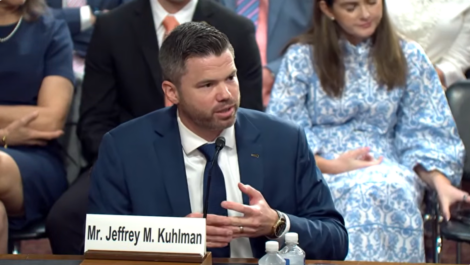
Senate confirms 1st of 3 Kansas nominees to U.S. District Court
Corporate income tax collections falling sharply in Kansas; Republican, Democratic leaders disagree on what it means
TOPEKA — Corporate income tax collections in Kansas have almost halved since last year, while other sources trend ...
Candidate’s campaign manager created website with documents used to attack rival
TOPEKA — Kansas U.S. Senate candidate Patrick Schmidt’s campaign manager left his digital footprint on ...