


Plans filed to convert the former Masonic Temple, organ and all, into a unique apartment building
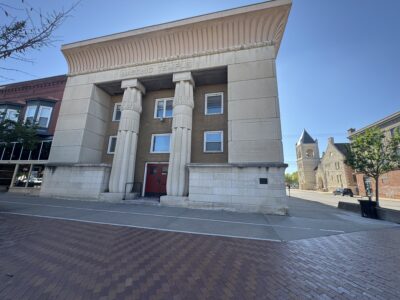
photo by: Chad Lawhorn/ Journal-Workd
The Masonic Temple building at 10th and Massachusetts streets is pictured on April 16, 2026.
Perhaps the most unique building in downtown Lawrence is set to become the most unique apartment building in the city — and arguably well beyond. After all, it would have an auditorium, an organ, a kitchen that is built underneath a city sidewalk, and that’s before you even get to the building’s connections to Freemasons and Egypt.
Indeed, plans have been filed to convert the long vacant, former Masonic Temple building at 10th and Massachusetts streets into an apartment building.
If you are having a hard time picturing the building, try to remember that Massachusetts Street building that made you wonder whether a pharaoh was in town. The building, with its tall, thick, stone columns, is the only building of an Egyptian Revival style in Lawrence.
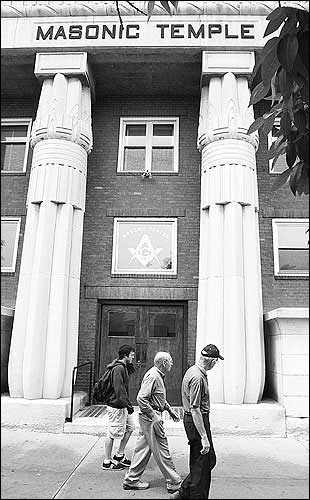
The Masonic Temple at 10th and Massachusetts streets is pictured in this file photo.
Built in 1910, the building is historic and protected by a variety of codes. That status has made it a difficult building to redevelop ever since the Lawrence-area Freemasons decided to vacate and sell the building in 2003 amid declining membership in the fraternal organization.
Now, a Lawrence businessman has bought the building and is proposing to convert the interior of the building into a series of apartments. The historic preservation requirements, however, will make that an unusual task too. The plans filed with Lawrence City Hall call for four apartment units with a total of 28 bedrooms.
One apartment unit would have nine bedrooms and its living room would be the auditorium area that includes a huge organ.
“It would have one of the nicest living rooms in all of downtown Lawrence,” local attorney Patrick Watkins, who is representing the owner of the building, said with a laugh.
That is one way to sell it. But, on that point, how do you sell — or more accurately rent — a nine-bedroom apartment? Watkins said the ownership group is still keeping its options open, but the idea of congregate living is a real possibility. Congregate living most often means where a tenant has a private bedroom but shares common spaces like living rooms and kitchens with other tenants in the building. The arrangement has become a more common use for large, old homes in the Oread neighborhood next to the KU campus.
Students are the most common tenants of congregate living spaces in Lawrence, but there could be other types of tenants interested in that type of living arrangement, especially given the building’s location in the center of downtown’s main entertainment district.
“We know that student housing can work in downtown,” Watkins said, noting that several buildings in the district have student apartments on their upper floors, “but we are not trying to limit the users.”
The historic preservation requirements are what’s driving the odd layout of the building. The project intends to use historic tax credits, and that program discourages applicants from making large changes to the layout of historic buildings. Thus, chopping the auditorium into smaller rooms could be problematic.
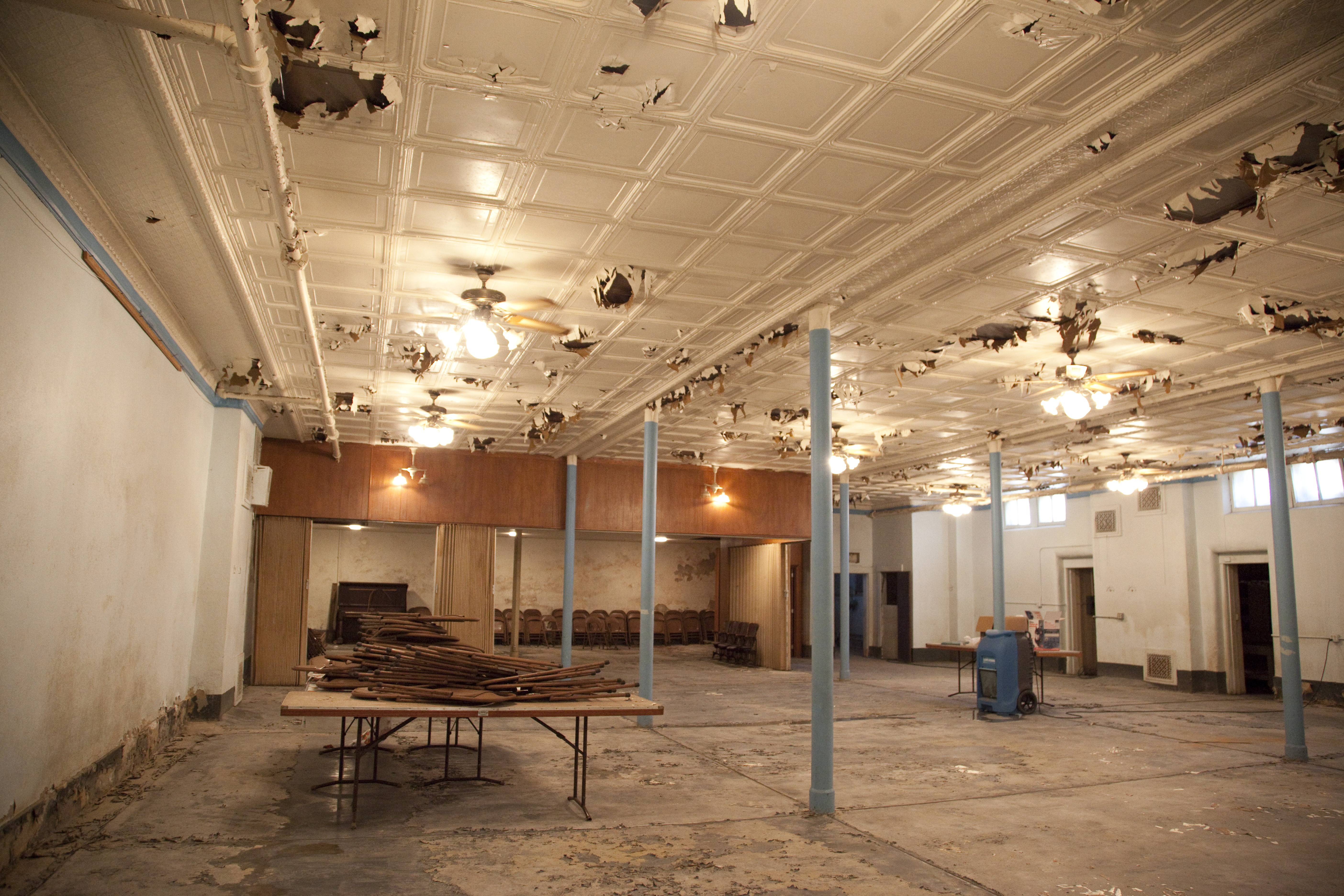
photo by: Nick Krug
The lower level of the Masonic Temple building in downtown Lawrence is pictured in this 2011 file photo.
The basement level of the building also has some of the same issues. Plans call for the basement level to house an eight-bedroom apartment. The basement level historically was the building’s reception hall. That is where you will find the original kitchen, which indeed extends underneath the sidewalk on 10th Street, according to a 2003 Journal-World article about the building.
The remaining 11 bedrooms would be spread between two other apartment units. One apartment would be a three-story unit that occupies the western portion of the building. The fourth apartment would be located, partially, in an attic area that currently is unfinished.
Plans also call for the exterior of the building to have some windows added. The general architecture style of the building, though, will most certainly remain Egyptian Revival. Watkins said research indicates the building may be the only Egyptian Revival-style building in Kansas.
A Journal-World article written in 2003 when the Freemasons were moving out the building didn’t include that detail, but it did provide several other facts about the building. According to that article, the building’s auditorium seats 275 people and includes a balcony. It also has a grand organ. Watkins told me the basic structure and equipment of the organ will remain, but it will not be a functioning instrument.
The 2003 article also noted that the basement level is grand in its own way. The dining room measured 55 feet wide and was a half-block long.
I also once received a tour of the building by the then-owner of the facility, local businessman Doug Compton. One of the fun facts that he pointed out to me was the large number of bank-like safes that were in the building. With popular culture having lots of odd — and inaccurate — information about Freemasons, the large number of safes made you wonder what was going on in this building that it needed so many safes.
Compton, though, told me that when he purchased the building, he also got some documents associated with the history of the building. One of them explained the safes. The Freemasons took out a loan from J.B. Watkins, the most prominent banker of the day, to build the elaborate building. According to Compton’s account of the document — I never saw it — Watkins made it a condition of the loan that the Freemasons install a certain number of safes in the building. The reason: Watkins had some worry that the Freemasons may default on the rather large loan. If so, the building could make a nice bank — as long it had safes.
Compton owned the building for a couple of decades, and multiple redevelopment projects have been discussed but never completed. The idea of it serving as a banquet and catering hall perhaps advanced more than any of the others, but it too never got to the finish line. I believe the last time the building was occupied was when Compton leased it temporarily to a haunted house operator during Halloween season in 2021.
But now, Compton no longer owns the building. That’s the other significant development with this latest proposal. Even though the apartment project will require significant levels of approval from city and state officials, the proposed developer has already purchased the property, Watkins (Pat, not J.B.) told me.
A group led by Lawrence businessman Robert Wilson of Beckmeisters, LLC, has purchased the building, Watkins said. Beckmeisters is better known as a successful developer of senior living communities and memory care centers in Lawrence. But Wilson also is an expert in historic tax credits and has a real passion for historic preservation, Watkins said.
Watkins said a change in state law that allows for projects of this nature to receive up to 40% in historic preservation tax credits — the cap once was 25% — has opened a window of opportunity for the building’s restoration.
“This really is a historic preservation project more than anything else,” Watkins said.
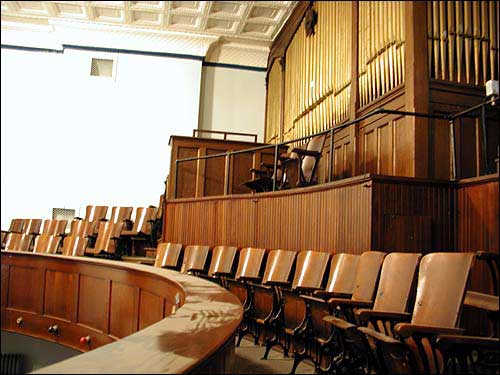
A shot of the former Masonic Temple’s balcony, pictured in 2003, reveals the massive
pipe organ along the back wall.
The project has hired Lawrence-based architect Stan Hernly, who specializes in historic preservation work. The city’s Historic Resources Commission will get its first look at the project this week, but Watkins said the developers are anticipating multiple reviews.
Eventually, the project will end up before the Lawrence City Commission because the developers will seek some assistance. Watkins said developers likely will seek an exemption from paying sales tax on the building materials needed for the project, and also would seek industrial revenue bond financing that would give the project some property tax breaks.
Watkins said details on those items are still to be developed, but he said he’s confident the development team will have a compelling case to make for community support because the building truly is historic and unique in the community.
“You don’t always get the chance to save these cornerstones of downtown inventory, but things have lined up well for this,” Watkins said. “We are taking a shot. It is a big risk, but it is a great opportunity to save what is otherwise a building that has been neglected for a couple of decades.”
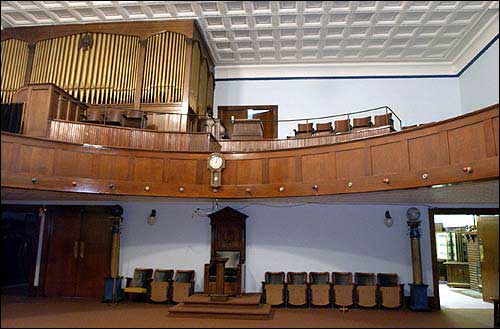
The second floor of the Masonic Temple has balcony seating over the
hall below. An additional meeting room is also on the second floor,
through the doors visible at top center, as shown in this 2003 file photo.
Town Talk column
Affordable apartment project in East Lawrence that escaped funding clawback shows new sign of progress
KC-area dealer Cable Dahmer buys Lawrence’s longtime Dale Willey Chevrolet and GMC dealership
Introducing a new writer for the Journal-World’s Town Talk feature
Bad television was a big part of the creation of Town Talk. While some of these posts made about as much sense as ...