Lecompton will be full of Lincolns — the president, not the car — on Saturday; national association to visit historic sites
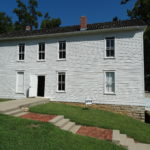
photo by: Journal-World File
Constitution Hall in Lecompton is the site of an early state constitutional convention where delegates drafted a pro-slavery form of government for Kansas. It was narrowly rejected by Congress amid a political battle that eventually propelled Abraham Lincoln to the presidency and sparked the Civil War.
At first blush, having a couple dozen Abraham Lincoln re-enactors attend a play sounds a bit risky, but it really won’t be. It won’t be that fateful and tragic play at Ford’s Theatre, but it will be unique. And it also will be nearby, in Lecompton.
Approximately 30 Abraham Lincoln re-enactors — plus some re-enactors of his wife, Mary Todd Lincoln — will be in the small, northwest Douglas County community on Saturday. They’ll be in full dress, walking up and down the streets, touring Lecompton’s Civil War-era historic sites and watching a play about the Bleeding Kansas period performed by area actors.
But why Lecompton? Well, one answer is because Lincoln was maybe in Lecompton in 1859, as he campaigned for president. In all honesty (a trait Abe is rumored to have valued), it is not likely that Lincoln was in Lecompton that year. But it is known that Lincoln was in nearby Leavenworth in that year, and there was a time during that trip where his whereabouts are undocumented. Some speculate that he may have come to Lecompton secretly in an effort to meet and better understand the pro-slavery leaders who had made Lecompton their headquarters.
Again, the historical record doesn’t show evidence of such an 1859 visit, but the country’s largest organization of Lincoln re-enactors — the Association of Lincoln Presenters — is happy to visit Lecompton in 2022. The association is having its annual conference in Leavenworth, and the itinerary includes a day trip to Lecompton.
A trip to Lecompton makes perfect sense for people who are engrossed in Lincoln history. After all, it is not difficult to find reputable historians who contend Lincoln never would have become president if not for Lecompton.
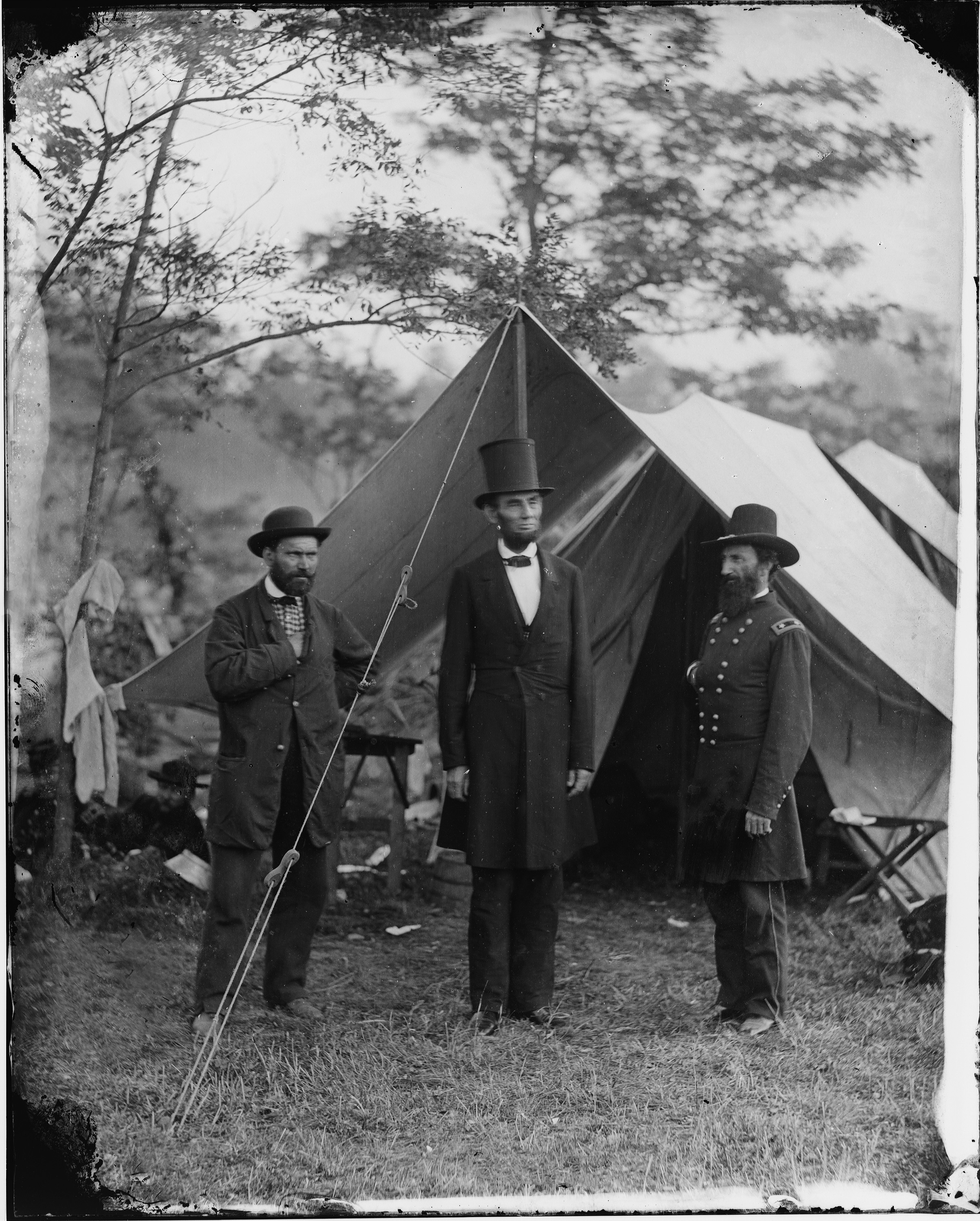
photo by: AP/Library of Congress
This photo credited to Alexander Gardner from 1862 at the Battle of Antietam, pictures Allan Pinkerton, Abraham Lincoln and John McClernand. The stiff poses were necessary because of the long exposures of several seconds. Note how Lincoln’s face is blurred from his head moving during the exposure.
That’s the thing about Lecompton, the smallest town in Douglas County: You can persuasively argue it had the largest impact of any area community on American history. The eyes of the nation were on Lecompton in the days leading up to the Civil War.
A group of pro-slavery leaders sent to Congress what is known as the Lecompton Constitution, which would have admitted Kansas into the Union as a slave state, thus shifting the balance of national power toward the pro-slavery side. The pro-slavery constitution was never enacted, but it did win approval in the U.S. Senate and became a political lightning rod across the country.
The Lecompton Constitution was so divisive that the Democratic Party could not agree on a single candidate for president in 1860. Instead, the Democrats had a pro-slavery Southern candidate and a Northern candidate who sought to limit slavery. Throw in a candidate for the Constitutional Union Party, and Lincoln, a Republican, was running against three other candidates in the 1860 race. It was that highly divided field that allowed Lincoln to win the 1860 election with less than 40% of the popular vote.
Without the Lecompton Constitution, some historians argue the field would not have been so divided, and Lincoln’s chances of winning the election would have been greatly diminished. That, of course, is a matter of speculation, but what is clear is that Lincoln definitely knew of the little town of Lecompton. The Lecompton Constituion was mentioned more than 50 times in the famed Lincoln-Douglas debates between Lincoln and Democratic Sen. Stephen A. Douglas (the Northern Democratic candidate), according to longtime Lecompton resident and historian Paul Bahnmaier.
Now the town, which promotes itself as a great destination for tourists interested in the Bleeding Kansas period of history, might be in a position to get repaid, in a way.
“We are hoping to get lots of pictures of all these Lincolns walking down the streets of Lecompton,” Bahnmaier said.
The community also may get some international attention. Bahnmaier said the association has notified him that a journalist from the Netherlands and another from the international news organization Reuters are expected to be with the group when they come to Lecompton.
Bahnmaier said he also would be happy for area residents to show up on Saturday to see and interact with the Lincoln re-enactors. Bahnmaier said members of the public could watch the Bleeding Kansas play at 10 a.m. at the Territorial Capital Museum, as long as there is seating available. He said the same was true of an event at Constitution Hall that will feature an expert on Douglas. While the Lincoln re-enactors will have a private lunch at a Lecompton church, Bahnmaier said he expects they’ll be pretty approachable at other points in the day. The group is expected to be in town from about 10 a.m. to 2 p.m., Bahnmaier said.
After all, the association serves as a place for Lincoln re-enactors who like to make public presentations about Lincoln. The website shows photos of everything from typical schoolhouse Lincoln talks to Lincoln re-enactors throwing out the first pitch at a baseball game.
As the website says, when it comes to helping people better understand and appreciate Abraham Lincoln, the association is “ready, willing and Abe L.”
Town Talk column
Lawrence City Commission to weigh whether Costco should be included in STAR bond district
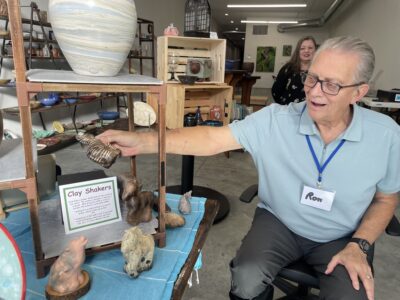
Thanks to a nonprofit that pairs artists and landlords, the Lawrence Potters’ Guild gets a temporary space of its own

After a brief bump during the World Cup, Lawrence is back to collecting less in sales taxes than it did a year ago

To make home construction easier and faster, Lawrence plans to experiment with a menu of pre-approved designs
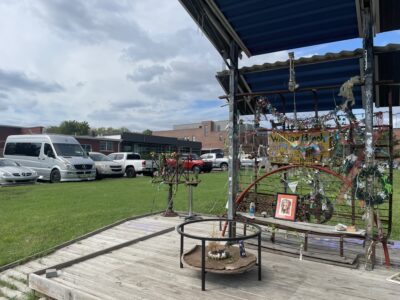
Affordable apartment project in East Lawrence that escaped funding clawback shows new sign of progress