

Meet the candidates running in primaries for Kansas State Representative across Douglas County

photo by: Kim Callahan/Journal-World
The Douglas County elections office at 711 W. 23rd St. is pictured Monday, Oct. 31, 2022.
Every seat in the Kansas House of Representatives will be on the ballot during the 2026 fall elections, but a handful of seats that represent Douglas County include a primary challenge.
There are four primary elections for seats that represent portions of Douglas County. Three of those races — in District 5, District 42 and District 47 — are primaries for the Republican nomination, with the winner advancing to the general election to take on a Democratic candidate.
District 10, which includes the southern portion of Lawrence, features a primary race for the Democratic nomination; however, there is no Republican candidate who has filed to run for the seat.
Advance voting for the primary has already begun in Lawrence at the Douglas County Elections Office, 711 W. 23rd St. Eudora, Baldwin City and Lecompton’s in-person early voting locations will open July 25. More information about polling locations, dates and times is available on the Douglas County elections website, dgcoks.gov/county-clerk/voting-and-elections. The last day to advance vote will be Monday, Aug. 3.
The primary election day will be on Tuesday, Aug. 4, with polls open from 7:00 a.m. to 7:00 p.m.
The Lawrence Journal-World reached out to all the candidates facing primary elections for their stances on a variety of issues, including property taxes, data centers and off-cycle redistricting. See the candidates’ responses below.
District 5
Courtney Sappington
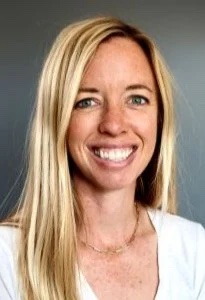
photo by: Screenshot
Courtney Sappington
Sappington, the incumbent in the race, has a professional background in supply chain and logistics, but has worked part-time for the last several years as she is raising her children in rural Douglas County.
To address rising property taxes, Sappington said she supported legislation that instituted a cap on property tax revenue increases. If a municipality decided to exceed a certain threshold, the legislation would allow for citizens to create a protest petition to give “citizens a voice in that budgeting process,” according to Sappington.
While Sappington said the state can’t control some of the factors around rising inflation like currency in circulation or interest rates, she said the size of the state government “outpaces” the population that supports it which has an impact on Kansans. She said legislators should focus on “scaling down” the size of the government to reduce the tax burden.
Sappington is against providing data centers — especially hyperscale projects — special tax incentives and does not want eminent domain to be used to help construct them. Sappington said she wants to see independent studies about how the projects could impact the local environment and quality of life, and if the projects don’t benefit Kansans, “they are not welcome” in her view.
Sappington said she was supportive of last year’s redistricting efforts, but she does not think those conversations will extend into next year. More broadly speaking, Sappington believes Kansas needs to “bring revitalization and growth” to the economy and population, and she will help those aims by reducing the cost and difficulty of operating a business, reducing regulation, and attracting investment.
Courtney Crawford
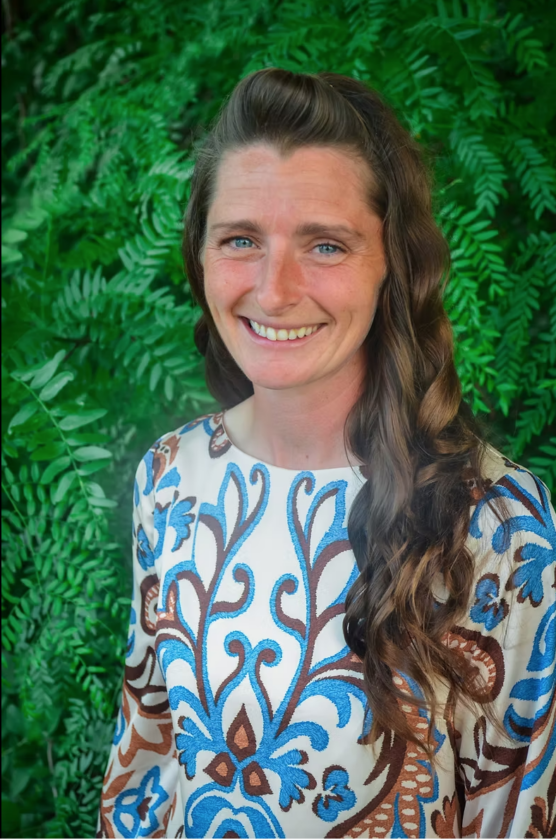
photo by: Screenshot
Courtney L Crawford
Although Crawford was a nurse for 10 years, she said she is now raising her and her husband’s three children and growing their farm in Miami County.
Crawford said the sharp rise in property appraisals and growing local government budgets placed an “unsustainable tax burden” on homeowners, farmers and business-owners across Kansas. One potential solution Crawford supported was Senate Bill 488, which would have phased a shift away from property taxes to a system more focused on sales tax. While she supported that legislation, which died in committee this year, Crawford does not see it as a “long-term solution,” and she wants to work to streamline the government and eliminate “waste and duplication.”
In the face of inflation, Crawford said she wants to cut unnecessary regulations and red tape to lower costs for farmers, businesses and retailers because those savings will reach the consumers. She also said the state government should “lead by example” for fiscal discipline, and avoid new spending.
Crawford does not support the development of data center projects, saying they typically create few permanent jobs and consume enormous amounts of electricity and water — which can raise utility rates for “everyone else.” She wants to protect the “rural way of life” from large-scale developments that “prioritize corporate interests over our communities.”
Crawford said it was “unfortunate” the legislature could not secure a super majority last year to call a special session on redistricting.
Overall, Crawford said she hopes to be able to lower the cost of living, saying she would fight for meaningful property tax reform and reject one-sided tax incentives given to large corporations.
Jon Chitwood
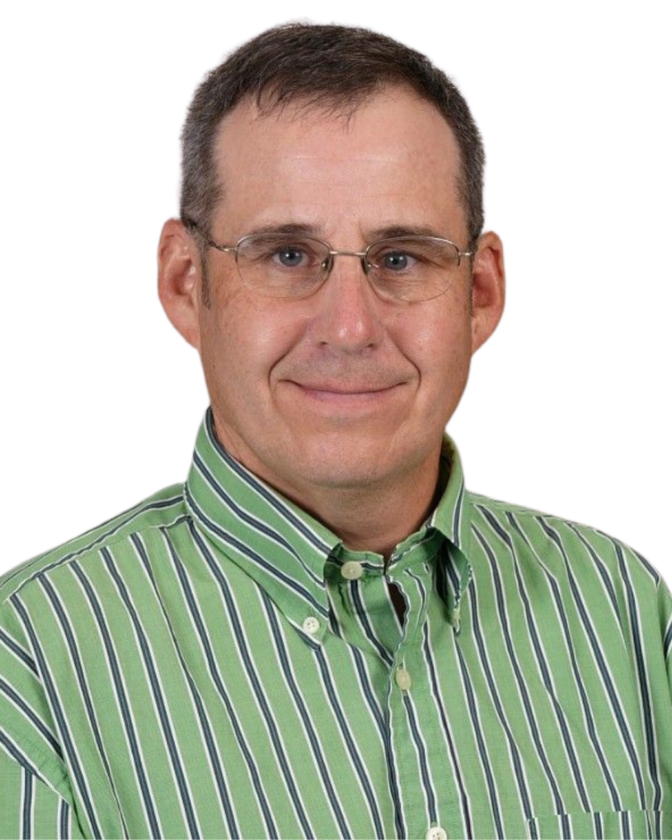
photo by: Screenshot
Jon Chitwood
Chitwood did not provide responses to the Journal-World’s questionnaire ahead of the deadline. Chitwood, currently a school board member for the Spring Hill school district, has been farming full-time since 2012, according to his campaign website.
Chitwood describes his most important issues as creating career-focused education, giving more local control to communities, stabilizing school funding with a better funding formula and protecting family farms by creating new markets.
Chitwood said one of his priorities would be to create a teacher housing program. Chitwood said the authority for local school districts to create “teacherages” already exists in the state, and he thinks it is a plan that can support local jobs and create better communities.
District 10
Suzanne Wikle

photo by: Submitted
Suzanne Wikle
Wikle has represented the district since January 2025. Prior to her time in the Legislature, Wikle worked to advance policies for improving access to healthcare as part of Kansas’ leading children’s advocacy organization.
Wikle said one reason property taxes are so high is because over the past 15-20 years, the Republican-led legislature eliminated state fund transfers to local governments and placed limits on how municipalities can raise funds. Wikle said she would work to lower property taxes in two ways: restoring general fund transfers to local governments and fully funding special education programs, which leads local districts to raise taxes to “backfill” the costs that should come from the state.
Wikle said the legislature must raise the state’s minimum wage to help tackle affordability issues. Healthcare costs also are a key issue facing Kansans. Some ways to tackle those costs are expanding Medicaid in the state and capping the cost of prescription drugs like insulin.
Wikle said she supported local efforts in Douglas County and Lawrence to impose a moratorium against data centers. Although Wikle voted to approve issuing incentives for projects when the legislation came up in 2025, she does not support incentives now. Wikle said she had “no record” of hearing from constituents regarding concerns over data centers at the time of the vote, noting people are now “much more engaged on the issue.”
Wikle said she does not support off-cycle redistricting, saying it is “another example of the attack on democracy by Republicans.” Wikle said the legislature should focus more on making it easier for people to cast ballots.
TJ Campsey

photo by: Contributed
TJ Campsey, a local activist and Communist Party member, filed for election for the Kansas House of Representatives Wednesday, April 22, 2026.
Campsey has worked for Free State Brewing Company since 2009, working from dishwasher to his current position as a brewer. Campsey, who described himself as a communist and is a member of CPUSA, has been an organizer and activist for more than 20 years.
Campsey said the property tax burden has shifted from “billionaires and developers to the working class” because of different statewide policies. He said the state needs a more progressive income tax structure and only use tax incentives when projects have a clear public benefit.
Campsey said housing costs and healthcare costs are two of the biggest expensive for working class people. To reduce housing costs, Campsey said he would propose a public housing trust that would buy abandoned residential properties. Those properties would be administered by a state board to lease low cost rentals. On healthcare costs, Campsey said he would fight for KanCare for all, saying the state needs a single payer plan to lower prices for Kansans.
Campsey said the speed that data centers are being built should “give (people) pause,” especially those that work to boost artificial intelligence companies. He said building new centers needs to be slowed down to give regulations a chance to “get ahead” of the environmental and social consequences caused by AI.
The recent push for redistricting is part of a larger attack on democratic rights, Campsey said. A major plank in his platform is a “Democratic Bill of Rights,” and Campsey said one measure would include creating a nonpartisan redistricting commission that draws the districts only once a decade, immediately after the census.
District 42
Lance Neelly

photo by: Journal-World File Photo
Lance Neelly
Neelly, the incumbent, did not provide responses to the Journal-World’s questionnaire. According to his Facebook page, he was recently endorsed by the Kansas State Rifle Association, the Kansas Farm Bureau’s Political Action Committee and the Kansans for Life Political Action Committee.
Neelly recently posted a video on his page that said he would continue to fight for lower taxes and to place restraints on how much property taxes could be raised.
Mike Stieben

photo by: Contributed
Mike Stieben
Stieben, who is currently a commissioner for Leavenworth County, worked for BNSF railroad for over 3 years as a locomotive engineer before he retired this year.
Stieben said he has testified in front of the Kansas Legislature several times to set a cap on property taxes and supports those caps as a first step to reforming the current property tax system. He also supports a freeze on property taxes for seniors who are 65 and older.
Stieben said to help reduce inflationary costs, the state must work to improve the business climate in Kansas through a reform of the overall tax structure. He said “systemic tax systems” that make it impossible for businesses to plan on a five-year cycle should be eliminated as well. Those moves can bring in “real industries and long-term high pay jobs.”
Stieben said he is against giving data center developments tax incentives. In the case of a recent plan to build a data center in Tonganoxie, Stieben said he was against that development, but he believes each community should be able to decide whether or not they want to build a project.
Stieben said he believes off-cycle redistricting is inappropriate “under most circumstances.” Stieben also noted he wants to fully fund special education in public schools, and the state should prioritize making Kansas public schools “the best in the nation.” He also said he would work to preserve the state’s agricultural economy, especially small farming communities.
District 47
Steven Scott
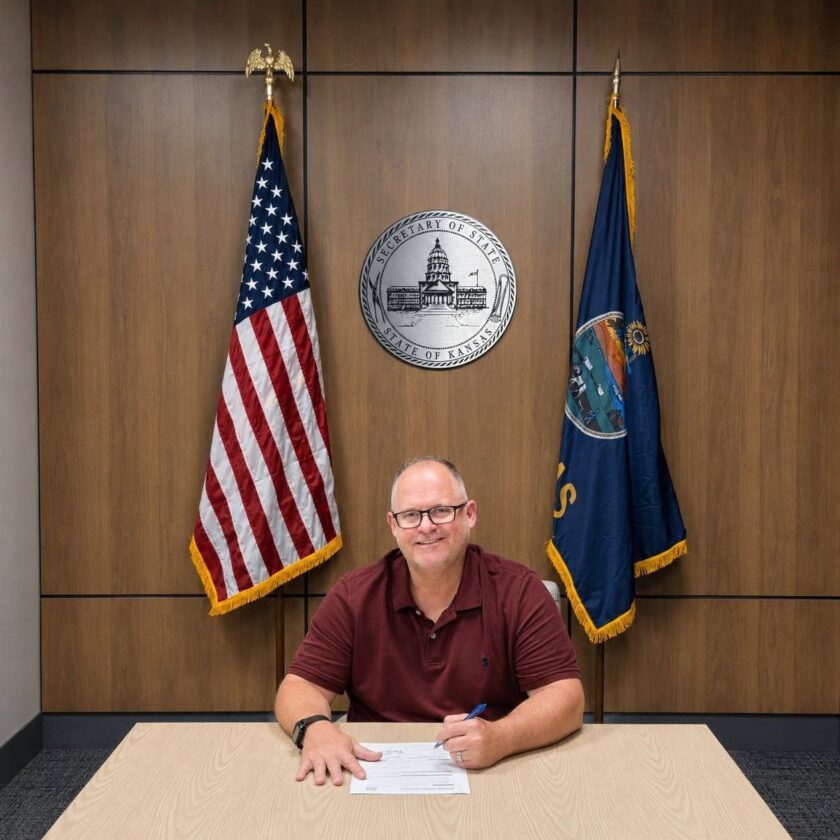
photo by: Screenshot
Steven Scott
After graduating high school, Scott said he enlisted in the military and retired from the Kansas Army National Guard after more than 24 years of active service. After his service, Scott began working for the BNSF in multiple states before putting down roots in Ozawkie.
Scott said reducing the property tax burden centers on three areas: reducing the state’s spending by improving efficiency and eliminating wasteful spending; eliminating the statewide 20-mil property tax levy that supports public education and putting in a “modest” sales tax increase and legalizing and regulating marijuana, dedicating a “significant portion” of the tax revenue to property tax relief.
Scott said some of the results of inflation come from federal policies, but in Kansas, he said actions to take would be lowering property taxes, keeping government spending under control and cutting unnecessary regulations that increase costs for businesses and customers.
Scott said he is still “gathering information” about the pros and cons surrounding data centers. He believes communities should be the ones that make decisions, but if he was elected, he would carefully review proposed incentives to ensure a “positive return” for Kansas taxpayers and costs don’t fall to local residents.
Scott does not support off-cycle redistricting and believes lines should only be redrawn after the census to make decisions “based on facts rather than politics.” Changing district boundaries could create confusion for voters, according to Scott. He thinks the current system of drawing the maps after the census “provides stability, transparency and confidence” that elections are fair.
Paula Newell Ellis
Newell Ellis did not provide responses to the Journal-World’s questionnaire.
Newell Ellis, from Meriden, does not appear to have a public campaign website or Facebook page outlining her political platform. She filed to run for election on Feb. 9, 2026, according to Douglas County records.
Christopher W. Feuerborn

photo by: Screenshot/City of Ozawkie
Christopher Feuerborn
Feuerborn did not provide responses to the Journal-World’s questionnaire.
According to his campaign’s Facebook page, Feuerborn had served on the city council in Ozawkie for six years. He described himself as a veteran and where he “flew Black Hawk helicopters in a medical evacuation unit” servicing in Afghanistan.
Feuerborn said he believes in conservative principles of “fiscal responsibility, supporting law enforcement, defending constitutional rights, encouraging economic growth and ensuring government remains accountable to the people.”
State Government
What to know about amendment seeking to restrict noncitizen voting in Kansas
2 Douglas County District Court judges up for retention on November ballot
General Election Voter’s Guide
Two state senators vying to be Kansas governor
14 candidates for Kansas House of Representatives will appear across Douglas County ballots in November. See who they are.
Three candidates vying to become state’s chief election officer
There will be a new Secretary of State in Kansas after the incumbent decided not seek re-election to the post that ...