Judge rejects teen shooter’s self-defense claim in The Hawk case, orders him to stand trial on murder and other charges
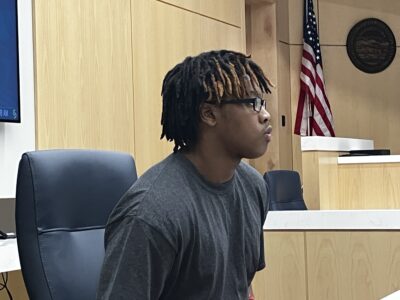
photo by: Kim Callahan/Journal-World
Daitron Daniels Strickland is pictured Thursday, Sept. 10, 2026, in Douglas County District Court.
Updated at 5:18 p.m. Thursday, Sept. 10, 2026
A Douglas County judge on Thursday ordered the murder defendant in January’s fatal shooting at The Hawk to stand trial, denying his motion for immunity from prosecution based on self-defense.
Judge Amy Hanley said that no evidence supported Daitron Daniels Strickland’s claim that he had acted in self-defense when he shot two other teens, one fatally.
Under Kansas law, a person may justifiably use lethal force against another when he subjectively believes such force is necessary to protect himself and his belief is also objectively reasonable under the same circumstances. Hanley, citing video footage and the defendant’s own statements after he shot the teens, found that neither criterion had been met.
Daniels Strickland, 19, of Shawnee, faces charges of first-degree murder, two counts of attempted first-degree murder, criminal possession of a firearm by a felon and misdemeanor battery, according to an amended complaint filed by the Douglas County District Attorney’s Office.
He is accused of fatally shooting Aiden Sullivan Knowles, 18, and critically wounding Brady Clark, 16, on Jan. 17 outside the popular college bar on Ohio Street.
Daniels Strickland’s attorney claimed that he should be immune from prosecution because he was reacting in self-defense when he heard “multiple gunshots in close proximity to him.”
Those gunshots came from the firearm of a friend of his, Caiden Clem – another teen he had arrived at the bar with and who is facing separate, less serious aggravated assault charges over the incident.
Clem fired some shots into the air as he left The Hawk and walked across the street following a disturbance at the bar, during which he had reportedly held a gun to a staff member’s head.
Hearing Clem’s gunshots entitled a “scared” Daniels Strickland to pull his own handgun out and start shooting, his attorney, Razmi Tahirkheli, argued. Tahirkheli said that his client’s “environment growing up” had played a crucial role in his actions – an environment where he had seen others, including his brother, get shot.
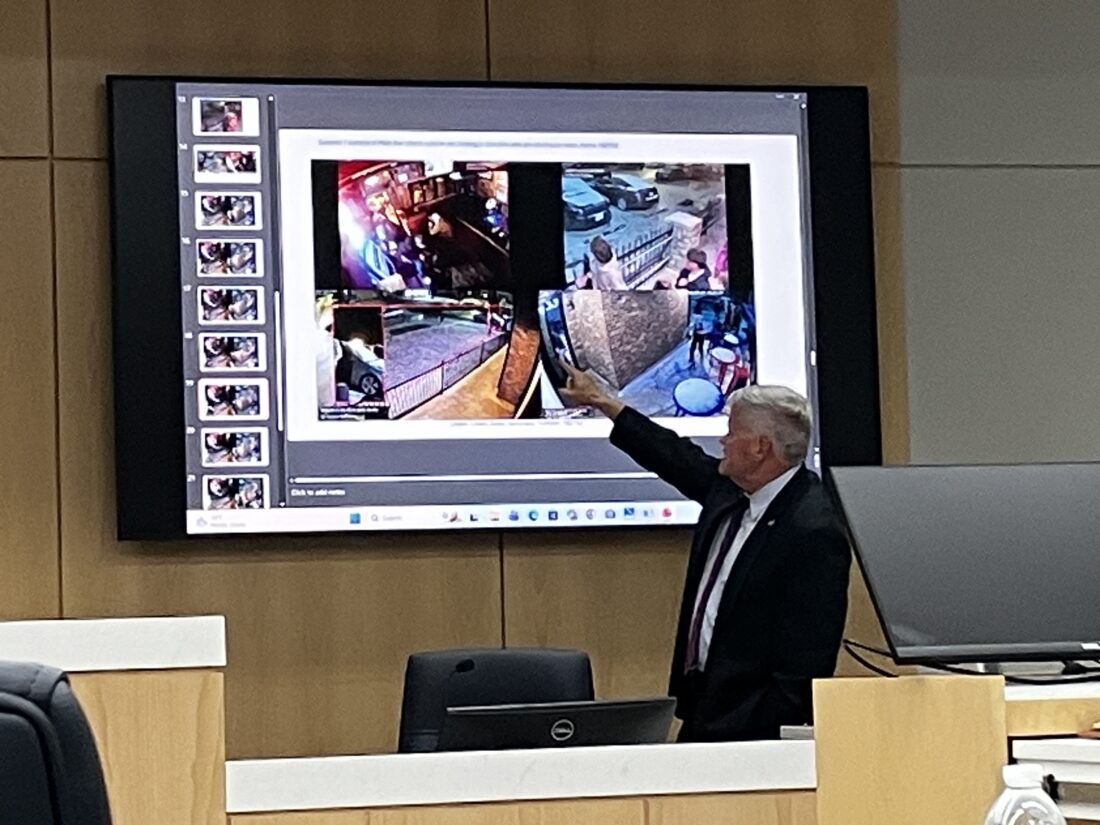
photo by: Kim Callahan/Journal-World
Detective M.T. Brown testifies on Thursday, Sept. 10, 2026, in Douglas County District Court.
On Thursday, Tahirkheli laboriously walked Detective M.T. Brown through a series of photographs and videos Brown had collected during the investigation, asking him what he was seeing in each frame and attempting to minimize his client’s role and to blame Clem as the instigator for “introducing a gun into the situation.”
Brown obliged Tahirkheli but said several times that the selected images Tahirkheli was showing him did not accurately reflect what had occurred. He said Tahirkheli had removed context by removing certain images.
“You’ve skipped quite a few sequential images,” Brown protested. “It looks like you edited them for what you want to show.”
In his closing argument to Hanley, Tahirkheli indicated that the shooting had been “very unfortunate” but that “anyone” would have reacted the way his client had under the same circumstances.
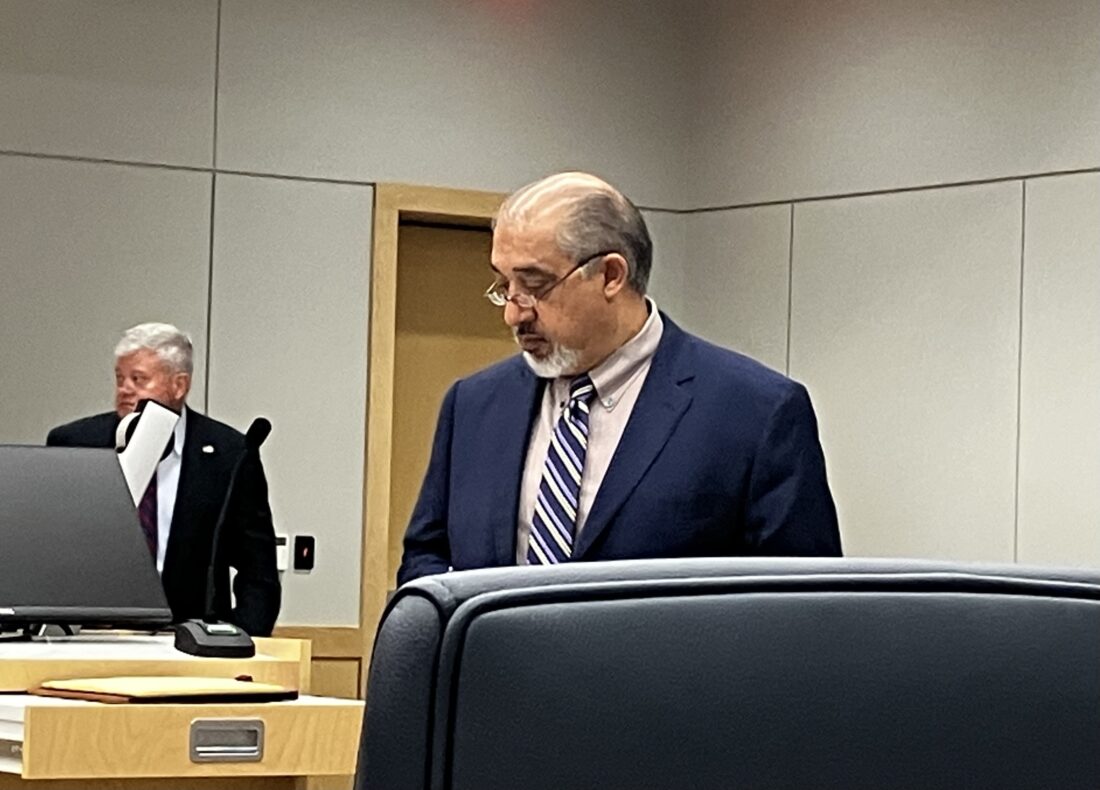
photo by: Kim Callahan/Journal-World
Defense attorney Razmi Tahirkheli is pictured Thursday, Sept. 10, 2026, in Douglas County District Court. Detective M.T. Brown is at left.
He also argued that his client should not be ordered to stand trial on any charges involving premeditation because the shootings had occurred in a “matter of seconds,” an argument that Hanley rejected along with Tahirkheli’s other claims.
Back in February, prosecutor Eve Kemple had argued that no basis existed for Daniels Strickland to claim immunity from prosecution, citing video and witness accounts in the case. On Thursday she renewed those arguments, highlighting Daniels Strickland’s own statements to police in which he didn’t report feeling scared for his life but, on the contrary, indicated that he was in charge and knew how to “handle” the situation.
“Yeah, I was shooting,” he reportedly told police. “I don’t play that bullshit.”
Hanley agreed with the state, saying that no evidence was presented that Daniels Strickland, who did not testify Thursday, honestly believed that use of lethal force was necessary under the circumstances.
“There is nothing in the record that supports that,” Hanley said. Nor would a reasonable person believe that the use of force was necessary, she said.
Daniels Strickland is being held on a $1 million bond.
Judge Hanley cautioned the crowd in the courtroom Thursday to not expect a quick resolution now that the long-delayed immunity decision has been made. Cases like this “take a considerable amount of time,” she said.
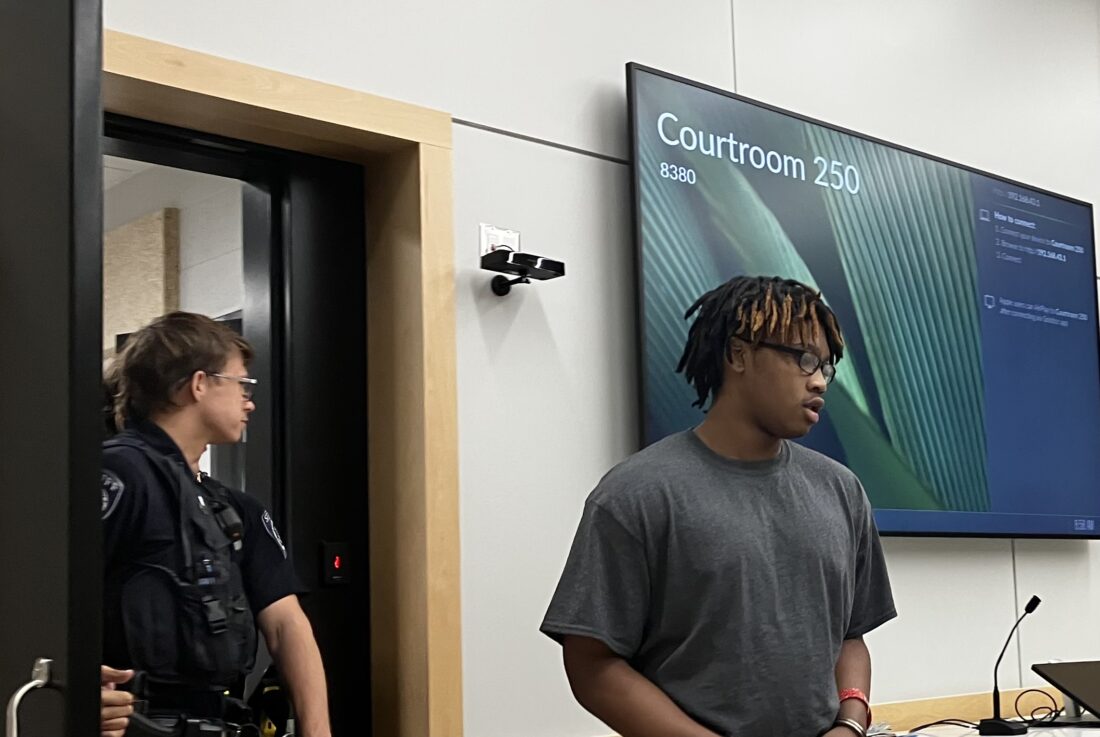
photo by: Kim Callahan/Journal-World
Daitron Daniels Strickland enters the courtroom Thursday, Sept. 10, 2026.
Public Safety
Man accused of selling wristbands to enable minors to drink at time of Hawk shootings is sentenced to probation

36-year-old Lawrence man confessed to raping 13-year-old girl, affidavit says
Evacuation drill planned Tuesday at Lawrence City Hall
Douglas County’s newest pro tem judge sworn in

Woman has renewed hope for justice 17 years after reporting rape in Lawrence