DA says ‘fatal mistake’ in predecessor’s office led to 3rd DUI not being charged; the next year, the driver allegedly killed a local actor
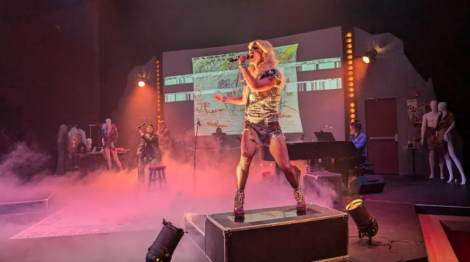
photo by: Theatre Lawrence
Louise ImMasche as Hedwig in "Hedwig and the Angry Inch."
If Eliseo Munoz had been charged with a third DUI back in the spring of 2024, when he was reportedly driving with three times the legal limit of alcohol in his bloodstream, local actor Louise ImMasche might be alive today.
The failure to pursue the DUI charge was a “fatal mistake” by the previous administration in the Douglas County District Attorney’s Office, according to the current DA, Dakota Loomis.
Loomis’ explanation came Wednesday in response to a Journal-World question about why Munoz wasn’t charged for a March 7, 2024, DUI incident until one year and seven months later, on Oct. 27, 2025 — just three days after ImMasche, 41, died in a head-on collision on the South Lawrence Trafficway.
In that fatal crash, The Kansas Highway Patrol reported that Munoz, going westbound in a Chevrolet Tahoe, crossed the center line and struck ImMasche’s eastbound Kia Forte head on. ImMasche, a popular performer, had been driving home after a production of “The Rocky Horror Show” at Theatre Lawrence.
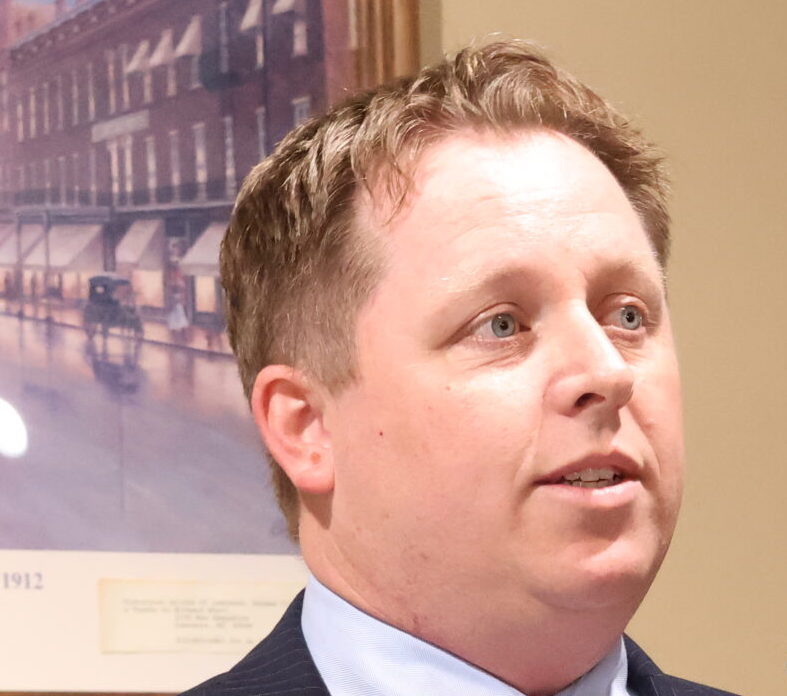
photo by: Journal-World File
Douglas County District Attorney Dakota Loomis
Loomis, who took office in January of 2025, said that a March 2024 arrest affidavit regarding a third DUI was reviewed by an attorney in then-DA Suzanne Valdez’s office. That attorney, in a written memo, requested additional follow-up from the Lawrence Police Department — such as what kind of sobriety tests were given, whether blood was drawn and whether a passenger in the vehicle was hurt in the accident — but in the meantime “declined the case,” which Loomis said had the effect of the computer system closing the case instead of leaving it open to await the requested follow-up.
When the police submitted additional documents a month later, on April 19, 2024, there was no case pending for charging review, Loomis said, and “therefore the prior administration took no action.”
On the night that ImMasche was killed, Oct. 24, 2025, Loomis said he went to “the scene of the crash that Mr. Munoz caused” and then looked up his name in the DA’s office system.
“It was then that I discovered the prior administration’s fatal mistake,” he said. “Our office immediately filed a complaint against Mr. Munoz on October 27, 2025, based upon the affidavit and reports the prior administration received in April of 2024.”
The charging document indicates that Munoz’s blood alcohol level was 0.24, which is three times the legal limit. It also alleges that he was driving while suspended. In charging the third or subsequent DUI, it lists a previous DUI conviction from November 2021 and one from December 2023, both in Lawrence.
Munoz, 24, is being held on a bond of $750,000 in the murder case and $7,500 in the DUI case. Prosecutor David Melton told a judge in February that Munoz posed “an extreme risk to the public” if he were to be released.
Munoz was critically injured in the wreck that killed ImMasche and was hospitalized that night. When he later appeared in court via video from the jail, he was seen using a wheelchair, though the extent of his injuries wasn’t clear. He pleaded with a judge to let him out of custody so that he could continue his physical rehabilitation, but the judge said no.
Munoz has not been charged with DUI in the ImMasche case. Instead, he faces one count of second-degree murder, one count of reckless driving and one count of driving with a suspended or revoked license.
Munoz was supposed to have a preliminary hearing last week, at which Judge Stacey Donovan would have heard evidence and decided whether probable cause existed to order Munoz to stand trial. That hearing has been delayed by months, however, at the request of Munoz’s defense attorney, Michael Clarke.
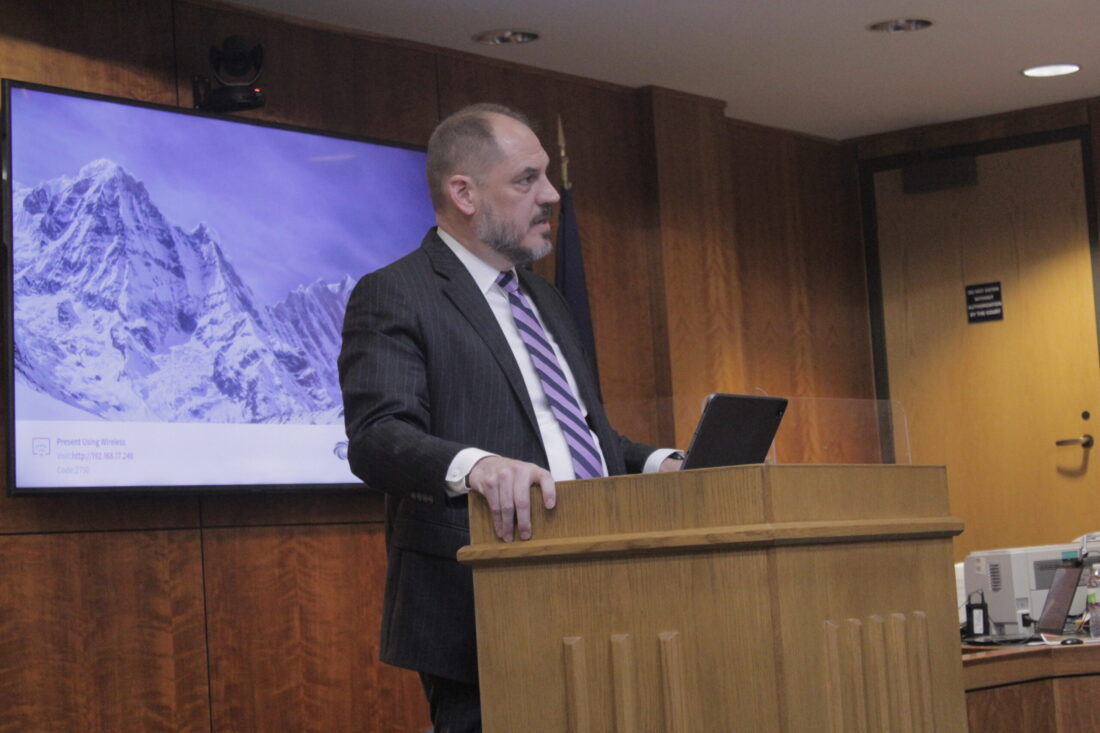
photo by: Journal-World File
Defense attorney Michael Clarke delivers his closing argument at a trial on May 5, 2022, in Douglas County District Court.
Clarke said in a motion that he required at least another 60 days to consult with an expert on “crash reconstruction, vehicle data event recorder analysis, and related forensic evidence.”
The state did not oppose the motion for a continuance, and the preliminary hearing, if it isn’t waived, will now be sometime later this year. Donovan has set a June 16 status conference, at which time a new date for a preliminary hearing will be selected.
Clarke successfully fought the release of Munoz’s arrest affidavit. He said that the public didn’t need to see the “granular” information in the affidavit but should be satisfied with the charging document, which lists nothing but general information such as charges, dates and the people involved.
If the public were to see the allegations in the affidavit, Clarke said, they might become prejudiced against Munoz ahead of his trial. Clarke specifically asked the court to black out words that Munoz is alleged to have said to police, toxicology details and information related to “technical evidentiary assertions,” which would presumably include information such as his vehicle’s speed. Rather than blacking out particulars, however, Donovan decided that no part of the affidavit could be seen by the public and she sealed the document in its entirety.
An arrest affidavit is a sworn document by police detailing why they believed they had probable cause to take a person into custody.
Last month, the state filed a notice that it plans to offer statements at trial that Munoz gave to law enforcement officers. If Munoz objects to those statements being admitted at trial, a hearing will be held to determine whether the statements are admissible.
Public Safety

36-year-old Lawrence man confessed to raping 13-year-old girl, affidavit says
Evacuation drill planned Tuesday at Lawrence City Hall
Douglas County’s newest pro tem judge sworn in

Woman has renewed hope for justice 17 years after reporting rape in Lawrence

Lawrence filmmaker explores program uniting incarcerated mothers and their children in new documentary