KU to lead national effort to address special education needs and tackle industry’s pressing concerns
University secures $3.6 million grant to prepare next generation of special education leaders
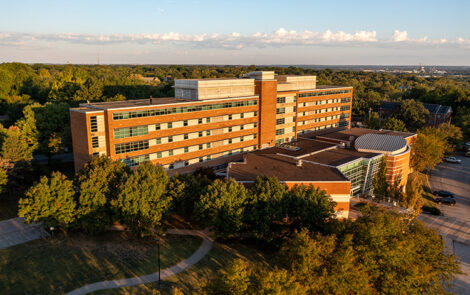
photo by: University of Kansas
Joseph R. Pearson Hall is home to the University of Kansas School of Education and Human Sciences.
The University of Kansas will lead a new national program that aims to provide leadership to the special education field, which is seeing far more teachers leaving it than entering it.
But the new project — which recently received a $3.6 million grant from the U.S. Department of Education — aims to provide something else to the industry: recognition.
“I think what gets lost often is the amount of really amazing teachers that are out there that are doing this job and are changing this world,” Lisa Dieker, professor of special education at KU and one of the leaders of the initiative, told the Journal-World on Friday.
That’s why she pursued the grant, which KU announced on Friday and which took over a year to secure.
“I am an optimist that society will continue to do right by our children,” Dieker said. “And part of doing right by our teachers is a systematic need for everyone to recognize the value of an amazing teacher.”
KU will lead the effort with two partner universities — the University of Kentucky and Howard University in Washington, D.C. — and together will launch Project ALIGNS, or the Advancing Leadership Through Interdisciplinary Graduate Networks in Special Education program.
The project’s goal is to prepare the next generation of leaders to advance policy, research and other services for individuals with disabilities.
“Project ALIGNS reflects our commitment to preparing scholars who can lead meaningful change in special education,” Dieker said in a university press release. “By bringing together nationally recognized expertise across universities and connecting scholars with leaders throughout the country, we are creating a powerful pathway for developing the next generation of faculty, researchers and systems leaders.”
One of the program’s top goals is to inspire the next generation of special education teachers to enter the profession, which is facing significant challenges. Dieker said the program can help reach about 2,000 new teachers who could then inspire the next generation of students to become teachers themselves.
Ultimately, the goal is to get over one of special education’s biggest hurdles: an acute teacher shortage. Dieker, who taught for 20 years at the University of Central Florida before moving to Kansas, said that shortage started more than 50 years ago. Now, with retirements on the rise, current numbers don’t paint a pretty picture either.
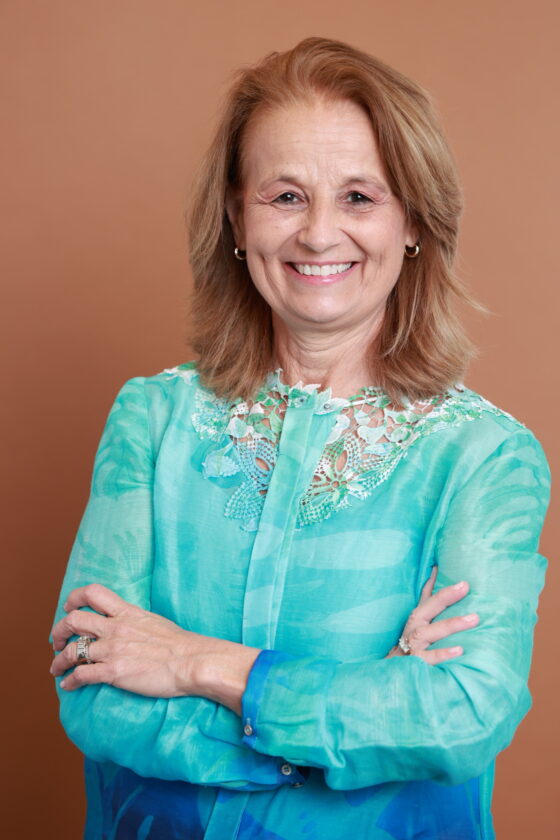
photo by: Lisa Dieker
Lisa Dieker, professor of special education at the University of Kansas.
Recent numbers show that in the 2024-2025 school year, nearly every state in the nation reported teacher shortages in special education, according to the Learning Policy Institute, a D.C.-based group that conducts research on education policy. That is largely consistent with findings by the U.S. Government Accountability Office, which in 2022 found that a nationwide shortage existed among special education teachers.
In Kansas, things are not looking better. During the 2020-2021 school year, nearly 1,500 of the 9,833 personnel employed during the previous school year did not return to a special education position, according to a 2025 report by the U.S. Commission on Civil Rights. The numbers represent a 15.1% attrition rate, which is about 30% higher than two years prior.
Meanwhile, the number of children who receive special education services under the federal Individuals with Disabilities Education Act continues to rise.
In 2013, 6.4 million public school students in the U.S. were served under IDEA. In 2023, that number increased to 7.5 million, or 15% of all public school students, according to the U.S. Department of Education. In Kansas, that figure is even higher, with nearly 17% of public school students being served under the federal program.
Dieker said there isn’t a system in place to help the public understand the teacher shortages more clearly. But some of the issues have been known publicly for decades: low pay, lack of recognition, burnout, financial instability, undefined roles and retirement, among others.
Addressing low pay, which is among the biggest issues, isn’t enough, Dieker said; teachers must be recognized. Just as society celebrates athletes and Olympians, it should celebrate teachers, too, she said.
KU, which is frequently ranked as the nation’s top graduate program in special education, will lead the project. Howard University, a historically Black university, has a Communication Sciences and Disorders Department that offers graduate preparation in speech-language pathology, with doctoral alumni serving in academic, research, government and professional leadership roles. And the University of Kentucky operates the Visual Impairment Program that provides teachers with the latest research and techniques for teaching visually impaired students, according to the release.
In addition to Dieker, three other KU faculty members — Kathleen Lane, Maggie Mosher and Mark Buckman — will assist in leading the project.
KU

Military aircraft to fly over Lawrence ahead of KU vs. Baylor game
‘This isn’t just childcare’: Hilltop closure brings community together to brainstorm solutions

KU researchers win $1.8M grant to study program designed to help parents who adopt children

KU’s homecoming parade returning to campus after hiatus
KU’s center for eating disorders invites public for open house