KU to bring back its park-and-ride system as spaces on the main campus have become harder to find
With new park-and-ride in place, KU will issue fewer permits for main campus
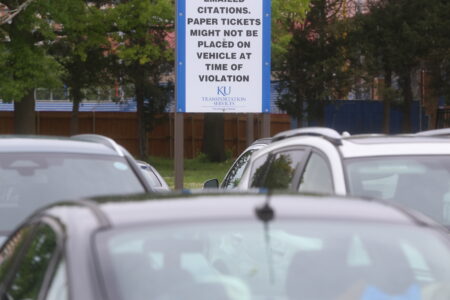
photo by: Chad Lawhorn/Journal-World
A sign warning parkers of potential violations is pictured on May 5, 2026 in Lot 90 on the University of Kansas' main campus.
Get ready for a parking shuffle at the University of Kansas’ Lawrence campus next school year — and, yes, it will involve a shuttle, too.
Beginning Aug. 1, KU will restart its dormant park-and-ride program that allows students to park on West Campus and take an approximately 10-minute bus ride to the main campus. The new system — which will utilize two existing lots on West Campus — is expected to accommodate about 700 parkers per day.
But that’s not all KU is changing with its parking system. With the park-and-ride system in place, KU intends to sell 700 fewer parking permits on the main campus for the popular yellow zone lots, which primarily serve students. The end result likely will be that some students who drive to classes will have a harder time securing a parking permit for the main campus, and will be more likely to be taking a shuttle.
“Our yellow zones are just busting at the seams,” Aaron Quisenberry, director of transportation services at KU, said Tuesday during a public forum explaining the need for the new system.
A couple of developments have led to a parking crunch at KU. First, there are record enrollments. That’s meant more people everywhere, including parking lots.
Second, there is a grocery store.
The new Dillons grocery store just northwest of the intersection of 23rd and Iowa streets was built on property that previously housed KU’s 1,500-space park-and-ride lot. Quisenberry said his department has been looking for a way to replace those lost spaces, and recently got approval to do so.
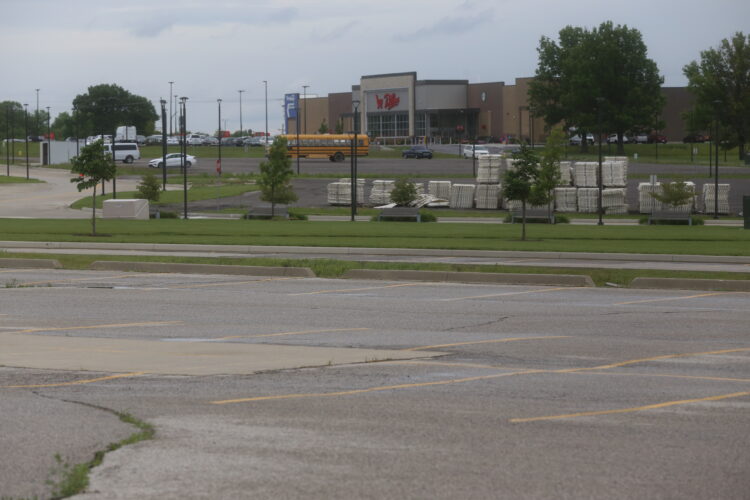
The new system will utilize two lots that are several blocks apart on West Campus. The larger of the two lots is Lot 302, which has about 400 parking spaces about two block west of the Dillons grocery store. The second area will be a portion of the parking lot that serves the Lied Center and the Dole Institute of Politics. About 300 spaces will be reserved for the park-and-ride system in that lot, which Quisenberry predicts will still leave adequate daytime parking for the Lied and Dole centers.
The 700 parking spaces the two lots will provide roughly matches how many people were using the park-and-ride system each day when it was last in operation. Quisenberry said he thinks the system will attract similar numbers this time, and new users will end up appreciating the system.
“You could park, get on one of our busses and be at the (business school) in eight or nine minutes, which is less time than you will spend circling around Lot 90 right now looking for a place to park,” Quisenberry said, referring to the large and busy parking lot that is next to the business school and across the street from Allen Fieldhouse.
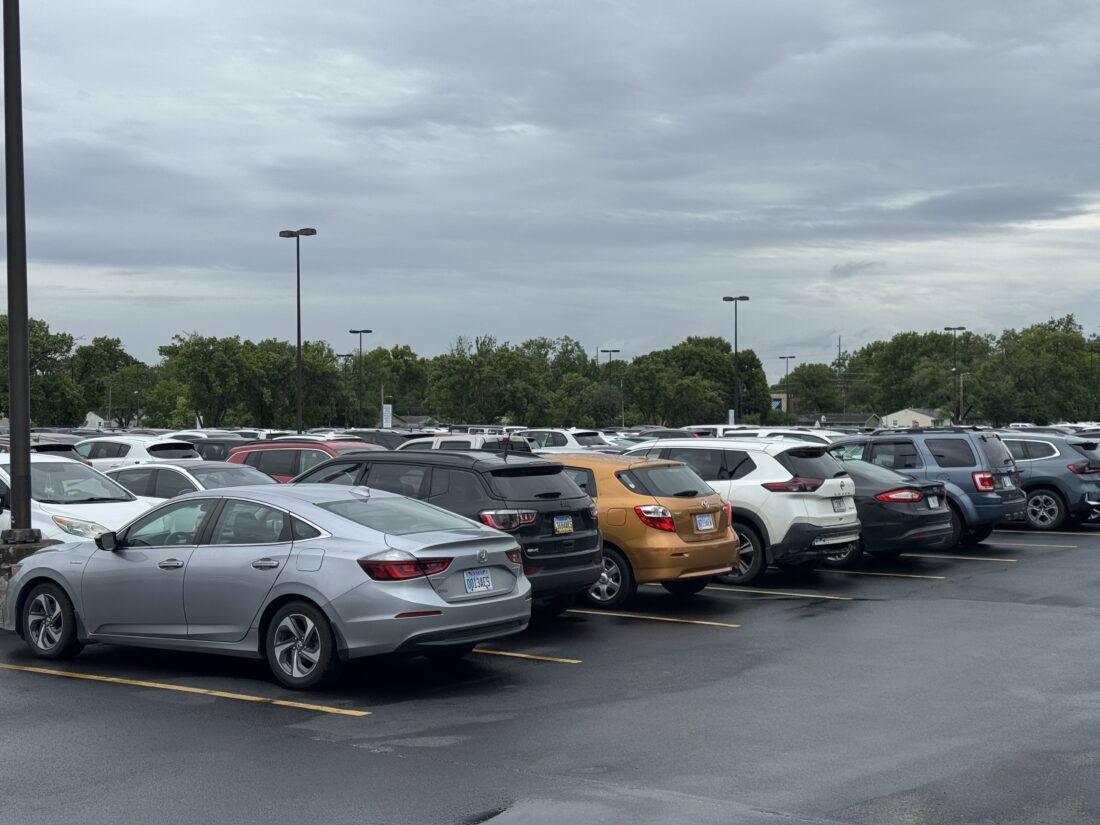
photo by: Chad Lawhorn/Journal-World
Rows of vehicles in Lot 90 on the University of Kansas main campus are pictured on May 5, 2026.
The park-and-ride system also will be less expensive than the traditional yellow zone parking permit. Parking officials at Tuesday’s forum said the park-and-ride permit will be $231 for the school year, while the yellow zone permit will be $318.
The new system will mean that students and others parkers will want to pay attention to the deadlines for buying parking permits for the next school year. KU allows a multitude of students to buy a yellow zone parking permit for the main campus, but it opens up the buying period on a staggered basis, with graduate students getting the first chance to buy permits, then seniors and so on down the line of classes. That means freshmen who need a parking permit are the most likely to be impacted by the 700-permit reduction in yellow zone permits. However, it also is possible that seniors or others may lose out on a yellow zone permit, if they wait to purchase one.
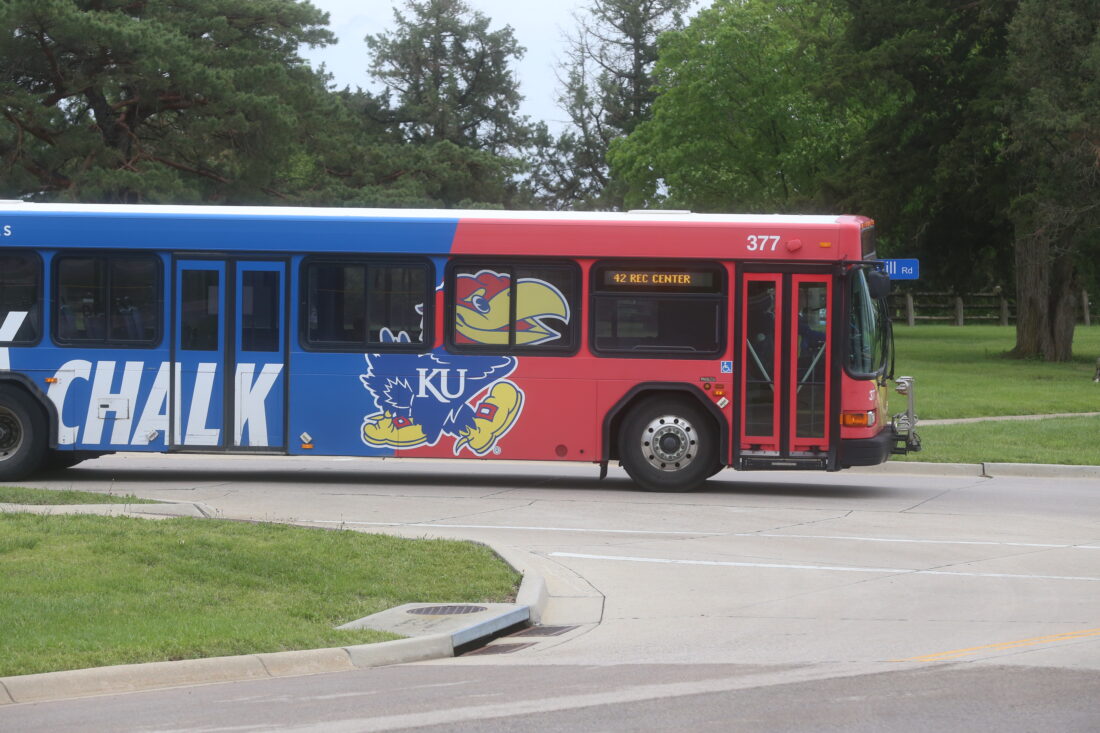
photo by: Chad Lawhorn/Journal-World
A University of Kansas bus travels near the Lied Center on KU’s West Campus on May 5, 2026.
Details about a few other parking projects were discussed at Tuesday’s forum. They included:
• KU plans this summer to build an approximately 175-space, surface parking lot at the northwest corner of 19th Street and Naismith Drive. The property previously housed the Oliver Hall dormitory, which was decommissioned and demolished in recent years. The new lot will provide parking for yellow zone permit holders.
• Also this summer, KU plans to build an approximately 200-space surface parking lot near the sand volleyball courts and the computing center that are just south of Sunnyside Avenue. The lot will be for faculty and staff parking. The lot will be built near the sand volleyball courts, but won’t impact their operations, officials said Tuesday.
• Work also will be underway on a parking lot dedicated to serving daytime business at KU’s new conference center, which is connected to David Booth Kansas Memorial Stadium at 11th and Mississippi streets. As the Journal-World has reported, KU plans to build a surface parking lot on the site of the Sunflower Apartments — a set of World War II era garden-style apartment buildings that have been owned by the KU Endowment Association. Mark Reiske, director of facilities planning and development at KU, told Tuesday’s forum attendees that the lot would be ready by this fall.
He said it would have spaces for about 125 vehicles. That’s considerably less than 300 spaces that KU officials had considered when the Journal-World first reported on the project in October. Reiske said the 125 spaces will be designed to serve the daytime needs of KU’s new conference center. Much of the other parking around the stadium is reserved for university uses during the daytime hours.
The operators of the conference center believe the 125-space lot should be enough to house many of their daytime events. However, Reiske said KU also is developing a plan for larger, daytime events that may take place at the conference center, which can seat more than 1,000 people for a banquet. For those larger events that require daytime parking, Reiske said KU is developing a system to have attendees park on West Campus and take a shuttle bus to the conference center.
Large conferences — or concerts, which KU has said it intends to host — that happen during the evenings or weekends are expected to have adequate parking around the conference center, as daytime users of university parking will have left those spaces by the evening hours, Reiske said.
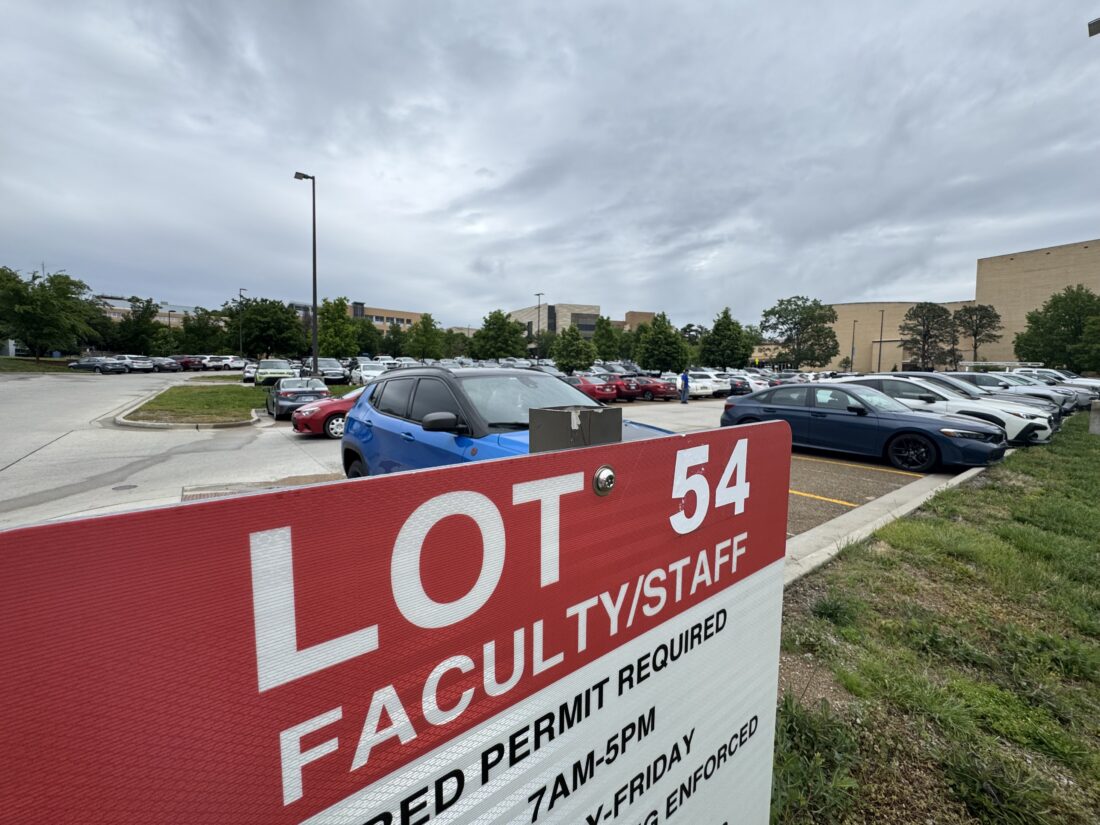
photo by: Chad Lawhorn/Journal-World
A parking lot for faculty and staff members on the University of Kansas’ main campus is pictured on May 5, 2026.
KU
Hilltop childcare center has been losing money for at least two years, records show

Turnstile rocks KU campus as Day on the Hill returns after two-decade absence
UPDATE: Closure of Hilltop childcare center is final, but the building seems likely to stay
KU to lead national effort to address special education needs and tackle industry’s pressing concerns
Opinion: KU faculty, staff should be nervous about the new spending rules proposed for college athletics