
De Soto residents may get a nearly $50M recreation center without a tax increase, but it will take dollars from lots of data centers
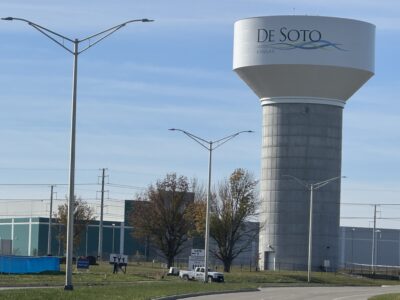
photo by: Chad Lawhorn/Journal-World
The Panasonic electric vehicle battery plant sits next to a city water tower in De Soto in November 2026.
Unless you consider the fierce debates about their construction a form of entertainment, data centers haven’t been known to create a lot of fun in their home communities.
But in nearby De Soto, a multitude of data centers may end up being the key to bringing a nearly $47 million community recreation center to life.
The city has a plan to use millions of dollars in electric franchise fee revenue – which the city collects from the utility Evergy – and sales taxes generated by its major industrial developments to help pay for a proposed recreation center that could include indoor swimming, basketball courts, fitness equipment and other amenities.
De Soto, a community of about 7,000 people approximately 20 miles east of Lawrence, is perhaps best known for landing the project commonly touted as the state’s largest-ever economic development project — a Panasonic electric vehicle battery plant that was projected to employ 4,000 people and cost about $4 billion to develop.
But the city along Kansas Highway 10 also is gaining another reputation: The data center capital of Kansas. Commuters along K-10 already can see multiple buildings being erected near the Evening Star Road intersection of the highway. Those buildings are just phase one of a data center development led by a national firm, Beale Infrastructure, that specializes in constructing hyperscale data center campuses.
The Panasonic battery plant was once expected to be a major contributor to the city’s growing revenue, but its full production build-out has been pushed back roughly three years, leaving De Soto with lower-than-expected franchise fee revenue.
Now, Beale Infrastructure’s multi-phase hyperscale data center campus – which began construction in the spring – could help make up the difference.
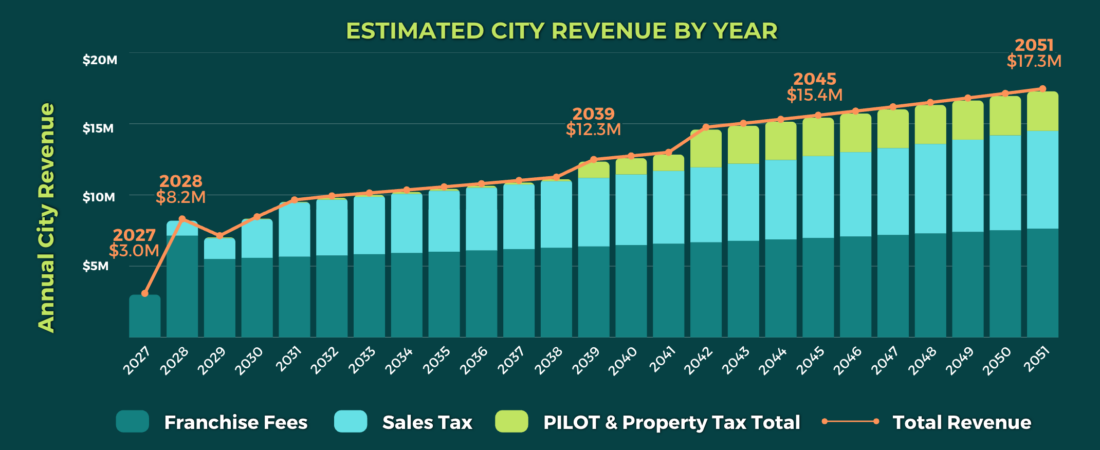
photo by: The City of De Soto
The estimated revenue the City of De Soto is planning to receive from Beale Infrastructure’s data center campus over 25 years. These estimates were calculated in July 2026. Actual revenues will depend on the timing of development and when each phase becomes operational.
The campus is estimated to generate more than $300 million in revenue for De Soto over the next 25 years, including nearly $160 million in electric franchise fees, according to estimates on the city’s website. The new revenue stream got city leaders thinking how they could add a major new amenity to the community without raising the city’s property tax rate.
“The thing that we keep telling people is it’s only possible because of these economic development projects,” Brandon Mills, the city’s assistant city manager, said. “The Beale and Panasonic that are coming in. This is how we would pay for it.”
There is also another data center project by Digital Realty currently moving through the city’s development review process, as the Journal-World reported, and it could be added to the funding mix before the recreation center begins construction.
While the city has significant revenue projections for Beale’s data center campus, those figures remain estimates tied to a development that will take years to fully materialize. How much revenue the project ultimately generates will depend on its construction timeline, electricity consumption and pace of operations.
So how does the city plan to turn those projected industrial revenues into a community recreation center, and how much of that money will it need to make the project a reality? De Soto has begun outlining a funding strategy that would rely on a combination of franchise fee revenue and sales taxes from its major developments.
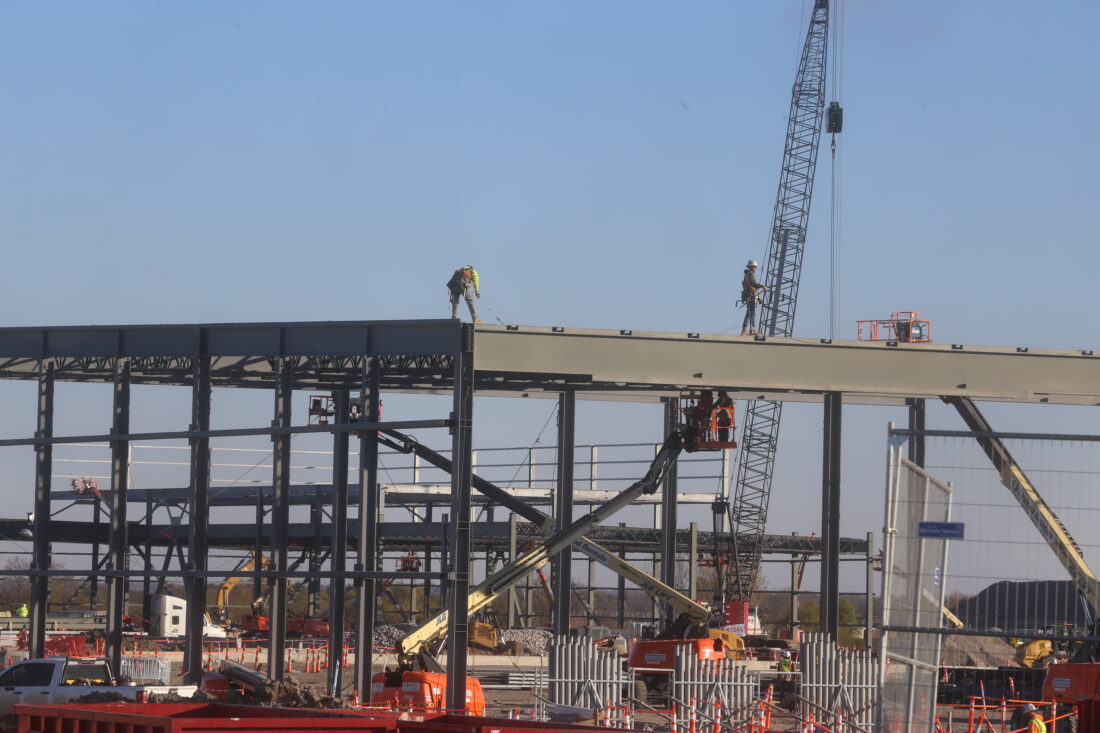
photo by: Chad Lawhorn/Journal-World
Workers stand atop a steel beam of data center construction in November 2026 in De Soto.
THE PROPOSAL
Mills said the city became interested in the community recreation center project after a grant opportunity presented itself a few years ago. The city wasn’t successful in receiving the funding, but it was clear that the community had a desire for indoor recreational activities.
In an effort to keep the project moving forward, the city began exploring other funding and location options. The city is planning for the facility to be located behind De Soto High School, and the idea of using its revenue from two of its large industrial developments is the leading funding plan.
“(It) is one potential funding model,” Mills said. “It’s probably the best one we have right now.”
According to the city’s master plan for the project, the city is hoping to use $4.75 million in annual franchise fee and sales tax revenue over 20 years to cover bond payments and operating support for the new facility. The funding plan is not final, and estimates will continue to be refined as the project planning progresses.
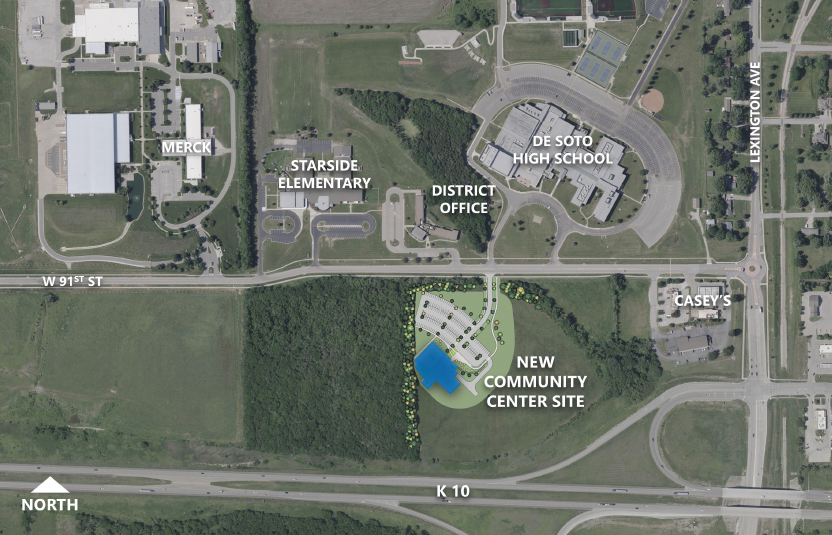
photo by: Clark & Enersen
The City of De Soto has expressed an interest in the new community recreation center to be located behind De Soto High School.
“We’d like to see those revenues ramp up a little bit before we really feel comfortable about issuing the bonds and going through this process,” Mills said. “Because the thing we don’t want to do is raise property taxes.”
There are a few ways the proposed two-story recreation center could be designed, and it ultimately revolves around whether the city includes an aquatic center for recreational and lap swimming opportunities. Mills said a pool in the design would cost around $13 million alone.
However, the city is consistent with wanting to include amenities like an indoor walking and jogging track, a fitness center with cardio equipment and weights, a group exercise studio, an indoor playground, locker rooms, staff offices and other support services.
In addition to the new community recreation center, the city also plans to renovate the existing community center near downtown De Soto. The renovations include updating the multipurpose meeting and rental rooms to accommodate community meetings, events and rentals. There are also plans for improvements to the existing catering kitchen.
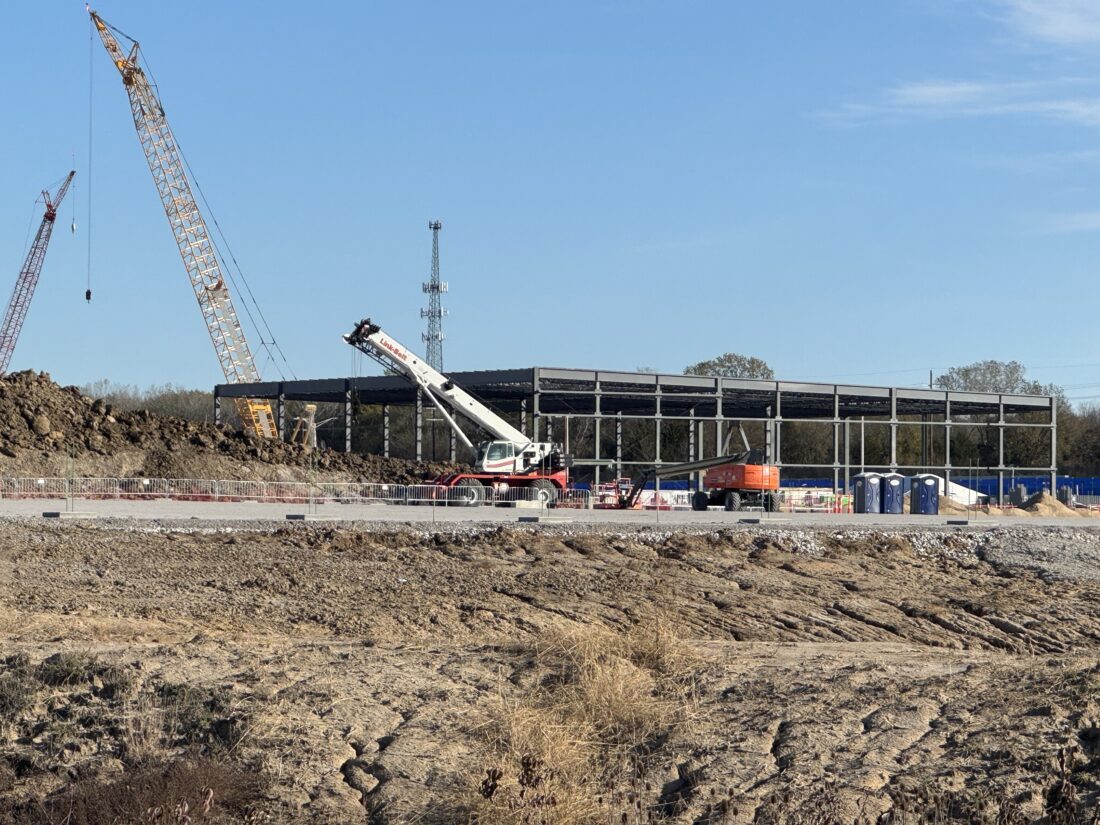
photo by: Chad Lawhorn/Journal-World
Construction, pictured in November 2026, is well underway on multiple data centers in De Soto.
PANASONIC DELAYS
De Soto is expecting to see a large increase in electric franchise fee revenue from the Panasonic facility – which currently has 2,200 employees – as it ramps up production. However, the city has significantly lowered its original revenue projections due the battery plant’s slowing timeline.
In July, the company announced plans to repurpose production lines in order to produce energy storage systems for data centers – which is estimated to start in late 2028 or early 2029. The Journal-World asked Panasonic how many De Soto production lines would make EV batteries versus data center energy storage, but a spokesperson did not answer.
“Panasonic Energy built our wholly owned lithium-ion battery facility in Kansas as part of our long-term commitment to investing in American manufacturing and advancing the EV industry in the U.S.,” a Panasonic spokesperson said via email. “This facility is designed to be agile and responsive to the market and our diverse customers’ needs.”
Evergy originally provided estimates showing Panasonic generating approximately $4.36 million annually in electric franchise fees once the facility reached its full production capacity at the end of 2026, according to the city’s 2027 budget.
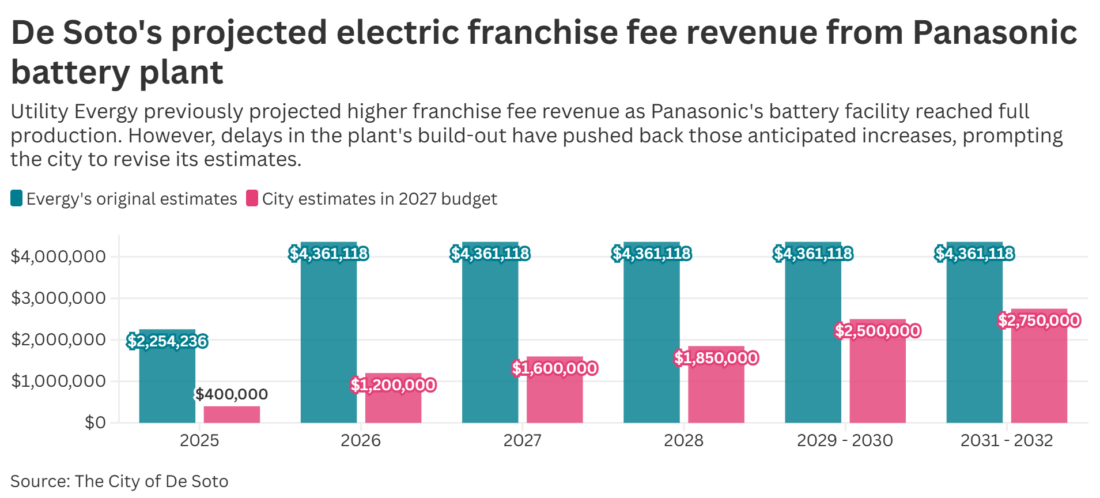
photo by: Flourish
De Soto’s projected electric franchise fee revenue from the Panasonic battery plant.
But now, with the timeline extending three years, the city has adopted more conservative projections, using about half the amounts originally estimated by Evergy. The city was also anticipating increases in franchise fee revenue during the facility’s construction in 2023 and 2024, but those increases never materialized.
Since the battery plant facility is currently operating at about half of its build-out capacity, it is currently generating about $1.5 million annually in franchise fees for the city, Whitney Lange, the city’s spokesperson said via email. This is almost $3 million less than what was originally anticipated by this time.
“While Panasonic’s build-out has progressed more slowly than originally anticipated, franchise fee revenues have continued to increase as production has ramped up,” Lange said.
In five years, the city projects that revenue will only rise to about $2.75 million annually. The budget document said there is still uncertainty surrounding the updated projections, and De Soto will remain in contact with both Panasonic and Evergy to continue refining the estimates.
“The city is closely monitoring Panasonic’s progress and the franchise fee revenues being generated,” Lange said. “Before making a long-term commitment to a project estimated at approximately $47 million, it’s important to have a clearer picture of the revenues available to support it.”
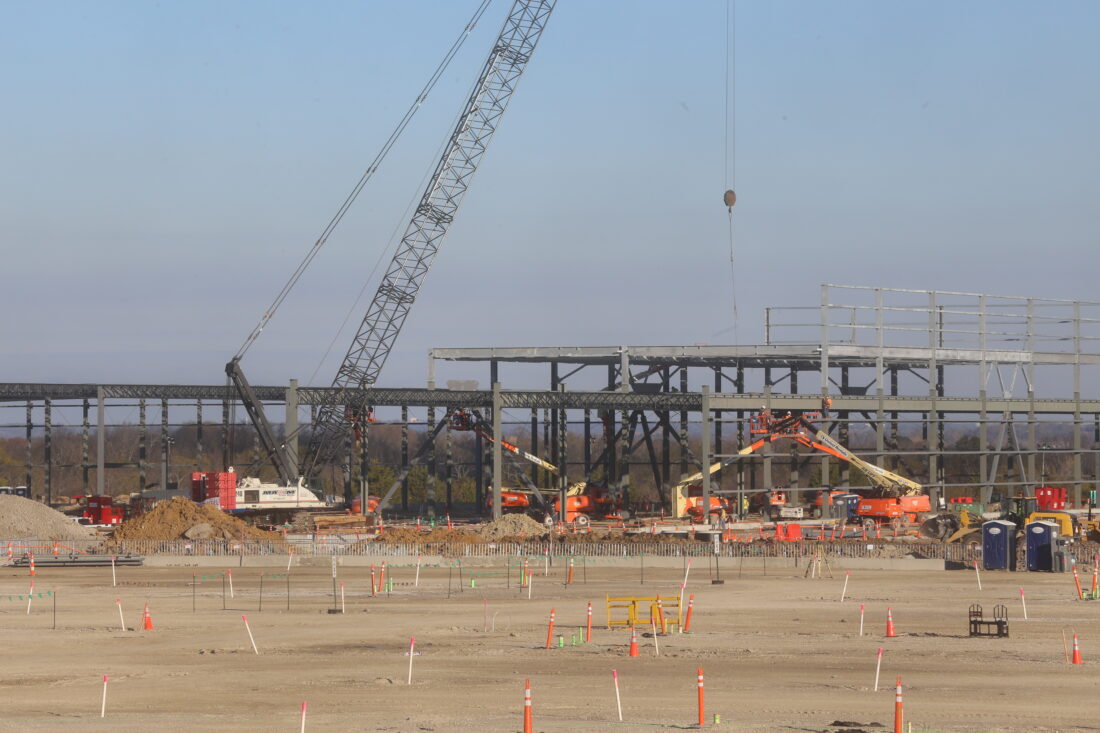
photo by: Chad Lawhorn/Journal-World
Construction work is underway on multiple data centers near the Evening Star and Kansas Highway 10 intersection, which is just east of the Douglas County line between Eudora and De Soto.
THE ROAD AHEAD
While De Soto has identified a potential funding source for the recreation center, the project is still several years away from becoming a reality.
Next year, Mills said the city will begin the preliminary design of the facility, which is estimated to take six to eight months to complete. The next step would be to do a call for proposals from engineering and architectural firms.
“We’ll spend most of next year doing that, and then we’re thinking of an election sometime in spring or summer of 2028,” Mills said, referring to a bond election, where residents will decide whether the city should take on long-term debt to finance the project.
Lange said the cost estimates outlined in the project’s master plan assume construction will begin around 2029.
“There is still a lot of work between now and then, but we now have a clear path for moving the project forward,” Lange said.
Mills said the city sees the revenue from its major industrial developments as an opportunity to move forward with the recreation center without placing an additional financial burden on residents.
“Because what we’ve heard over and over again is (residents) love the idea, but they worry about their property taxes going up,” Mills continued. “That’s the one thing we have a hard line on is we don’t want to raise property taxes for this.”
Other News
De Soto residents may get a nearly $50M recreation center without a tax increase, but it will take dollars from lots of data centers
Opinion: With new president in place, now is the time for Lawrence to invest in Haskell Indian Nations University
Douglas County commissioners to review new financial policies, including changes to reserve fund rules

Douglas County explores new permanent supportive housing project after Bert Nash proposal falls through

Bert Nash announces new medical director for county’s Treatment & Recovery Center