New group opposing data centers in Douglas County urges residents to start protesting before developments are proposed
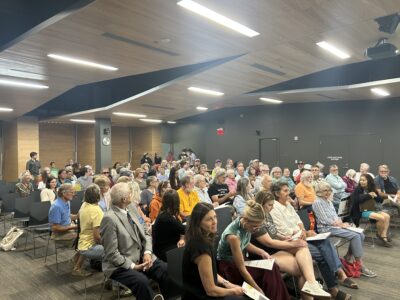
photo by: Bremen Keasey/Journal-World
Around 100 residents gather for a meeting at the Lawrence Public Library hosted by Douglas County groups organizing against data centers.
Inspired by the opposition to data center development in a nearby community, a new coalition of Douglas County residents is trying to deter potential projects from locating here, and about 100 people showed up to hear about it on Tuesday night.
The group is called Douglas County Data Center Watchdogs, and it hosted a “call to action” against potential data center projects on Tuesday at the Lawrence Public Library. It’s a combined effort from multiple other community groups, and some of its members, including some former local government leaders, urged attendees to make their concerns heard.
Nancy Thellman, a former Douglas County commissioner, said there are no known projects in Douglas County right now, but that communities “don’t want to wait until there is an application on file.” She said communities that have organized early have been able to “push off” data center developers.
And Lisa Harris-Frydman, a former planning commissioner, agreed that the time to start organizing was now, before any proposals popped up.
“They’re coming our way; they’re all around us,” Harris-Frydman said. “We need to be educated and know what to think about them.”
The Data Center Watchdogs group was partly inspired by a group in Tonganoxie that has opposed the development of a data center in Leavenworth County, called Project Bluestem, due to concerns about the economic and community impact.
Part of why more data center projects are being proposed in Kansas is Senate Bill 98. The law created a 20-year sales and use tax exemption for data centers that invest at least $250 million and create at least 20 jobs within five years.
Chelsi Hayden, another former planning commissioner, said these kinds of incentives are a draw for data center developers, because they look for areas where it would be “fast, easy and cheap” to build. But vocal public opposition, she said, would make it less easy to develop here. Hayden said organized communities “cost the industry money” by slowing down projects, and she encouraged people to participate by attending public meetings and voicing opposition to data centers.
“If you participate, you can make a change,” Hayden said.
Another reason organizers wanted to start these discussions now is that the City of Lawrence’s Land Development Code lists data centers as a permitted use in industrial zoning districts, as the Journal-World reported. That means as long as they meet the standards for those districts, data centers could be allowed there by right – no vote from the City Commission required.
On June 9, the City Commission expressed interest in exploring a moratorium on data center development after hearing public concerns about things like their water use, noise pollution and electrical brownouts. Organizers on Tuesday reiterated those kinds of concerns.
Dominique Sexton, a Lawrence resident involved with the group, said there’s a difference between the many small data centers that serve institutions like universities and hospitals and the types of “hyperscale” data centers normally used for AI. The latter, Sexton said, are the types of developments “approaching (Lawrence’s) neck of the woods” and creating environmental concerns.
Hyperscale data centers often use “massive quantities of water” to cool their equipment, Sexton said, but power plants that provide their electricity also require a lot of water for cooling. So, when a data center is using a lot of power, that puts even more strain on water resources, Sexton said. The Journal-World has reported before that the proposed center near Tonganoxie would require 1.2 gigawatts of power.
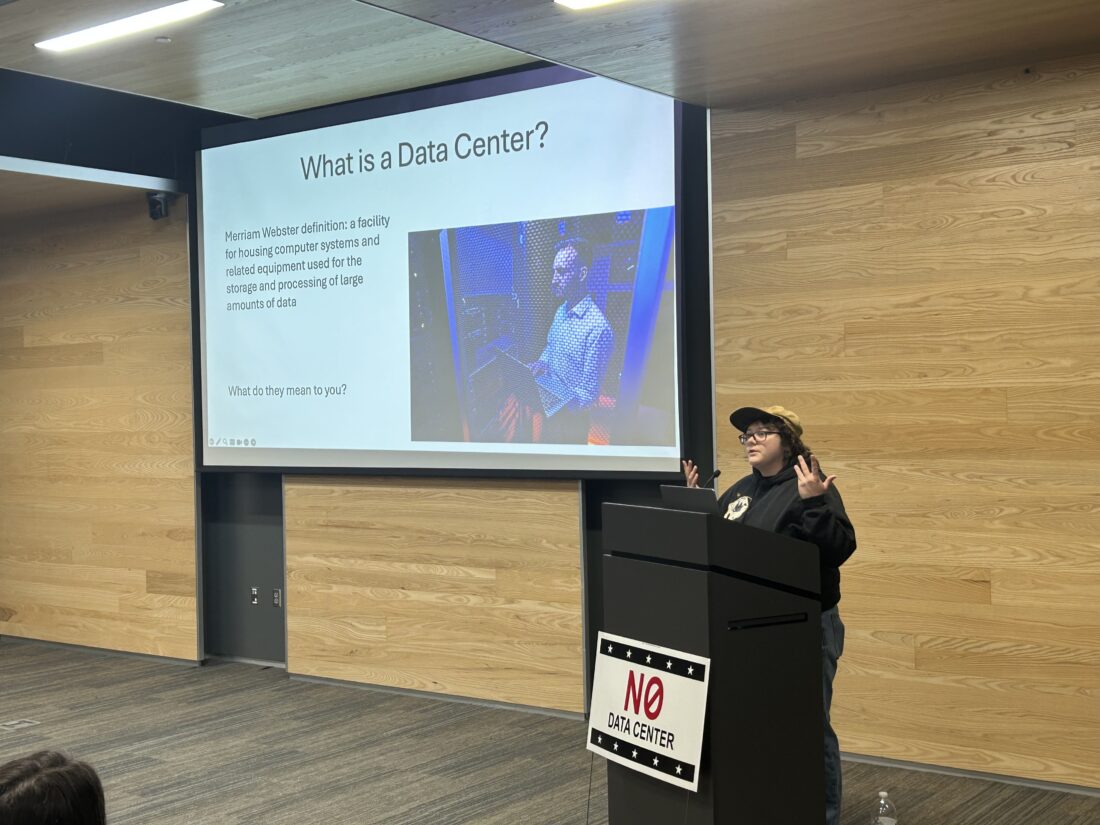
photo by: Bremen Keasey/Journal-World
Dominique Sexton speaks during a Tuesday night meeting about the environmental concerns surrounding “hyperscale” data center projects.
At the end of the meeting, the organizers said the group was planning to host monthly meetings to update people on data center issues, and the organizers urged attendees to stay active and possibly hold protests. The group was selling yard signs that read “No Data Center” and signing up people on an email list so they could stay informed.
Thellman said Lawrence was in “good shape” to take action because of its long history of activism.
“Our community is well known for organizing and saying no,” Thellman said.
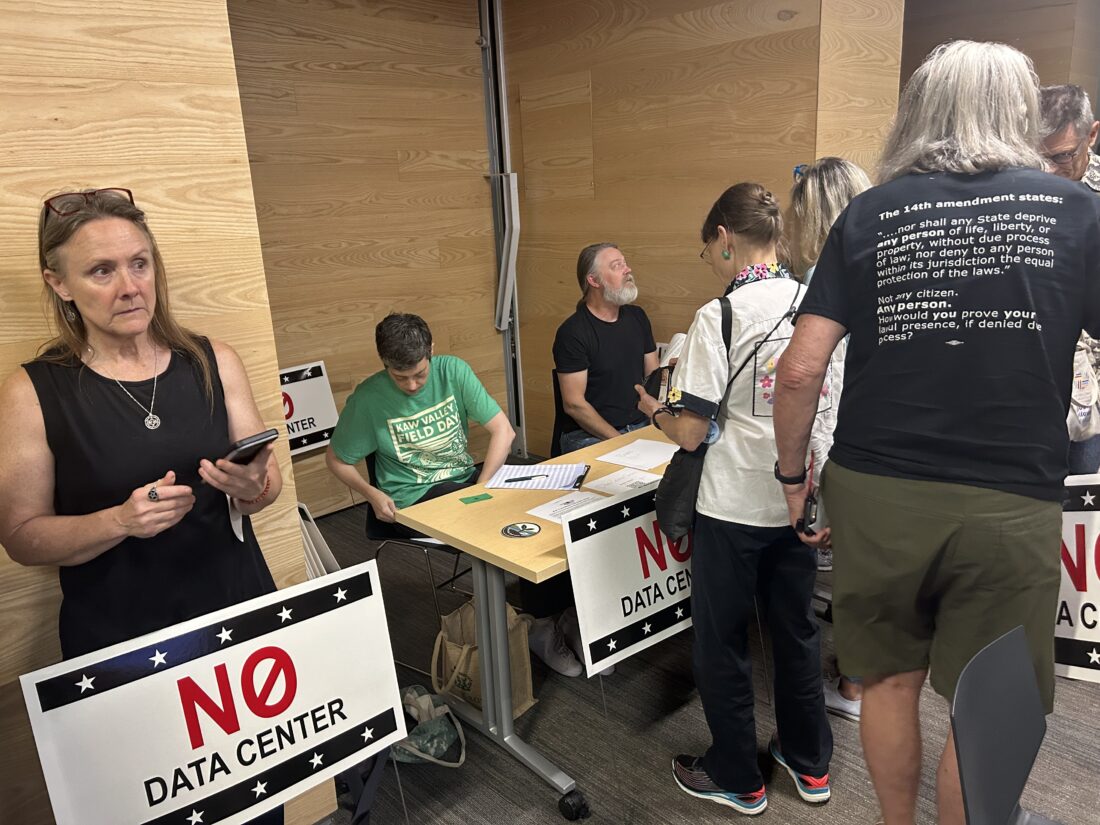
photo by: Bremen Keasey/Journal-World
Residents line up to buy yard signs that read “No Data Center” after a Tuesday night meeting organizing opposition against any proposed projects in Douglas County.
Other News
‘This is for all of us’: Midco Prairie, an oasis of native plants in downtown Lawrence, opens to the public
Douglas County commissioners express interest in fireworks sales dates that include a weekend

Douglas County commissioners to discuss whether to increase the number of days fireworks can be sold in the county
Lawrence’s first bike lanes with physical barriers are installed on Ninth Street
Data center company plans up to $1,000 a year in tax, utility credits for De Soto households