Despite poor first quarter financial report, LMH Health leaders say they are working to improve clinics’ long-term performance

photo by: Contributed
LMH Health's main campus at 325 Maine St.
While poor financial performance from LMH Health’s clinics has the hospital operating at a loss, its CFO said Wednesday the staff is taking steps to address those financial difficulties for the long-term.
LMH Health is currently operating at around a $3.1 million loss, according to its report for the first quarter of 2026. Although the hospital had budgeted to be operating at a loss for the first quarter, it anticipated just a $322,649 deficit.
Much of the losses came from LMH Health’s clinical side. During the month of March, the hospital had a net operating income that was just $93,965 below its budgeted total; however, the clinical operations side lost $4.8 million during the month, according to LMH Health’s March income statement. According to meeting minutes from the hospital’s Finance Committee meeting, the clinic enterprise performance accounted for 75% of the negative budget performance.
During Wednesday morning’s LMH Board of Trustees meeting, Beth Llewellyn, the chair of the board, said the hospital has expanded its clinical reach in recent years, but the financial performance is “not sustainable.” Changing that has been a key focus with the leadership staff since the arrival of new CEO Shelly Kortkamp six months ago, according to Rob Chestnut, the CFO for LMH Health.
Chestnut told the Journal-World the hospital’s project to improve the clinical side “is well underway” thanks to the creation of a formal steering committee that has dozens of people from different hospital departments addressing current challenges.
Chestnut said one recent problem was tackling a high rate of “no shows” from patients. When they don’t show up to appointments, the costs for physicians and clinical staff are all spent with no potential reimbursements to cover it, Chestnut said. Ensuring there are less no show appointments is one of the “20 to 25 initiatives” the staff is working on to help the overall performance for LMH Health’s clinics.
“There isn’t one silver bullet that makes everything better,” Chestnut said.
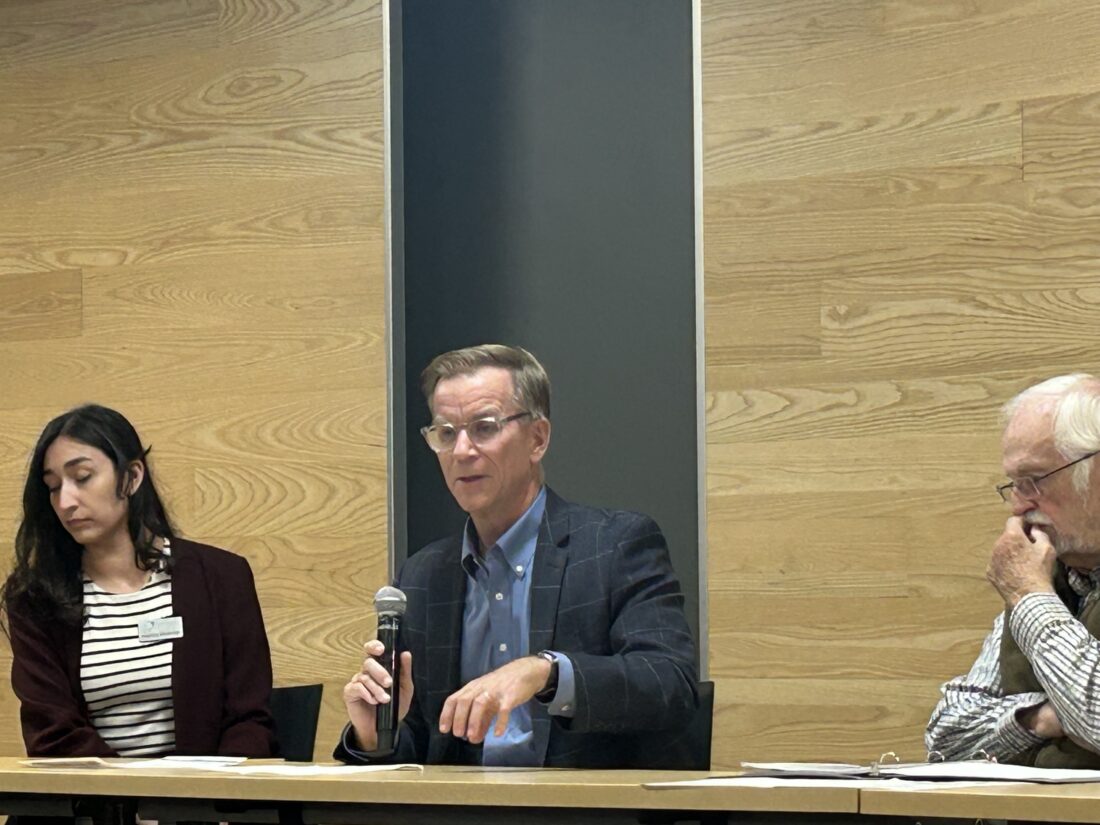
photo by: Bremen Keasey
Rob Chestnut, the CFO for LMH Health, speaking during a town hall meeting on Oct. 30, 2025.
Another key challenge for the hospital was higher costs for contract labor. LMH budgeted for contract labor costs of around $2.3 million in the first quarter, but the actual cost was around $3.6 million, which is 58.3% over budget.
Chestnut said those higher costs come are in part due to a shortage of nurses both regionally and nationally. LMH also has seen more in-patient stays in the last year; one wing in the hospital that used to be open “every once in a while” now has patients every day, according to Chestnut. Combine that increase in patients with a competitive hiring market, it means the hospital has had to turn to contract labor to get the health care workers it needs.
“The market is short now,” Chestnut said. “It’s a supply and demand situation we’ll have to face.”
Despite the first quarter report, Chestnut said the recent financial challenges will not cause any instability for LMH. Chestnut said its leaders like Kortkamp are “playing the long game” instead of focusing on short-term improvements. If the community can’t get care in a timely fashion or don’t have a good experience, “(patients) will go out of market, Chesnut said, so improving those experiences is “part of getting financially healthier.”
Chestnut said many other health care systems are facing the same challenges at the moment, but he thinks the current work of the hospital has it on the right track.
“This hospital has been here for 100 years. We’re going to be here for the next 100,” Chestnut said. “We just need to adjust to where the market is going, and I’m very confident we’ll get here.”
Other News

‘This is for all of us’: Midco Prairie, an oasis of native plants in downtown Lawrence, opens to the public
Douglas County commissioners express interest in fireworks sales dates that include a weekend

Douglas County commissioners to discuss whether to increase the number of days fireworks can be sold in the county

Lawrence’s first bike lanes with physical barriers are installed on Ninth Street

Data center company plans up to $1,000 a year in tax, utility credits for De Soto households