

Kansas lawmakers advance bill to develop rules for treated wastewater used for drinking; Lawrence currently not planning reuse project
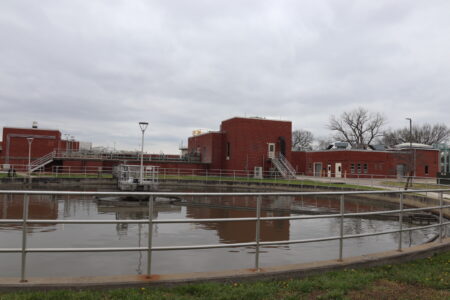
photo by: Josie Heimsoth/Journal-World
The Kansas River Wastewater Treatment Plant is pictured on Thursday, April 3, 2026.
While Kansas lawmakers are advancing a bill that will develop rules for reusing treated wastewater as drinking water, the city of Lawrence isn’t currently exploring changes to where its drinking water comes from, a city official told the Journal-World.
House Bill 2462 is a water policy bill that requires the state to develop rules allowing wastewater to be reused as drinking water after going through extensive treatment. Specifically, the bill directs the Kansas Department of Health and Environment to create regulations by July 1, 2028, for both direct reuse – or turning treated wastewater straight into drinking water – and indirect reuse, which releases wastewater into groundwater or surface water sources.
There are currently no federal requirements or guidelines for developing indirect and direct potable reuse regulations, but proponents of the bill have said these water reuse methods would provide “more flexibility with water resources in communities, safely easing water scarcity in regions of the state currently experiencing such concerns,” according to the supplemental note for the bill.
Michael Leos, a city spokesperson, told the Journal-World via email that at this time, the city does not have any project in its Capital Improvement Plan for a beneficial reuse or reclamation of treated wastewater. He said such a project would require “a thorough study” beforehand if the city were to undertake it.
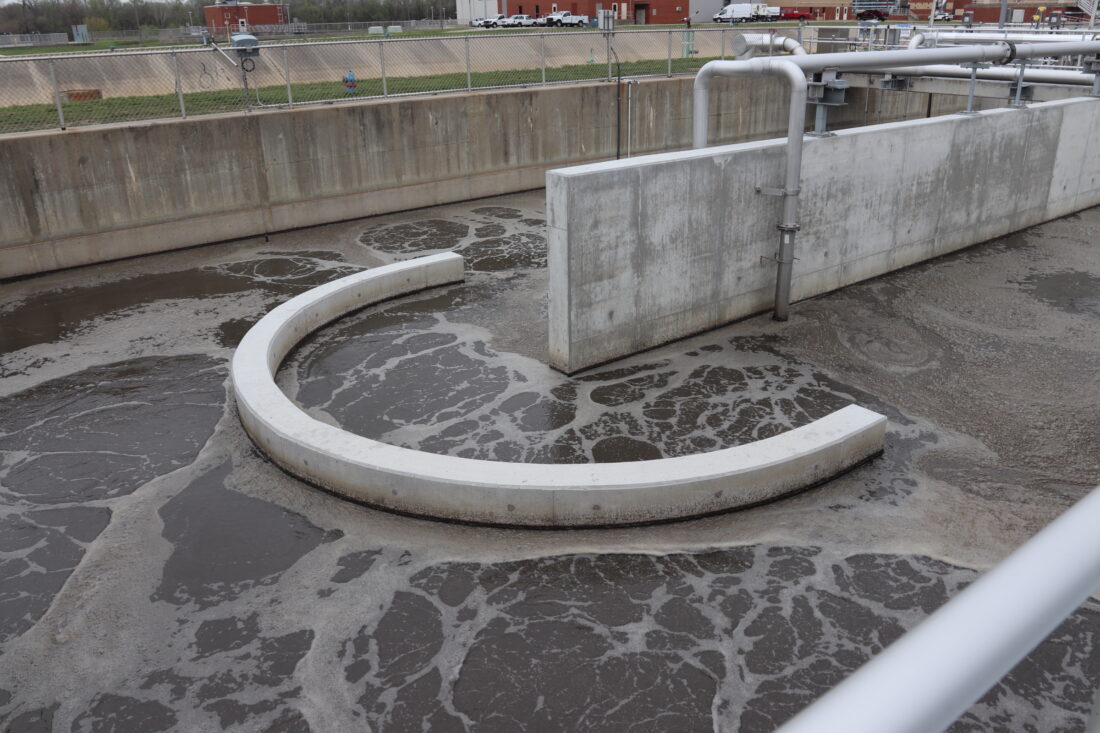
photo by: Josie Heimsoth/Journal-World
A basin at the Kansas River Wastewater Treatment Plant is pictured on Thursday, April 3, 2026.
“Without a study or project in place, the City cannot comment regarding what process modifications would be required to reclaim the treated effluent into the potable system,” Leos said.
While it is less common to directly recycle wastewater into tap water as outlined in the bill, water reuse for irrigation is common. Leos said the city reuses a portion of treated wastewater within the plant itself. This water is separate from drinking water and is used for plant treatment needs like cleaning basins, pump seal water and other process needs.
He added that the city’s Parks, Recreation, Arts and Culture department also uses this water to water flower beds and medians around town.
Kansas gets its water from a mix of groundwater and surface water, depending on where you are in the state. Eastern Kansas – like Lawrence and the Kansas City area – rely heavily on surface water from rivers and reservoirs like the Kansas River. Meanwhile, Western Kansas depends almost entirely on groundwater from the Ogallala Aquifer, which is a part of the larger High Plains Aquifer.
Communities in western Kansas are more likely to benefit from the option of recycling wastewater for drinking purposes, as the Ogallala Aquifer has been heavily extracted for agricultural irrigation much faster than it can be naturally replenished.
However, the Kansas Geological Survey had some good news to report earlier this week. According to a press release, preliminary measurements have shown an overall increase in 2025 groundwater levels across Kansas High Plains aquifer regions, due in part to periods of above-average rainfall. In south-central Kansas, water levels increased an average of nearly 2.5 feet, breaking five years of straight declines.
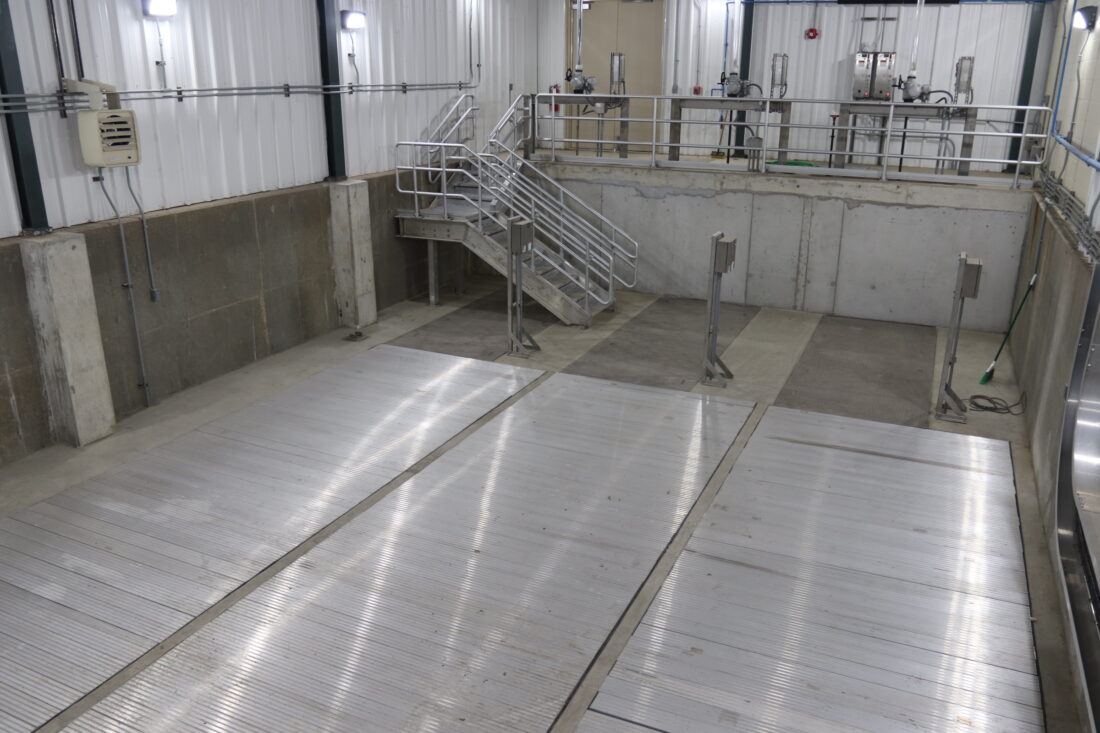
photo by: Josie Heimsoth/Journal-World
The UV disinfection building at the Kansas River Wastewater Treatment Plant is pictured on Thursday, April 3, 2026.
“Western Kansas saw some great rainfall events in many spots last year. This helped reduce groundwater demands, and changes in the water levels across much of the High Plains aquifer improved over what we saw last year,” Brownie Wilson, KGS water data manager, said in the release. “In south-central Kansas, the water table rose significantly in Great Bend Prairie and Equus Beds portions of the aquifer. The beneficial and timely rains over the growing season combined with the sandy soils and the aquifer’s proximity to the land surface really helped to recharge the system.”
Some cities in Kansas are already exploring wastewater recycling for conservation purposes, like the City of Wichita. The city is currently developing a reuse master plan and studying whether treated wastewater could become part of its future drinking supply in order to provide resilience during drought conditions, according to the city’s website.
The bill also updated funding rules and priorities for state water programs and grants, and it is aiming to support water infrastructure and long-term supply planning across Kansas. HB 2462 has passed both chambers of the Kansas Legislature and has been sent to the governor.
Lawrence’s wastewater plant improvements project
While Lawrence does not have any plans to develop a wastewater reclamation program, it is nearly finished with improvements to one of its wastewater plants.
The work on the Kansas River Wastewater Treatment Plant has reached “substantial” completion, Leah Morris, engineering program manager for the city, said. Everything is expected to fully wrap up on the project in June 2026.
Morris told the Journal-World that there are a handful of things that remain on the $74.4 million project, such as the replacement of certain parts and cleanup at the plant, but the new equipment is currently being used as intended. She added that staff is also continuing to make sure the plant is operating properly with all the new moving parts.
“There’s still the little things,” Morris said. “And really it’s trying to make sure that we’re getting our eyes on everything that they installed over the past three years and making sure that it’s working right, because this is when the warranty period starts. So if there is anything not functioning as intended, we have to go back to them and get it fixed per the warranty.”
As the Journal-World reported, improvements to the Kansas River Wastewater Treatment Plant have been in the works since 2023. The project is intended to improve the removal of nitrogen and phosphorus from water being discharged into the river.
While the plant is utilizing all of the same basins it was using before, they have been converted from aeration basins to biological nutrient basins. Bacteria inside the basins are actively feeding off of phosphorus in order to remove it from the water.
Reducing nitrogen and phosphorus in the water that’s released into the Kansas River is important, because too much of these nutrients in bodies of water can harm the environment. According to the U.S. Environmental Protection Agency, excess nutrients can cause algae to grow faster than ecosystems can handle and decrease the levels of oxygen, which fish and other aquatic life need to survive.
The plant has also added some new buildings. One of those is a new treatment building that uses ultraviolet light instead of chemicals to disinfect water. Before the new addition, the plant used chlorine for disinfection. Another is a new building designated for the plant’s supervisory control, data and servers. The previous server room was located in the basement of the plant, and it was prone to flooding.
Morris said all of the improvements to the plant have it operating more sustainably.
“We are now chemical free,” Morris said. “We’re not using chlorine for disinfection or sodium bisulfite to remove the chlorine … Everything we’re doing besides adding polymer to the biosolids to give it a cake-like material is now chemical free. That was one of the big sustainability features of the project.”
Other News
KU Religious Studies to host public talk with Justice Matters about the group’s role in promoting community health

With prompts for tipping rising over the past few years, KU professor looks for ways to make it less stressful for all
Kansas lawmakers advance bill to develop rules for treated wastewater used for drinking; Lawrence currently not planning reuse project

Community invited to celebrate second annual Haskell Wetlands Day
Haskell to host ‘Summer of Soccer’ events that hope to promote Native culture for global visitors during World Cup
