Look for Kansas River near downtown Lawrence to go down about 6 feet as unexpected repairs begin on Bowersock Dam
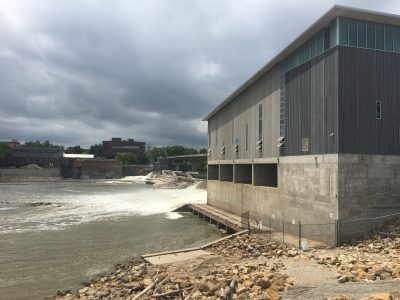
photo by: Kim Callahan/Journal-World
The Bowersock Dam is pictured on Friday, June 25, 2021, looking south toward downtown Lawrence. At right is a hydroelectric plant owned by the Bowersock Mills & Power Company.
An unexpected repair to the Bowersock Dam is likely to produce a noticeable drop in water levels along a key stretch of the Kansas River near downtown Lawrence.
Sarah Hill-Nelson, an owner of the Bowersock Mills & Power Company, said an inflatable bladder on the dam has unexpectedly failed and needs some urgent repairs. The bladder is used to control the height of the dam, which allows operators of the dam to control the water level of the Kansas River immediately upstream of the dam.
Nelson said users of the river, along with motorists who cross the river on the downtown Lawrence bridges, likely will notice a significant drop in the river levels. She said the repairs would require the level of the river to be lowered by about 6 feet. That will put the stretch of river near Burcham Park and the University of Kansas boathouse at unusually low levels.
The dam, which dates back to the 1870s when Hill-Nelson’s ancestors built it to power an industrial complex along the Kaw, serves at least three purposes today. The dam allows Bowersock to operate two hydroelectric power plants on the Kansas River, which produce green energy that is sold to electric providers in the region. The dam also is used to keep water levels on the Kansas River high enough to ensure efficient operation of the city of Lawrence’s water plant. It also ensures an adequate pool of water to be used for cooling purposes at Evergy’s coal-fired power plant, which operates on the north side of the river.
Hill-Nelson said the draw-down of the river is expected to leave water levels about two feet above the minimum needed for the water plant to continue operating efficiently.
But she said getting the damaged bladder fixed was important to ensure continued smooth operation of the dam. She said the bladder was only about 10 years old, and it was expected to have a 30-year lifespan.
“It is basically a brand new dam, so we will be inspecting what caused that damage,” she said.
Hill-Nelson said that the cost of the repair to the bladder was expected to be minimal and that Bowersock was taking the lead on the repair project. However, if an inspection reveals that the bladder can’t be repaired but rather needs to be replaced — which is considered unlikely, at the moment — the project becomes much larger and more expensive. Hill-Nelson said that would require the construction of a coffer dam to divert water from the permanent dam and likely would last several months.
Work to draw down the water levels in the river is expected to start this weekend, depending on the weather. The actual repair work on the bladder is expected to take place July 7-9. However, Hill-Nelson said large rainstorms over the next few days would change the dates of the project. The work can’t be done when the current is strong on the river.
Hill-Nelson said once the work is completed, the height of the dam will be raised and the water levels upstream will rise to normal levels in a few days.
Other News

On sister city visit, delegates from Hiratsuka, Japan, see Lawrence’s friendship firsthand

U.S. Sen. Roger Marshall faces Democratic, Libertarian challengers in general election

Incumbent Douglas County commissioner and newcomer challenger face off for District 5 seat

Primary winner faces incumbent’s write-in campaign in Douglas County Commission District 4
A student-run coffee shop will open at Community Connections at Pinckney next week