Couple goes the custom route to build a house that fits their needs

photo by: Mike Yoder
Rene Morgan and Charles Hurst built a home at 1607 Golden Rain to help meet some specific needs of Charles who after a stoke was left with some paralysis and required a wheelchair accessible home. The one-level home has large hallways and wide sliding doors in each room.
When Rene Morgan and her husband Charles Hurst began to look for a home in Lawrence, they were struck with all of the changes they would have to make-no matter which house they bought. Morgan is blind, and Hurst had a stroke in 2015 that left him with physical limitations. The everyday features of many home — such as stairs, narrow hallways and doors that swing open and shut — became more like obstacles than benefits.
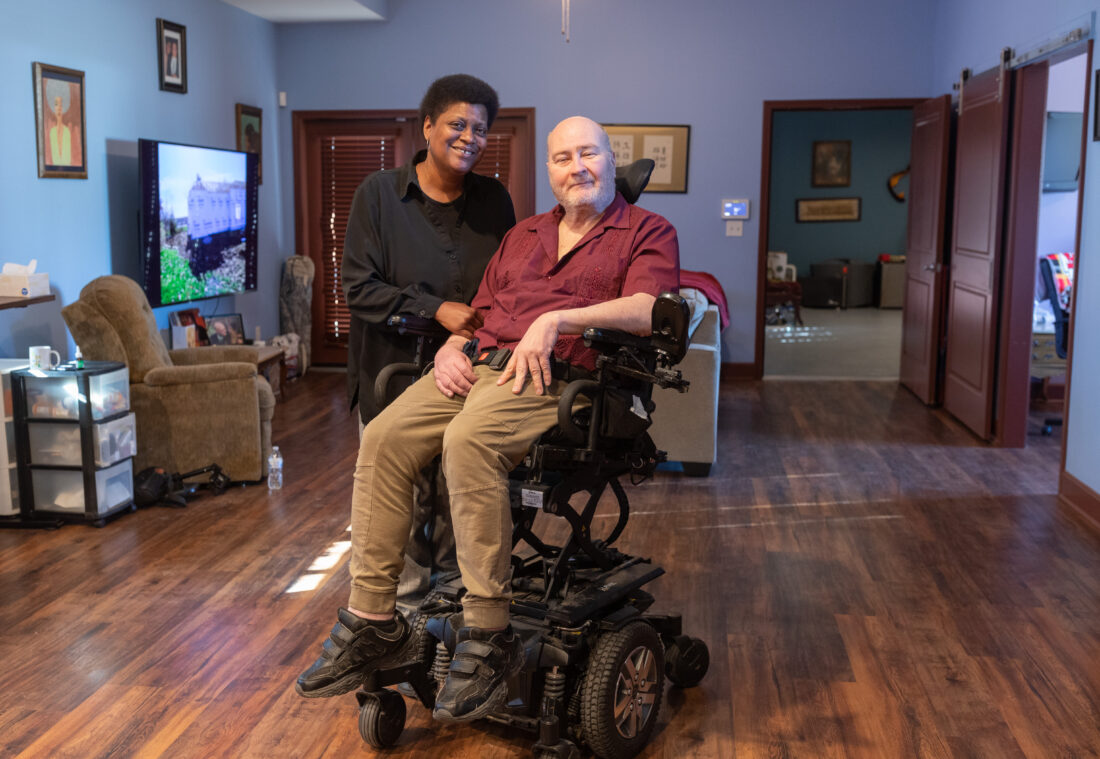
photo by: Mike Yoder
Rene Morgan and Charles Hurst built a home at 1607 Golden Rain to help meet some specific needs of Charles who after a stoke was left with some paralysis and required a wheelchair accessible home. The one-level home has large hallways and wide sliding doors in each room.
“We had been looking for houses previously, but we never could find a house that was handicap accessible,’ says Morgan. “We would have to significantly modify every house, so we started looking into a custom build.”
Knowing she would need a loan, Morgan worked with a credit counselor to strengthen her credit score. After six months, her score was where it needed to be. In 2020, Hurst found a vacant lot for sale on Craigslist, and the couple quickly snatched it up. Next they hired architect Mark Stogsdill, of HMA Architects, and First Construction to design and build their home, at 1607 Golden Rain Drive.
“Mark (Stogsdill) would send us sketches or site plans, and we would send them back, saying, ‘Well can you tweak this a little bit?’ This looks great, but…’ then he would send us another one. We went back and forth like that over the phone for about a month.”
Because it was in the midst of 2020, Morgan and Hurst avoided meeting their architect or builders in person because of COVID, a phenomenon Morgan found strange. Despite having never met Morgan or Hurst, the builders made haste after the couple closed on the land purchase.
“I always heard all these horror stories about having a house built,” says Morgan. “I was really worried about time delays. One of the things I’m grateful for is the fact we had none of that. When they said we were going to move in on March 20th, we moved in on March 20th. They really set a precedent for me on builders.”
There were specific features Morgan and Hurst had in mind when they helped craft the plans for their home. In particular, Hurst needed wide hallways and doorways so he could navigate around the home in his electric wheelchair. Devoid of a kitchen island, a feature common in modern builds, the kitchen has an open floor plan, with lots of room to move around in.
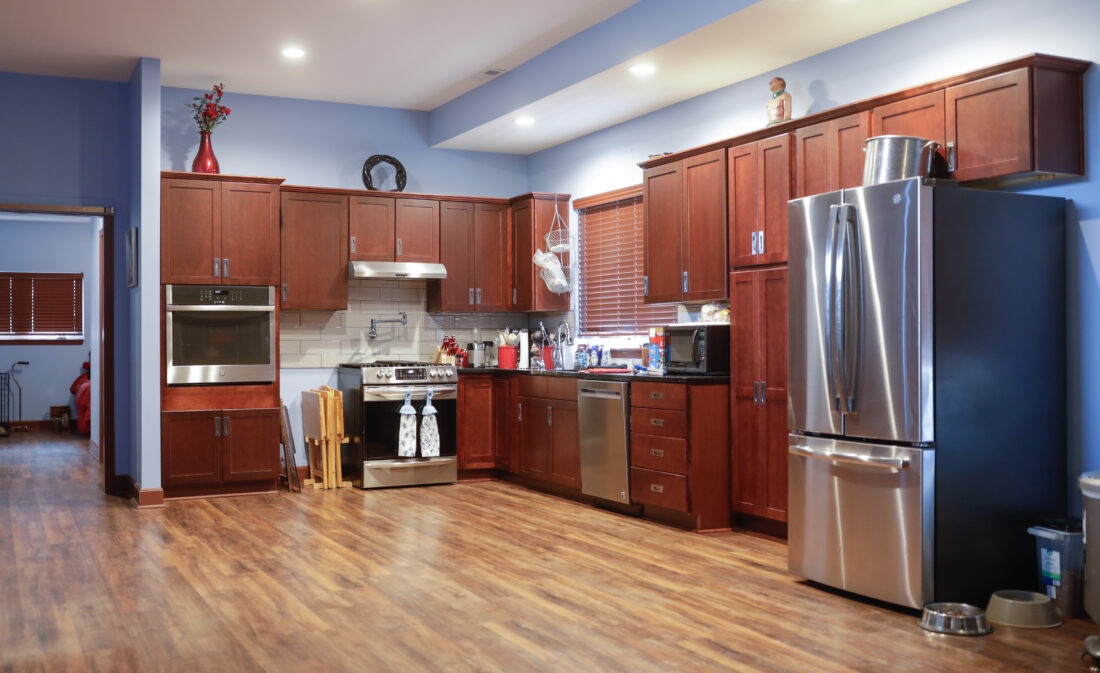
photo by: Mike Yoder
The open kitchen area and adjacent living space make it easy to move around and gain easy access to cabinets.
Morgan and Hurst also needed several door exits, in case of a fire or other emergency, as Hurst would be unable to exit through a window. Small touches that make the home more accessible are scattered throughout the house.
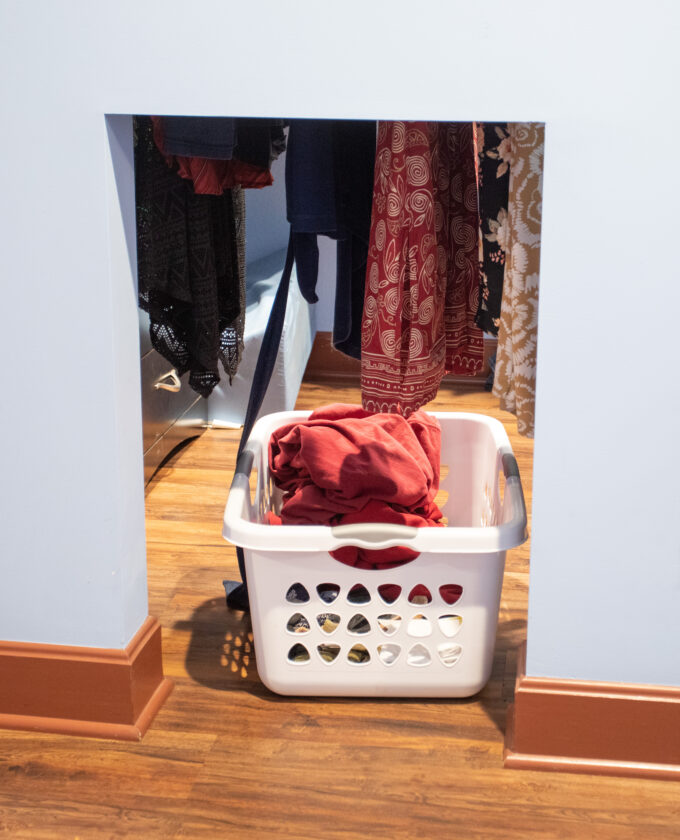
photo by: Mike Yoder
A cut-through in the wall between a closet and the hallway – just across the hall from the laundry room – makes it easier to move laundry when ready to wash.
In the laundry room there is a cubby carved onto the wall so Hurst is able to slide a full laundry basket from his closet to the laundry room and vice versa, rather than lugging it down the hallways with his wheelchair. The floors are all wood, to ensure the wheelchair can move without hindrance. And rather than doors that open on a standard hinge, the interior doors are barn doors that slide on rollers.
“The barn doors were important to us,” says Morgan. “A lot of times it’s very difficult for Charles to open doors, because you have to back up.”
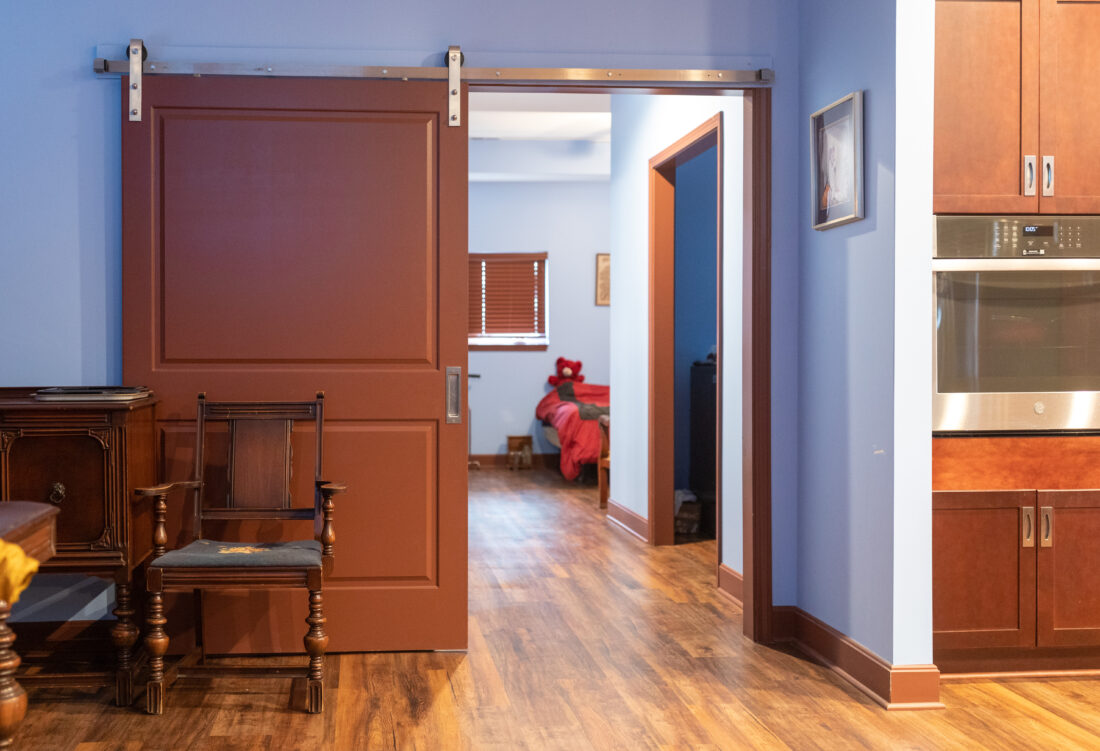
photo by: Mike Yoder
Large sliding doors make it easier for Charles to open and close while in a wheelchair.
Morgan and Hurst had the architect build an attached garage, which they transformed into a music room and office area. Guitars hang from the wall, and a small piano sits in the corner, vestiges of Morgan and Hurst’s time playing in a six-person band together. During that time, Morgan played bass guitar, and Hurst played guitar and sang. Now Morgan is learning to play piano.
“It was built as though it were a garage, but we use it as a music room,” says Morgan. “We kept the room as a garage so that if we ever sold the house it could be easily transformed.”
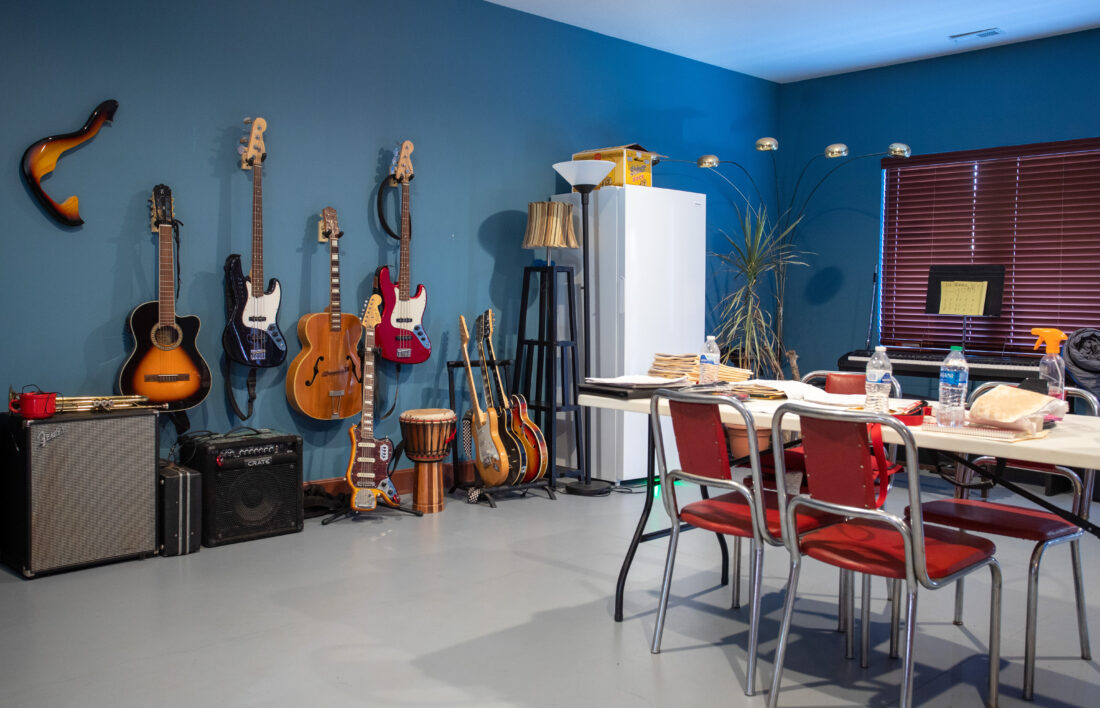
photo by: Mike Yoder
The couple have turned the two-car garage into a large recreation and music room. Charles is a musician who has had one of his old electric guitars adapted to a smaller body shape that he can cradle in his lap and play through an amplifier using his left hand to hammer on notes and play melodies. The reduced size guitar is on a floor stand just left of the Congo drum.
The home features high ceilings, giving the illusion of added space.
“It’s really nice to have the high ceilings,” says Morgan. “I don’t feel as claustrophobic.”
Hurst jokes that the ceilings help because the couple has ” a couple of tall friends.” At 6’5 and 6’8, their friends needn’t duck in Hurst and Morgan’s home.
Because Morgan and Hurst also have two dogs, they had a doggie door installed so the dogs can go in and out on their own.
Morgan and Hurst said one difficulty of building a home is making decisions on what something should look like without actually seeing or using it. They found the original color they selected for the outside of the house too bold, and had it changed. There are small things they would do differently.
“I have a really hard time getting to the upper cabinets,” says Hurst. “There are little things I would change, but it’s hard to know that before.”
“For a blind woman and a man with multiple vision, we did pretty good,” jokes Morgan. “I really want to show people they can do these things. I am legally blind and he’s in a wheelchair; I want to let people in Lawrence know this can happen. Building is not easy, but it’s possible.”
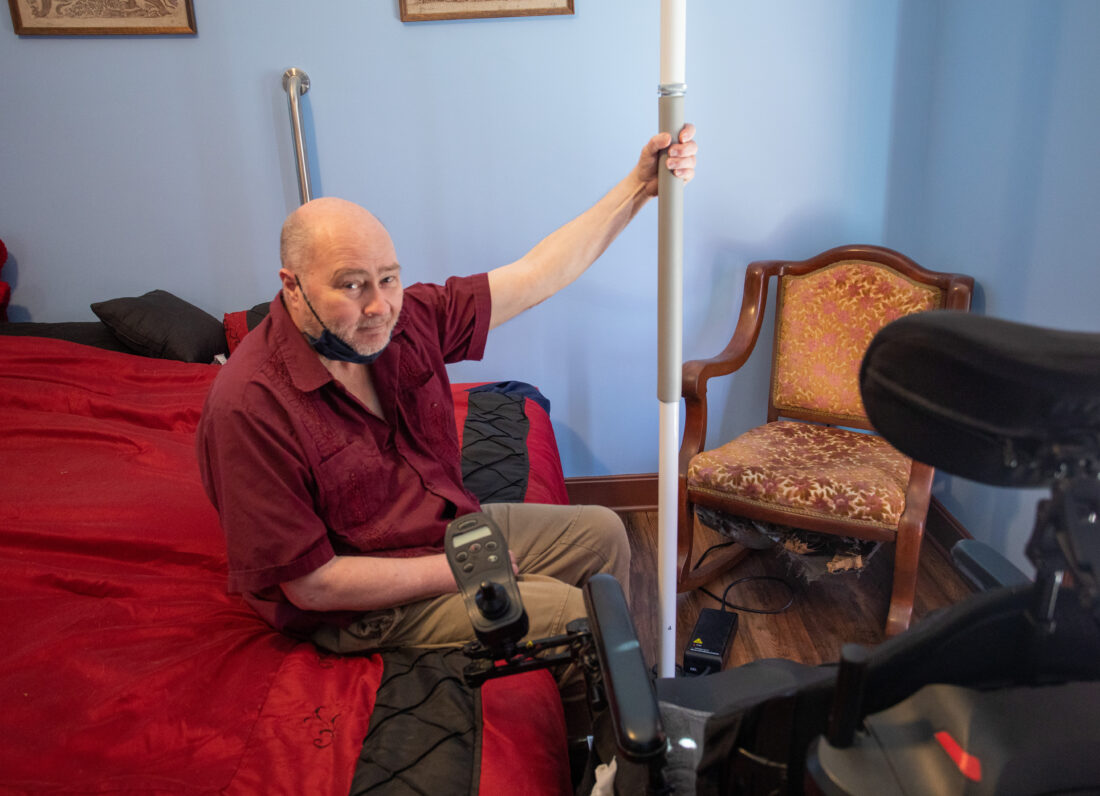
photo by: Mike Yoder
Charles uses a grab bar, pictured behind him on the wall, to lift himself upright from his bed, and the floor-to-ceiling pole, enables him to pull himself from the bed to his wheelchair.
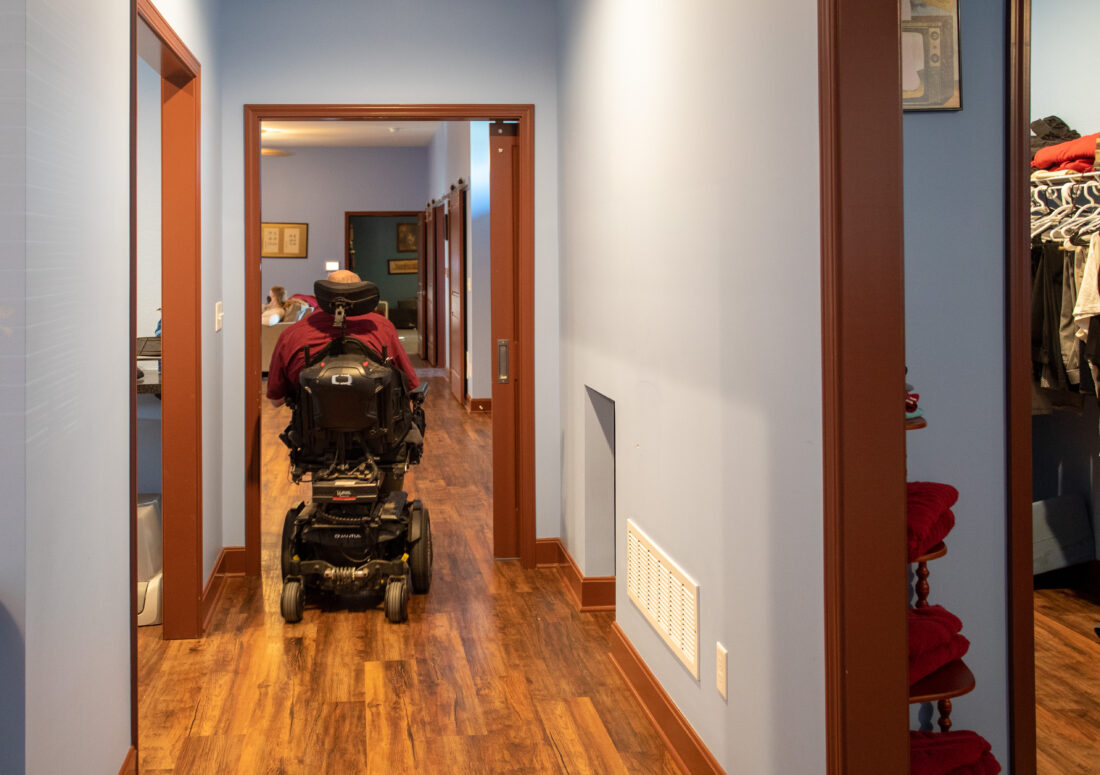
photo by: Mike Yoder
Wide hallways and doors makes it easy to maneuver through the house with a wheelchair.
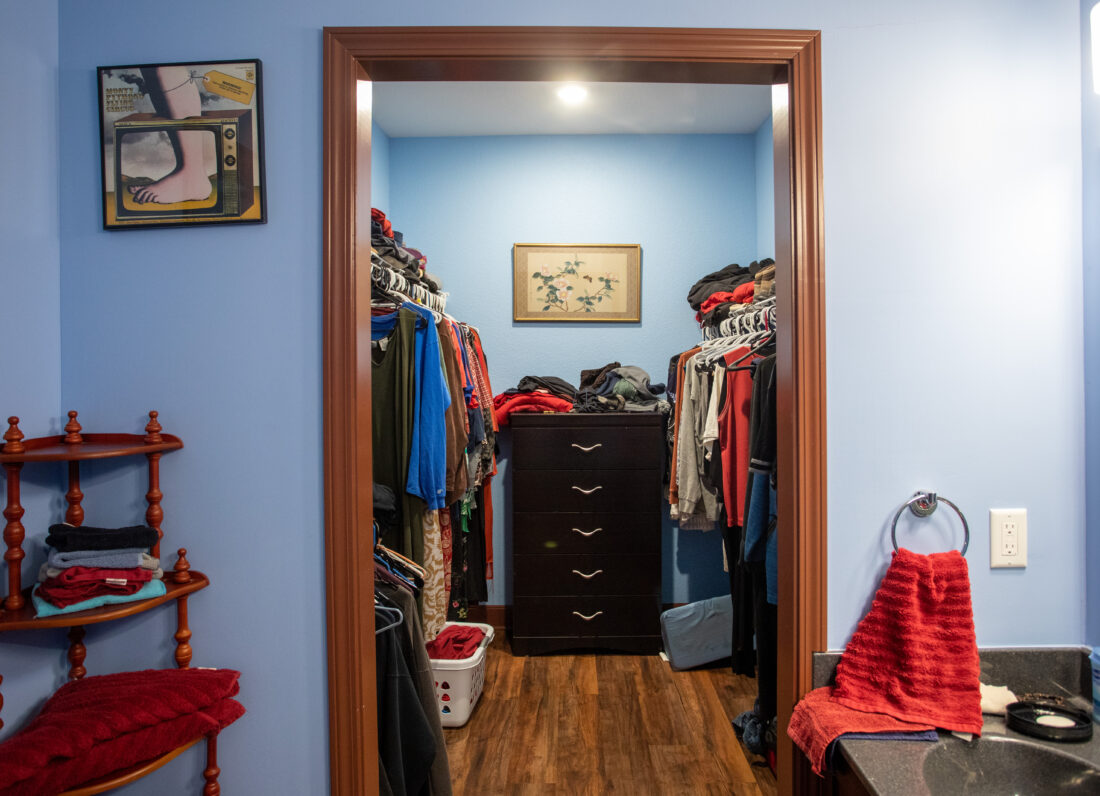
photo by: Mike Yoder
A large closet allows easy access for a wheelchair.
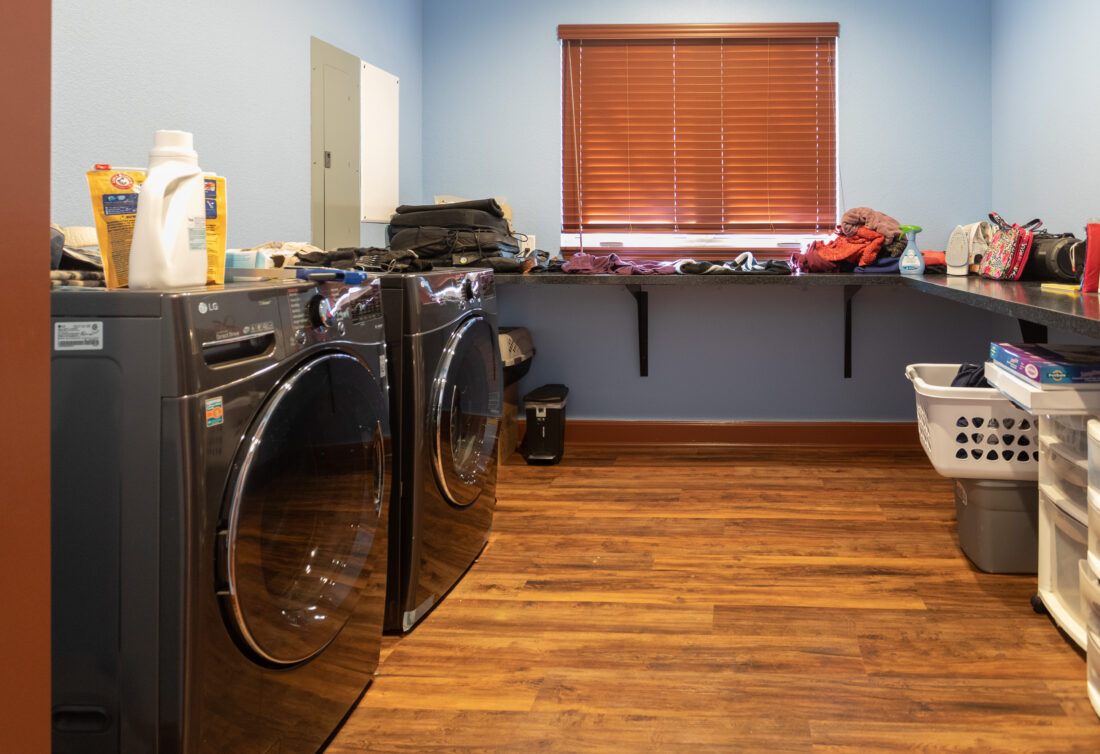
photo by: Mike Yoder
A good-sized laundry room with a counter wrapping around 2 walls, provides plenty of space to sort and stack laundry.
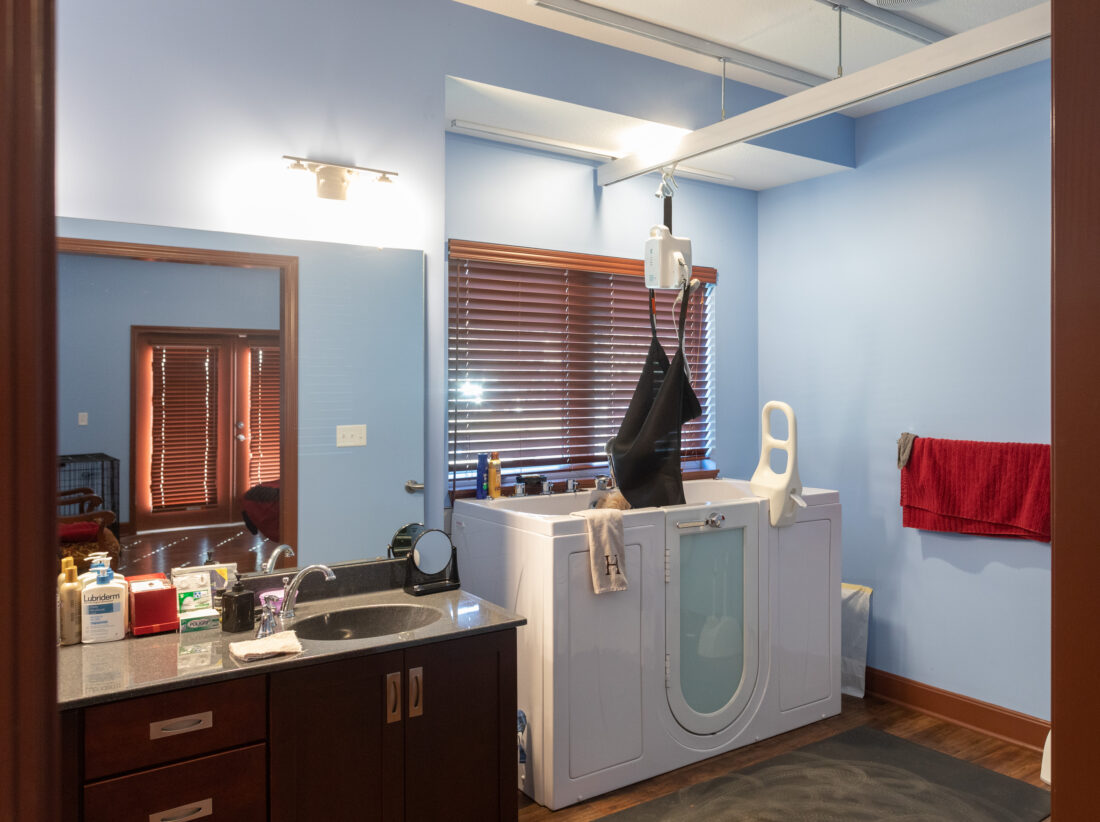
photo by: Mike Yoder
In the bedroom bath, a motor driven lift assists Charles in moving from his wheelchair into the tub with a water-tight door.
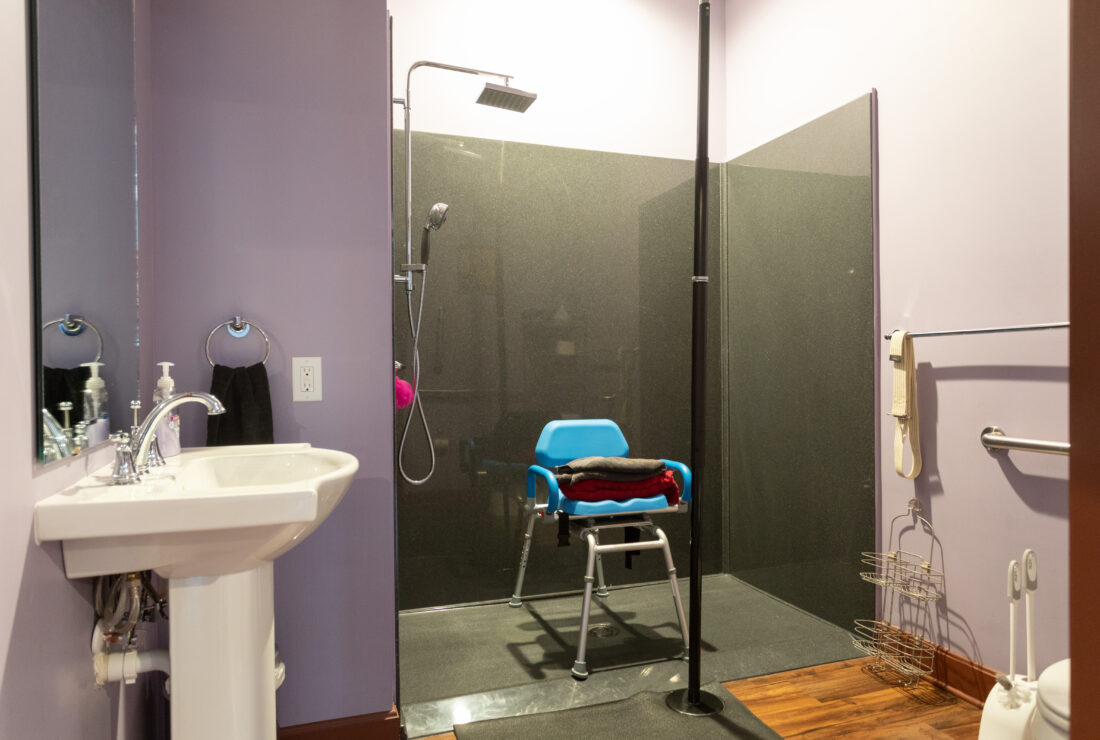
photo by: Mike Yoder
A large shower with no doors or curtains makes for easy access. The ceiling to floor pole enables Charles to move from his wheel chair to a chair in the shower.
Other News
Lawrence’s first bike lanes with physical barriers are installed on Ninth Street
Data center company plans up to $1,000 a year in tax, utility credits for De Soto households
Supernatural thriller filmed in Lawrence to have multiple showings at Liberty Hall
Eudora voters to decide sales tax election to fund increased fire protection in the city
Perry-Lecompton voters to weigh new joint recreation system funded by property tax levy