Douglas County commissioners to weigh in on data centers and similar developments; residents urge more public input
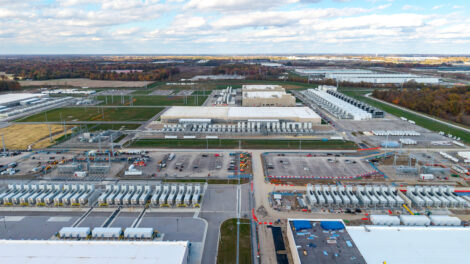
photo by: AdobeStock
Construction of multiple data centers in New Albany, Ohio is shown in this November 2025 photo.
Douglas County commissioners this week will hear staff recommendations to open the door for large data centers to locate in rural Douglas County, but some residents are protesting, saying the public’s voice has been shut out of the process.
Commissioners at their Wednesday afternoon meeting will conduct a work session on adding language to county codes that would allow data center, battery storage and crypto currency mining facilities in rural Douglas County. The county’s planning staff is recommending data center and crypto currency mining facilities be allowed in industrial-zoned areas and battery storage in districts where other utility-scale uses are allowed, if they also receive a conditional use permit from the County Commission.
Currently, none of those land uses are clearly defined in Douglas County’s zoning code, creating uncertainty around how they should be reviewed or permitted, if a developer were to seek locate such a project in the county. This July will mark two years since county commissioners initiated a text amendment to its zoning and land use regulations to address the issue.
During a study session at Wednesday’s meeting, county commissioners will hear the recommendations of the county’s planning staff for the first time. But some county residents are now objecting that the county’s planning staff did not conduct any public outreach with rural residents to first hear their thoughts before formulating recommendations to present to commissioners.
“There’s been research and speaking to the industry, speaking to peer communities, kind of going outside of our community to learn more, but not speaking to the public – never starting with the public,” Nancy Thellman, a former county commissioner who has been critical of other rural planning efforts by the county, told the Journal-World.
Douglas County spokesperson Karrey Britt told the Journal-World that the public will be heard during the crafting of the regulations, and that county officials see value in having a set of recommendations for the public to review and discuss.
“The goal is for the public to respond to a clear proposal, and no action will occur until after public hearings and input,” Britt said via email.
Ultimately, the Douglas County Commission is responsible for approving the codes. The commission won’t take any votes on approving any regulations Wednesday, but may give feedback to staff members on how to proceed.
County staff’s findings
County staff’s research so far has highlighted that each use comes with distinct infrastructure and safety concerns.
The biggest issue with battery energy storage systems is fire risk — especially the potential for “thermal runaway” — and whether rural fire departments have the capacity to respond to large-scale battery incidents.
For data centers and cryptocurrency mining operations, the main concerns are their heavy demand for electricity and, in some cases, water for cooling. Staff noted that water usage alone could exceed the capacity of some rural water systems, potentially requiring major infrastructure upgrades.
Staff say there are broader infrastructure constraints as well, including limited rural water supply, road and bridge impacts that may occur during long construction periods and the need for adequate electrical capacity. A memo in the agenda said staff are working with county departments as well as rural fire and water districts to understand potential impacts.
While these facilities typically generate little traffic once operational, the construction phase can be lengthy and disruptive. There are also concerns about noise, visual impacts, stormwater management, and the county’s own capacity to review highly technical proposals, which may require outside expertise.
In other communities, staff found that each of these uses are typically allowed in industrial or similar districts; permitted as a by-right use with site plan approval or subject to conditional or discretionary review processes; and regulated through standards addressing factors such as noise, infrastructure and safety.
Several counties have opted to go the route of passing an official pause – or moratorium – on such projects until they can write language in their codes, but Douglas County leaders have not implemented a moratorium. However, planning staff previously told the Journal-World that they will not consider applications for either development until regulations are adopted.
While data centers and similar developments have drawn opposition in many communities, they also have welcomed by the leaders of some communities. The centers often can generate millions of dollars in property tax revenues for local governments, given the expensive equipment required to run the facilities and the large size of the building itself. Plus, some communities also expect to receive millions by charging special taxes to the centers for their water and electricity usage.
A desire for public input
Thellman said there likely will be consequential decisions made at the upcoming County Commission meeting, and the public had a right to be heard before staff members developed their recommendations for the uses.
“I am concerned with this process and disappointed that the county would … not start with the public, or at least not include the public in the conversation from beginning on these utility-scale industries that have consequential impacts on land use and the future of our community,” Thellman said.
Lisa Harris, a county resident, said asking for public input beforehand would have shown respect for constituents and possibly create more buy-in about a high-impact use that many people in the county know very little about. “Now citizens are in a reactive mode, and understandably so,” Harris said via email.
Thellman added that this felt like a similar approach with how Douglas County handled drafting utility-scale solar regulations in 2022, which she also thought had limited public input.
“As a former commissioner, and now as a member of the public, watching this play out again, it’s just very frustrating,” Thellman said. “We can do better … I think there’s more concern about these particular industries than any I’ve ever seen across the nation, and it’s playing out locally as well.”
Thellman currently is a plaintiff in a lawsuit against Douglas County that alleges the county did not follow its regulations when granting a development permit for the Kansas Sky Energy Center, a proposed 600-acre solar farm in northern Douglas County.
Thellman said she wants to keep an open mind on these data center and related developments, but she’s learning what she can in a hurry and wishes a moratorium could be in place until the community is confident in any regulations.
The county’s next step is to begin preparing drafted zoning regulations for review by both the Planning Commission and the County Commission. No timeline has been established for when they will be considered by commissioners.
The County Commission will discuss these three developments at 4 p.m. on Wednesday during a work session in the Douglas County Commission meeting room at 1100 Massachusetts St. The meeting will also be available via Zoom.
Other News
Douglas County commissioners discuss tracking results of awarded funding to community partners

Baldwin High already has won $25K and is competing for $1M through national sports program

On sister city visit, delegates from Hiratsuka, Japan, see Lawrence’s friendship firsthand
U.S. Sen. Roger Marshall faces Democratic, Libertarian challengers in general election

Incumbent Douglas County commissioner and newcomer challenger face off for District 5 seat