Douglas County commissioners to consider employee health care plan changes as costs expected to increase
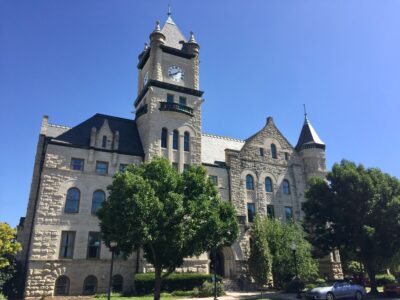
photo by: Journal-World
The west side of the Douglas County Courthouse, 1100 Massachusetts St.
Douglas County commissioners will make changes to the county’s employee health care plan on Wednesday as costs are projected to rise 14% next year.
The county’s new employee health care plan would start on June 1, 2026. From 2019 through 2025, the plan has performed well, often costing less than expected and has helped build up a strong fund balance, a memo in the agenda said. However, that trend has recently reversed.
In 2025, health care costs exceeded the budget by $300,000, and current projections show that spending is continuing to rise – and it’s largely driven by a significant increase in high-cost medical claims. Looking ahead, the county expects total health care costs to increase by about 14% for the 2026-2027 plan year, reaching roughly $13 million.
This estimate reflects the county’s transition to utilizing administrative services from UnitedHealthcare, which was approved by commissioners in February, as the Journal-World reported. If the county hadn’t begun utilizing its services, the projected increases would be closer to 21%.
In order to keep the plan financially stable, county staff are saying changes are necessary. There are several options on how to proceed: including increasing what employees pay out of pocket, raising premiums, increasing the county’s contribution or using a combination of these approaches.
County staff are recommending higher deductibles and copays for some services along with adjustments to prescription drug coverage to better control costs. The recommended option for commissioners would increase employee and retiree contributions by about 7% while significantly increasing the county’s share by over 36%. Meanwhile, staff have also proposed a second option – but it would place more of the cost increase on employees, with about a 14% increase in their contributions and over 34% increase in county contributions.
Even with these changes, the plan is still expected to run a shortfall in 2026, which would likely be covered by existing reserves. The reserves are also projected to drop sharply – from about $6.8 million to under $3 million – and it is raising concerns about long-term sustainability.
When staff re-estimated the 2026 budget with current enrollment data, they determined that costs will exceed the budget by approximately $1.75 million under the first option. Under the second option, the additional funding needed is estimated at $1.69 million. The memo said county staff will continue evaluating these numbers throughout the 2027 budget process.
“The fund will be re-estimated following open enrollment, when final enrollment data is available,” the memo said. “While minor adjustments are expected, significant changes to these projections are not anticipated.”
There are also multiple benefit-related recommendations for commissioners to consider on Wednesday. County staff are recommending moving coverage for impacted wisdom teeth from the medical plan to the dental plan and coverage levels will remain the same. The county also wants to eliminate its current Employee Assistance Program, which has seen very little use, and instead expand access to mental health services through a more widely used provider.
IN OTHER BUSINESS, COMMISSIONERS WILL:
• Discuss Consolidated Fire District No. 1’s Capital Improvement Plan, CIP, for 2026-2031 during a work session. The CIP outlines a structured approach for the department’s $11.6 million planned investment in apparatus, equipment, facilities and infrastructure over the next five years.
The fire district currently maintains a CIP reserve balance of approximately $950,000, and the fund contributes $300,000 annually. Over the period of the CIP, this funding will provide around $2.75 million in baseline funding. While this supports near-term capital priorities, a memo in the agenda said it will not fund all identified needs.
A fleet analysis showed 12 apparatus vehicles at or near critical failure risk, and many of these units are approaching 20 years of service. There is also equipment that requires replacement in order to comply with safety standards and support operations. Additionally, many stations require upgrades or replacements to meet current needs.
• Hear an update from Douglas County Visiting Nurses Association, an organization providing comprehensive home health and hospice care. Each year, the organization receives $260,000 from the county to provide skilled nursing, physical therapy, occupational therapy, speech/language pathology, medical social work and more to residents in the county regardless of their ability to pay for services.
• Hear an update on the activities of the Kansas Legislature at the end of its legislative session from lobbying and advocacy firm Little Government Relations.
• Consider creating a position to serve as the property crime compensation coordinator costing about $15,700 per year, and a person would be appointed to the position by the District Attorney. Douglas County created a property crime compensation fund in 2009, and each year, the county sets aside $20,000 to pay claims, and any unused money goes back into the general fund. The District Attorney’s Office also helps fund it by collecting diversion fees, which brought in about $21,000 in both 2024 and 2025.
• Consider approving an upgrade for electronic pollbooks for the County Clerk’s Office in the amount of $111,945 from Knowink, Inc. The purchase of the current system was in 2016, and a memo in the agenda said the equipment is no longer usable. The upgrade would be fully funded by the County Clerk’s Equipment Reserve Fund.
• Consider formally acknowledging the county’s application for High-Risk Rural Roads program funding, which focuses on enhancing the safety of rural roadways. The county was awarded $250,000 in funding from the Kansas Department of Transportation to replace 1,610 feet of guardrail at North 950 Road and East 550 Road in Douglas County. If approved, the county will be required to contribute $22,000, as the Journal-World reported. Construction of the guardrail improvements will be completed in 2028.
• Consider directing staff to place the 2026 Vegetation Management Plan on the agenda for the County Commission’s next business meeting for review, public input and consideration by commissioners. The plan was first adopted in 2022 to direct daily operations including roadside mowing, park maintenance, revegetation practices, herbicide use and noxious weed control. The plan has a two-year cycle, and the last plan was approved in 2024.
• Consider executing a contract with Shawnee Mission Ford for a 2026 Ford F550 in the amount of $75,711 for the Public Works department as well as a separate contract with American Equipment Co. for installing a flatbed, spreader and plow in the amount of $63,129. The total vehicle cost is $138,840.
• Consider whether a proposed project is necessary and authorizing to solicit construction bids to replace a bridge at North 1600 Road, 0.3 miles west of Stull. The current bridge has a narrow width, poor concrete condition and restricted channel alignment. Construction is scheduled for 2027.
The County Commission’s work session will begin at 4 p.m. Wednesday in the Douglas County Commission meeting room at 1100 Massachusetts St. The business meeting will follow at 5:30 p.m. The meeting will also be available via Zoom.
Other News
Douglas County commissioners to consider employee health care plan changes as costs expected to increase
KU Religious Studies to host public talk with Justice Matters about the group’s role in promoting community health
With prompts for tipping rising over the past few years, KU professor looks for ways to make it less stressful for all
Kansas lawmakers advance bill to develop rules for treated wastewater used for drinking; Lawrence currently not planning reuse project

Community invited to celebrate second annual Haskell Wetlands Day