
Lawrence to participate in program that helps nonprofits rehabilitate abandoned properties as affordable housing
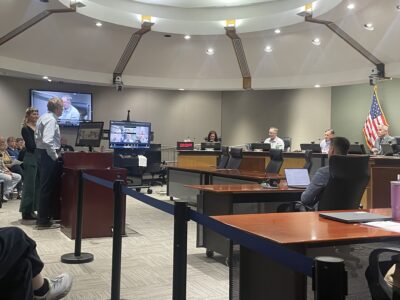
photo by: Sylas May/Journal-World
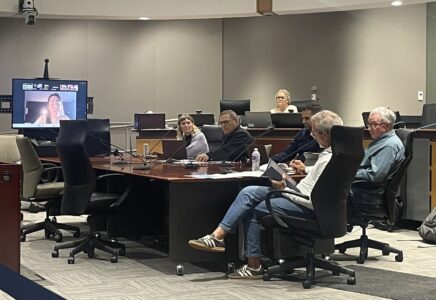
Affordable Housing Administrator Lea Roselyn and Gregg Lombardi of Neighborhood Legal Support of Kansas City give a presentation to the Lawrence City Commission on Tuesday, Oct. 20, 2026.
Lawrence city leaders have agreed to take part in a new pilot program that helps nonprofits take over certain blighted and abandoned homes and rehabilitate them as affordable housing.
At its meeting Tuesday, the Lawrence City Commission voted unanimously to approve the city’s participation in the Kansas Abandoned Housing Act project, which it applied for earlier this year. Gregg Lombardi of Kansas City-based Neighborhood Legal Support said that his organization had been working in KC for nearly 10 years, and that it was looking to expand to other metro areas in Kansas.
“We’re excited about a potential pilot program here in Lawrence,” he said.
The yearlong pilot will take advantage of a more than 30-year-old, infrequently used Kansas law known as the Abandoned Housing Act, which lets nonprofits petition a court to take over and rehabilitate abandoned and blighted properties that have been unoccupied for 90 days and tax-delinquent for two years. Neighborhood Legal Support just handles the litigation and doesn’t rehabilitate the properties itself; in Lawrence, Tenants to Homeowners and Lawrence Habitat for Humanity will do the actual repair work.
The city won’t have to contribute any financial support; it will just have to identify properties that might be good candidates for the program. “The city isn’t being asked to invest anything except for staff time at this time,” Affordable Housing Administrator Lea Roselyn said.
So far, she said, the city had identified more than 3,200 vacant residential units, at least 30 of which were also dilapidated. She said the city was using utility billing data to look for potentially abandoned homes, identifying ones that had abnormally low or no usage, but that the actual process of confirming that a home was suitable would take much more work than that.
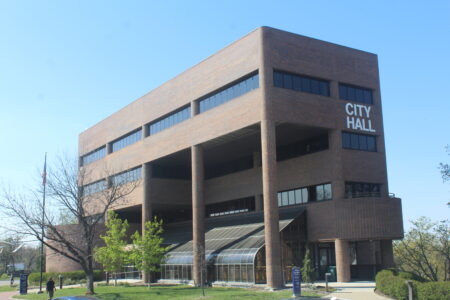
The homes being researched in Lawrence so far, Lombardi said, are concentrated in certain parts of the city. “Most of them are east and north,” he said. “There are a couple that are very close to City Hall, just to the west.”
In his experience in Kansas City, Lombardi said, blighted properties harm neighborhoods in several ways.
“They frustrate development. They tend to be magnets for crime. They’re demoralizing for neighborhoods,” he said. But when they’re renovated, that shows someone cares about the area.
In a successful case, it usually takes about 12 to 15 months from the beginning of litigation to the rehabilitation work being completed, Lombardi said. And in Kansas City, he said, about half of the roughly 100 cases Neighborhood Legal Services had brought had ended with the nonprofit partners repairing the home. In 30% to 40%, the property owner agreed to rehabilitate the home themselves, he said, and in the remaining ones, something else happened with the home, such as a demolition.
A few commenters spoke to the commission, saying that while they supported the program’s goals, they also wanted to make sure that there were guardrails to prevent unintended consequences, such as property being taken from people who inherited a home and didn’t know what to do with it or didn’t have the resources to renovate it themselves.
“Mediate before litigate,” commenter Christina McKenna said.
Mayor Brad Finkeldei asked Lombardi what would happen if a property owner objected to a case that was brought. “What happens if someone shows up (in court) and says, ‘I want to keep the house?'”
In that case, Lombardi said, Neighborhood Legal Services always tries to work with them to help them rehabilitate it. The law says that owners have the opportunity to pay their delinquent taxes and repair their properties themselves. If the owner takes care of the obligations within the time the court gives them, the nonprofit’s petition is dismissed.
“If somebody shows up, that’s what’s going to happen,” Lombardi said. “They’re going to be given that opportunity.”
Roselyn also said she’d heard concerns about gentrification after the homes were redeveloped. “This is not what we’re talking about,” she said. “We’re talking about investing and rehabbing these homes that maintain the character of the neighborhood and provide a mechanism for homeownership.” She said the nonprofits would “ensure that they stay affordable for our local workforce for generations to come.”
Commissioner Amber Sellers said that this was a good way to add more “missing middle” housing, which developers wouldn’t otherwise build because it wouldn’t be profitable for them. She also said she hoped the city could create a registry of abandoned and vacant properties.
“I think there’s some patterns of blighted and abandoned properties in our community,” Sellers said.
And Finkeldei said he was excited about using the state abandoned housing law, which he hadn’t heard about before the city began talking about the pilot. In his experience in city government, he said, he’d seen how long it took to condemn a house, and how that process would usually end in the house being torn down, not repaired.
“This is not a tear-down and build a new house statute,” Finkeldei said. “This is a rehab statute.”
City Government
Lawrence to participate in program that helps nonprofits rehabilitate abandoned properties as affordable housing
Lawrence’s first bike lanes with physical barriers are installed on Ninth Street
Opinion: Don’t give up on trying to use Costco to take tens of millions of dollars from the state of Kansas
Abandoned housing pilot program, data center rules, funding clawback for Bert Nash project on City Commission’s agenda
KU professors, middle school band director, radio personality among this year’s Phoenix Award honorees: ‘It’s a cool mix’