

Commissioners discuss whether Lawrence should shake up its tradition for choosing its mayor
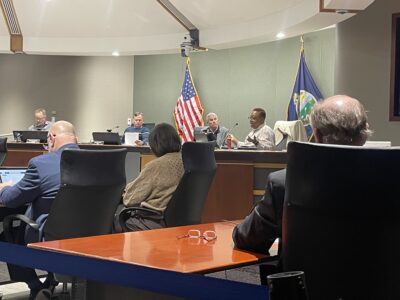
photo by: Sylas May/Journal-World
Changes to how Lawrence’s mayor is chosen might not ever happen – or they might be considered as soon as next month.
That’s when the Lawrence City Commission is set to choose one of its own members as the next mayor, something that happens every year and typically is a foregone conclusion. The commission has a tradition of choosing the mayor and vice mayor based on the vote totals of the previous election, but, at its meeting on Tuesday, Commissioner Amber Sellers said she wanted to do things a different way.
“We are so caught up on feelings and tradition that we lose sight of our authority and what actually has to be done for the betterment of this community,” Sellers said.
She brought this up while the commission was discussing whether voters in Lawrence should directly elect the mayor or not. The directly elected mayor idea was on the ballot in Lawrence in 2024, bundled with a number of other changes to how the City Commission would have operated, but it was rejected on a nearly 50-50 vote.
The commission didn’t direct staff to draft another ballot question or bring anything back on Tuesday, but there was some discussion about what the commission could do in the shorter term – including whether it could, if it wanted to, choose a mayor based on who it thought was most qualified.
Sellers has been an opponent of the traditional nomination process for years. She has been the third-highest vote-getter in both the 2021 and 2023 elections, and she has nominated herself for mayor three times. But each time, she said, the other commissioners voted for the person the tradition dictated. To her, this system of choosing a mayor is “chicanery,” and she said the decision should really be made based on who the commission thinks would be best for the job.
Not everyone has the skills necessary to “discern, research, evaluate policy” that make a good mayor, Sellers said. And Commissioner Mike Dever said much the same – that different people were suited to different kinds of public service.
“Not everyone wants to be a commissioner and be mayor,” he said. “That’s a fact.”
Dever also said that it would be possible to choose a mayor based on different criteria if the commission wanted to. All it would take would be a public conversation about what their vote would be based on.
“Previously, the only conversation we’ve ever had is Commissioner Sellers has brought it up a few times,” Dever said, adding that he thought she was “courageous” to do so.
Another thing the commission could do without a public vote is change the length of its terms. The commission did just that in 2023 when it changed all the terms to four years starting after that year’s elections. Before then, one of the terms on the commission was a two-year term – which went to the third-highest vote getter in each year’s election – and the others were four years. That meant that in each election year, a majority of seats were up for election.
Sellers, again, was in a unique situation, because she was the person who was serving the two-year term at the time of the change. She said this, like the mayor tradition, was an equity issue, where seats that should have been identical weren’t actually that way in practice.
All of the commissioners said that it would be ideal to have people in office for longer, so that they could learn how to govern better. “We don’t want to have revolving chairs,” Dever said.
Commissioner Kristine Polian said that if the terms were to change, there should be a public vote on them, not just the commission changing things on its own. “I would not be approving anything that we do within our authority as far as terms, whatever,” Polian said.
But Vice Mayor Mike Courtney wanted that logic to apply retroactively. While he personally supported all of the commissioners having equal terms, he said he would like to change the terms back to how they were before the 2023 election and let the voters decide.
“I want to hear that from the people who give us the authority,” Courtney said.
How the commission functions and how it chooses its mayor will likely be up for more discussion – if not when the next mayor is chosen in December, then in the future. The Lawrence Chamber of commerce has said that it has done research and found support for the idea of a directly elected mayor, and Mayor Brad Finkeldei said he’d heard people asking about the term lengths and about putting a question on the ballot. And Dever said that an expanded commission, which was also on the ballot in 2024, might also be worth exploring.
“We need to have more people on this body,” he said.
But, with no consensus, Finkeldei said they would have to “punt” on the topic for now.
If the commission wanted to put a question about directly electing the mayor on the ballot, the earliest that could happen would be in 2027, and the earliest the change to a directly elected mayor could go into effect would be after the 2029 election.
City Government
Commissioners discuss whether Lawrence should shake up its tradition for choosing its mayor
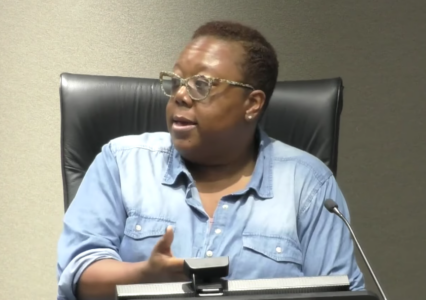
Lawrence City Commissioner Amber Sellers named as next president of National Black Caucus of Local Elected Officials

‘The Big Leplowski’ wins Lawrence’s 2026 snowplow naming contest

Wakarusa River plan suggests zoning protections, new park and other projects in Lawrence; city leaders to weigh in this week
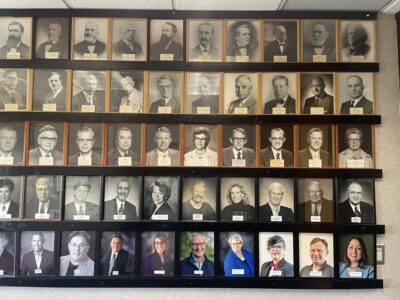
Lawrence City Commission continuing its conversation about directly elected mayor, term lengths
