

Lawrence City Commission approves extra layers of oversight for data centers, asks for patience on further regulations
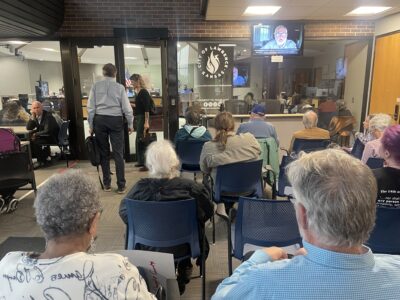
photo by: Sylas May/Journal-World
Members of the public sit in the overflow space outside the Lawrence City Commission's meeting room before a discussion about data center regulations on Tuesday, Oct. 20, 2026.
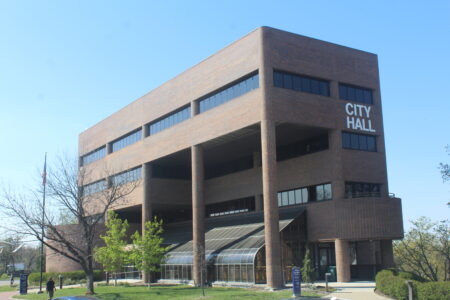
Before they voted 5-0 to add extra layers of public hearings and oversight to the approval process for data centers, Lawrence city commissioners wanted the crowd at City Hall to know what they weren’t voting on.
“This is not a discussion on what final regulations we’ll look at two years from now,” Mayor Brad Finkeldei said. It’s not about bans on specific kinds of entities, water use, electricity use or anything else. “None of that is initiated; none of that can be taken up tonight.”
All that the commission was approving on Tuesday was a text amendment to the city’s land use code that would require any future data center project to get a special use permit.
It doesn’t change anything about the two-year moratorium on data center development that the city imposed earlier this year. However, the moratorium, for legal reasons, allows developers to request an exemption, and if a developer were granted one, the special use permit requirement would make them go through additional public hearings where the Planning Commission and City Commission could impose conditions on their project.
Finkeldei said the process of drafting more comprehensive rules on data center developments would take time, and that’s what the moratorium was intended to give city planning staff. Eventually, he said the rules could include a variety of limitations – but they couldn’t happen until the planners’ research was done.
“It could include bans. It could include lots of definitions, it could include regulations on how much water can be used and how much electricity can be used, if at all,” he said. “But all of that will come at the end.”
To make sure the community understood what was going on, the commission took some time before hearing public comments to ask staff about what exactly it was approving and why it couldn’t do anything more right now.
Vice Mayor Mike Courtney asked why the city couldn’t just ban data centers immediately. “That is mostly because we don’t have a concrete definition of ‘data center,'” planner Drew Bealby said. “We don’t have those definitions, so we can’t really enforce a ban per se.”
To give the public an idea of what problems that could cause, Commissioner Kristine Polian asked staff about a hypothetical scenario: “[If] we say up here, we all know what hyperscale looks like, we read about them in the news, we want to literally put in code that we’re banning hyperscale, what is the outcome if we haven’t defined it?”
Deputy City Attorney Randy Larkin said there would likely be unintended consequences. That could mean that certain existing land uses that aren’t massive AI data centers are suddenly illegal, or it could lead to other problems that the commission and staff couldn’t even anticipate right now.
“That would cause ripple effects and a lot of consequences throughout the community,” Larkin said.
In response to a later question from Polian, Larkin said that data center regulations shouldn’t be done piecemeal. “It would be better to do that at one time,” he said.
Not all of the data center opponents who showed up spoke to the commission. But those who did had some questions about whether the city could do more.
Commenter Iris Craver said the special use permit requirement didn’t go far enough. “It’s inadequate,” she said. “Primary hyperscale data centers need to be banned.” She said that rather than crafting its own definitions and rules, the city could take its cues from other jurisdictions and institutions that had already done that research.
“The legal questions or concerns have already been addressed by others,” Craver said. “We don’t need to reinvent the wheel.”
And Nancy Thellman, a former Douglas County commissioner, wanted to know what conversations were happening about data centers between the city and the county. The county has said it’s taking a “de facto pause” on data center applications until regulations can be developed, but it doesn’t have an official moratorium like the city.
She also thanked the commission for having this discussion with the public, even if it made the meeting longer and entailed some repetition.
“We’re all new at this,” Thellman said. “It’s a massive topic. It’s hugely important to the community, and it’s probably worth a little extra time.”
“I think we hear you,” Finkeldei said after the commenters had finished speaking. He said the whole point of a moratorium was to give the city time to do the research and craft regulations, and that its legal basis would be shaky if the city wasn’t doing that work.
“If it was the belief of this commission that we didn’t need any time to do it, the moratorium would be illegal,” Finkeldei said.
And Commissioner Amber Sellers said that every municipality’s rules had to be tailored to its own specific needs.
“There are multiple municipalities that have nuances to their moratoriums, their language, how it’s zoned,” she said. And rushing the work would be a bad idea, in her view. “That’s not fair to the community, that’s not fair to our community engagement, that’s not fair to transparency and that’s not fair to staff.”
Sellers said she knew that “folks want to be involved,” and that the problem wasn’t with transparency or trust, but with people’s understanding of the process.
And city staff said the plan was to give people more chances to learn about the work on data centers. Bealby said that there would likely be a public forum toward the end of staff’s research, and Assistant City Manager Brandon McGuire said people could also find out more on engage.lawrenceks.gov.
Polian said strong communication with the community would be key as the process moved ahead.
“I would really like to see some level of structured community engagement,” she said. “… We need to allay the fears before we’re even making any decisions.”
City Government
Lawrence City Commission approves extra layers of oversight for data centers, asks for patience on further regulations
Lawrence to participate in program that helps nonprofits rehabilitate abandoned properties as affordable housing
Lawrence’s first bike lanes with physical barriers are installed on Ninth Street
Opinion: Don’t give up on trying to use Costco to take tens of millions of dollars from the state of Kansas
Abandoned housing pilot program, data center rules, funding clawback for Bert Nash project on City Commission’s agenda