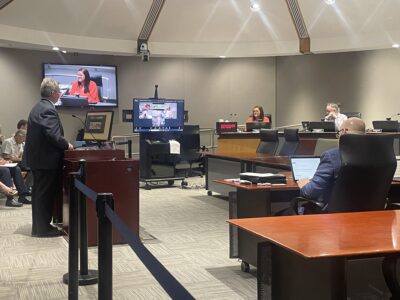

Abandoned housing pilot program, data center rules, funding clawback for Bert Nash project on City Commission’s agenda
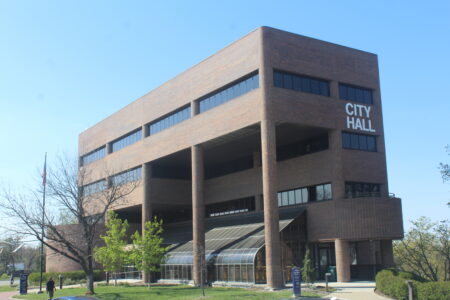
photo by: Bremen Keasey/Journal-World
Lawrence's City Hall, 6 E. Sixth St., as seen on Monday, April 6, 2026.
Lawrence has been chosen for a pilot program that uses a state law to acquire and rehabilitate abandoned homes for affordable housing, and city leaders could give their final approval for it next week.
At its meeting Tuesday, the Lawrence City Commission will be asked to approve the city’s participation in the Kansas Abandoned Housing Act project. The city applied for the program earlier this year, and in August the Kansas City-based organization Neighborhood Legal Support selected Lawrence to take part in it.
As the Journal-World reported when the city applied, the project will take advantage of a more than 30-year-old, infrequently used Kansas law known as the Abandoned Housing Act, which lets nonprofits petition a court to take over and rehabilitate abandoned and blighted properties that have been tax delinquent for at least two years. A memo from planning staff to city commissioners says that the city has currently identified 3,200 vacant residential properties and 35 that are both vacant and blighted.
“The City anticipates that participation in the pilot will provide additional capacity and expertise to evaluate these properties and determine whether some may be appropriate for action under the Kansas Abandoned Housing Act,” the memo reads.
The city’s role in the project will largely consist of identifying properties that could be eligible for rehabilitation under the law. The memo says Neighborhood Legal Services will be handling the litigation involved in acquiring the properties, and Lawrence Habitat for Humanity and Tenants to Homeowners will be responsible for actually rehabilitating them.
Just becoming a partner in the program won’t cost the city anything. Any attempts to actually rehabilitate housing in the city using this law would go through the city’s normal affordable housing incentive process, the memo says, and the city isn’t making any commitments to fund those projects at this time.
In other business, the commission will:
• Consider whether to claw back $558,000 in Affordable Housing Trust Fund money from Bert Nash Community Mental Health Center.
In April, the commission deferred for six months its decision on whether to recoup the funding for Bert Nash’s roughly two-dozen-unit Rockledge supportive housing project, which had missed its construction deadlines. Now, according to a staff memo to commissioners, “Bert Nash has confirmed that it will not move forward with the Rockledge project,” and the mental health center is currently looking to sell the property near the intersection of Sixth Street and Rockledge Road.
Bert Nash CEO Kirsten Watkins reported this to city leaders earlier this month, the memo says. It says Bert Nash had tried other options, such as partnering with the Lawrence-Douglas County Housing Authority on the project, but determined that none of them was feasible. Part of the reason, Bert Nash said, was an issue with a sewer line that would have to be relocated for development to occur on the site.
“Because Bert Nash will not proceed with the project, the project will not fulfill the purpose for which the AHTF funds were awarded, invoking the clawback provision of the funding agreements,” the memo reads.
This item was listed on the commission’s consent agenda, a group of items normally considered routine that can be voted on and approved in a single motion.
• Consider approving a text amendment to the Land Development Code that would require new data center projects to obtain a special use permit. As the Journal-World reported, the Planning Commission recommended last month that the City Commission approve this change. This was listed on the commission’s consent agenda for Tuesday.
• Hear a presentation about the city’s claims register approval process and provide feedback on it. Currently, the City Commission approves claims before those claims are paid out; this is normally done as part of the consent agenda.
City staff says that under this structure, the payments can’t happen until after the commission approves them. However, “state law and the City’s purchasing policy offer alternatives for quicker payment while maintaining oversight and transparency.” The commission on Tuesday will hear about some possible changes that could be made to the process.
• Consider calling a special meeting at 9 a.m. Monday, Nov. 2, for a budget retreat. The agenda says this is for informational purposes only, and no binding action will be taken.
The City Commission meets at 5:45 p.m. at City Hall, 6 E. Sixth St.
City Government
Abandoned housing pilot program, data center rules, funding clawback for Bert Nash project on City Commission’s agenda

KU professors, middle school band director, radio personality among this year’s Phoenix Award honorees: ‘It’s a cool mix’
Housing Stabilization Collaborative’s request for city trust fund aid won’t be considered because it was filed late

On sister city visit, delegates from Hiratsuka, Japan, see Lawrence’s friendship firsthand
Voters Guide: Lawrence voters will decide whether to raise transit sales tax