City leaders take next step in development of long-term parklet program, but ask to review contract with firm
photo by: City of Lawrence
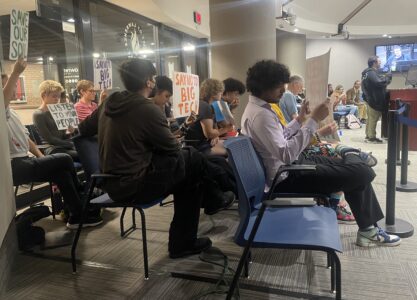
The Lawrence City Commission voted to the extend a temporary version of the downtown parklet program and take the next step in the development of a possible long-term program as part of its meeting Tuesday, March 1, 2022.
City leaders have agreed to take the next step in hiring an architecture firm to help develop a long-term version of a program that has allowed downtown businesses to construct patios and outdoor dining areas in parking stalls during the coronavirus pandemic.
As part of its meeting Tuesday, the Lawrence City Commission voted 4-1, with Vice Mayor Lisa Larsen opposed, to authorize city staff to proceed with development of a long-term “parklet” program with the consultation of a local architectural firm. However, the commission specified that it would want the proposed contract for the firm to come back to the commission for consideration.
Two downtown retailers, the owners of Arizona Trading Co. and Yarn Barn, voiced concerns about parklets taking away parking and questioned why the intent of the program, originally a temporary way to adjust to the pandemic, had changed. Ultimately, commissioners generally agreed they were comfortable moving forward with the process, but did want to see the proposal for the architecture firm before proceeding so they could review the cost and parameters of the work.
“We’re having a lot of discussions about whether or not we want to do something or not do something, and we haven’t even seen the full scope and comprehensiveness of what it could look like,” Commissioner Amber Sellers said. “And so I don’t want to stymie the process.”
As part of the meeting, the commission also voted 4-1, with Larsen opposed, to add new regulations to the temporary version of the program and extend that program until Aug. 12. Staff had proposed a date of Aug. 31, but Commissioner Brad Finkeldei proposed the earlier date so that the commission’s future action — be it the discontinuation of the program or changes as part of a permanent version — could be implemented before the return of university students.
Larsen had suggested that the commission defer the decision so that the commission could get more definitive answers about the price of the architectural proposal, the city’s commitment to enforcing new regulations in the temporary program, and to look at limiting the number of parking stalls a business could convert to a parklet to two. Though other commissioners agreed they wanted to get a definitive price and parameters for the proposal before moving forward, they did not want to add more limitations to the temporary version of the program.
Mark Hecker, assistant director of Parks and Rec, said the city has already been in touch with some local architecture firms, and he expected the proposal to cost $15,000 to $20,000. The cost of the contract does not require commission approval, but the commission specifically requested as part of its motion that the proposal come back for consideration before the city proceeds.
Regulations for the temporary program are relatively limited, and the new temporary regulations approved Tuesday require parklets to comply with access standards in the Americans with Disabilities Act of 1990 at all times. Hecker explained that will mean that parklets on the street need to be at the same level as the sidewalk.
The new temporary regulations also require a certain level of use if the parklet structures are to remain in place. They state that if a parklet is not used for more than 30 consecutive days, then the city shall issue a notice giving the business 30 days to either use the parklet or remove it from city property. Finkeldei and Larsen expressed interest in reducing that to 15 days, but there was not enough support among commissioners.
As part of the development of the long-term program, the city hopes to incorporate the parklet program into the city’s existing sidewalk dining program, according to a staff memo to the commission. The memo states the city seeks to hire a local architecture firm to collect best practices from other communities and develop a recommended set of design details, configurations, materials and fees for a permanent program. The consultant will also engage downtown Lawrence business owners with a proposed plan to attempt to gain consensus on program details.
City Government
Evacuation drill planned Tuesday at Lawrence City Hall

Bond issue for water and sewer projects, bike plan, Wakarusa Drive update on Lawrence City Commission’s agenda

Opinion: Environmentally conscious Lawrence is not focused on the biggest problem with electric vehicles
Locust Street apartments, Holcom housing development among this year’s applicants for $700K in Affordable Housing Trust Fund money
Business owners hurting from Wakarusa Drive closure say they’re getting no answers, no signs, no accountability