Citing the need for denser growth, city leaders approve proposal to bar more housing near Lawrence unless the city expands
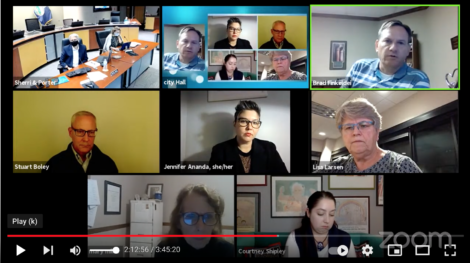
photo by: City of Lawrence
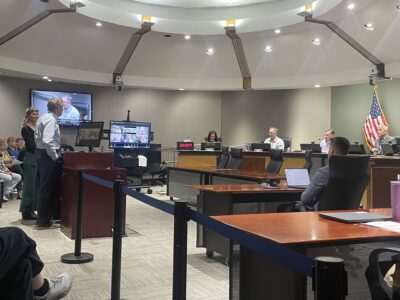
City staff and members of the Lawrence City Commission discuss new subdivision regulation as part of the commission's meeting Oct. 5, 2021.
Calling for denser and more efficient growth, City of Lawrence leaders have approved regulations that prohibit new neighborhoods in rural areas near the city’s boundaries unless that land is ready to be added to the city.
As part of its meeting Tuesday, the Lawrence City Commission voted unanimously to approve an amendment to subdivision regulations for Lawrence and the unincorporated areas of Douglas County. The amendment bars the development of additional rural subdivisions, and instead requires potential developers to request that the land be added to city so the neighborhood is subject to city lot sizes and other standards.
Though some in the development community expressed concerns that the amendment limited growth, Mayor Brad Finkeldei said he saw it as a pro-growth proposal that would encourage the city to annex more land into its boundaries and for that land to develop in a denser capacity that will provide more housing. Referring to some of the neighborhoods of rural ranchettes that already exist in the county, Finkeldei said that more 20-acre residential lots are not what the city needs in rural areas that are designated for the city’s expansion.
“I think this is the next logical step forward to preserve that land that will allow us to have denser development,” Finkeldei said. “And so, I really see this as a pro-growth sort of amendment.”
Under the amendment, new neighborhoods in the current and future growth areas of the city — known as tier two and tier three — would be allowed only when the development is eligible to be annexed into the city. Finkeldei said that he realized that others might see it as a way to stop growth, but that he saw it as pro-growth because it puts pressure on the city and landowners to annex land into the city.
The proposed change represents a turnaround from the relative ease of subdividing rural or agricultural land into residential lots in recent decades, which has resulted in a boom of rural neighborhoods with multi-acre lots. Planners have said the amendment works to implement the density standards and other goals related to growth management that are laid out in the community’s most recent comprehensive plan, Plan 2040.
“There is just a lot of development pressure on the county,” Planner Mary Miller told the commission.
Miller said such rural subdivisions preclude denser city expansion in those areas and create infrastructure problems for both the city and the county. She said those include making it costly for the city to provide services to those widely spaced homes if the neighborhoods join the city in the future or, if the homes don’t join the city, creating “county islands” that hinder the city’s expansion.
Citing the need for smarter growth, the Douglas County Commission voted unanimously last week to approve the amendment. Both the city and county commissioners have heard concerns from a few members of the public, including representatives of the Lawrence Board of Realtors and the Lawrence Home Builders Association. Critics have said the regulations restrict how property owners can develop land and potentially limit the addition of much-needed housing. But other residents have said the changes were needed to prevent further suburban sprawl.
Home Builders Executive Director Bobbie Flory said that instead of ruling out all development in tier two and three unless the city expands, the city and county should create guidelines for the type of growth that is appropriate. Flory said the amendment further restrains opportunities for housing, and that the city needs to take action to encourage annexation and remove regulatory barriers to development.
“What then is your plan for future housing needs?” Flory said.
Though she ultimately voted in favor of the amendment, Commissioner Lisa Larsen expressed concern that the amendment was an “extreme” way to accomplish the goals of Plan 2040. Larsen said she understood that the city needed development to be dense if tax dollars were going to provide enough funding to cover the needed fire, police and utility services; however, she said the city would need to be proactive about adding land so that the dense development it wants can actually occur.
“I want to meet Plan 2040 goals, but I think we need to do it in a more proactive way and look at annexation,” Larsen said.
In other business, the commission received an update about the city’s efforts to arrange emergency winter shelters for the approximately 200 people who are living outdoors. The city is looking for four churches to help shelter people on nights when the temperature is 35 degrees or below.
City Government
As club cancels ‘Beetlejuice’ screening at Oak Hill, city says there are no specific rules about events at cemeteries
Opinion: An $80 million Hail Mary that combines Costco and Lawrence’s love of trails
Lawrence Police Department receives KDOT’s top traffic safety award for second straight year
Lawrence City Commission approves extra layers of oversight for data centers, asks for patience on further regulations
Lawrence to participate in program that helps nonprofits rehabilitate abandoned properties as affordable housing