Planning Commission to continue discussion on regulations for solar farms

photo by: Sylas May/Journal-World Illustration
In anticipation of a proposal to create a large solar farm in Douglas County, local planners will soon continue work toward drafting regulations for such projects. The regulations will affect all future solar farms, and planners are hearing from those concerned with the need for clean energy and neighbors concerned with how a nearby project might affect them.
The Lawrence-Douglas County Planning Commission will consider new zoning regulations for rural Douglas County for commercial or utility scale “solar energy conversion systems,” or solar farms, as part of its meeting Monday. The commission will discuss the latest revisions as part of the meeting, and the committee that has been working on the revisions will update the draft regulations based on that feedback before bringing the draft back to the commission for a vote at a later date.
The commission has been hearing concerns from both residents and solar energy providers as they’ve been moving through the process, and planners and a committee have been making revisions to the draft regulations to address some of the questions raised. Issues have included how big of a solar farm should be allowed, what steps should be taken to preserve farmland, and whether to limit the length of permits. Planner Mary Miller said a key discussion point has been whether the county should limit the size of solar farms and, if so, what the limitation should be and how it would be measured.
“There has to be a reason for selecting that number, so we’re trying to be very deliberate and understand why we would chose it,” Miller said. “Or is it something that if they are broken up enough with open space could it actually be larger?”
As it currently stands, the draft regulations state that no solar panel system shall contain more than 1,000 acres total, unless the County Commission approves an exception. Solar providers and others have questioned the reasoning for that limit, and a potential cap is one of several ongoing discussion points. Miller said a cap, whether for an individual solar farm or an overall allowance of how much of the county can be covered in solar farms, is still being considered.
Planners requested the creation of regulations for solar farms in May because they had been contacted regarding plans to develop a solar farm in rural Douglas County. As the Journal-World reported in August, the energy firm NextEra has expressed interest in building an approximately 3,000-acre solar panel farm along the county line between Douglas and Johnson counties. That project — which basically would be east and north of Baldwin City — would be one of the largest solar farms in the country. Additional energy companies, such as Savion and Evergy, have also been in contact with the county as work on the regulations has continued.
Other revisions that the Planning Commission will discuss Monday include regulations aimed at preserving farmland. The draft regulations contemplate prohibiting solar farms on certain prime soils altogether, or alternatively permitting them only in cases where the installation of the solar arrays can occur without requiring grading of prime soil areas. In that latter case, removal of top soil or construction of structures other than the solar arrays would not be permitted.
The regulations also call for large solar farm projects to require a conditional use permit, meaning that county commissioners could place specific conditions on the permit as part of the review of individual applications. The committee is discussing setting a time limit on the conditional use permit and is proposing a 20-year time frame. When the conditional use permit expires, a new application would be required to continue the use.
Other regulations deal with setbacks, noise, the height of solar arrays, mitigation of glare from the arrays, permitted vegetation types, fencing and screening, and other issues. Miller said as the regulations will affect all future projects, it was important for those interested to give feedback at this point in the process.
Though the County Commission is not yet reviewing the regulations, some neighbors recently went to the commission with concerns about the regulations and the potential project. Those concerns included the effect of solar panels on the landscape, potential use of pesticides to control vegetation around the solar arrays, and potential noise from components of the systems, among other concerns.
Others though, say they hope dissenting voices don’t carry more weight than they are due. Dorothy Barnett, executive director of Climate + Energy Project, said she hoped the commission would address legitimate concerns but be cautious not to allow a vocal minority to have undue influence on the regulations. Barnett, who lives in Hutchison but said her organization was founded in Lawrence and has Lawrence residents on its board, expressed concern about the potential cap on solar farms, as well as some of the other regulations. She said if the regulations end up too stringent, it could have the result of essentially turning solar farms away.
“And if we chose that, then I don’t know how we’ll retire our coal plants, I don’t know how we’ll stop building new fossil gas facilities, and I don’t know that we’ll be a part of the climate change solution that we need so desperately,” Barnett said.
The committee drafting the regulations has been gathering information and meeting with experts on various aspects of solar panel systems and making changes to the draft language based on the new information, according to the planning report to the commission. The committee met with community planners in Johnson County and Wichita/Sedgwick County, farmers who graze within solar facilities, and a wildlife biologist from K-State Extension. The committee has additional meetings planned, and in the upcoming weeks will be meeting with industry experts/consultants, the county fire chiefs, and solar energy firms interested in operating in Douglas County.
Miller anticipated that the final draft of the zoning regulations could go to the Planning Commission for a vote about February. Once the Planning Commission approves the regulations, they will go to the Douglas County Commission for consideration. Following the County Commission’s approval, NextEra could then officially file its plans for the solar farm. That would result in a new set of hearings by both the Planning Commission and the County Commission that would be specifically focused on the NextEra project.
The Planning Commission will meet virtually at 6:30 p.m. Monday. A link to watch a live video stream of the meeting as well as a link to register for the meeting to provide public comment are available on the city’s website, lawrenceks.org.
Other News
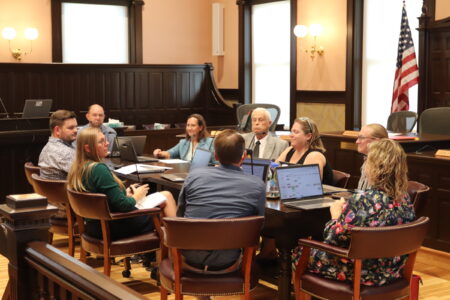
Douglas County commissioners signal support for beginning a ‘phased approach’ of changes to the county’s zoning code

State health officials warn of increased risk of rabies exposure, especially from bats
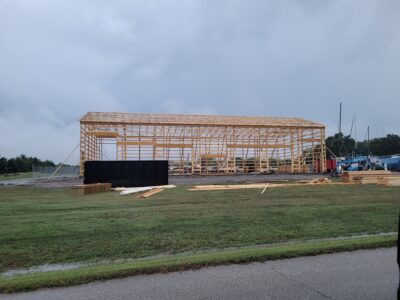
Boaters won’t have to leave Clinton Lake for maintenance or repairs with new service center at the marina
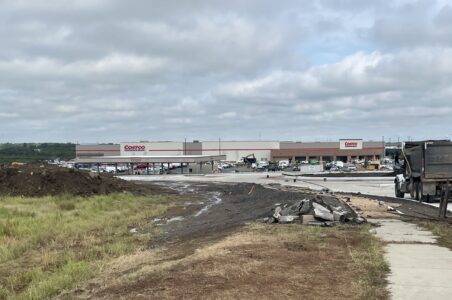
Costco confirms its Lawrence store will open on Oct. 29

Nine Lawrence-area high school seniors named semifinalists in national scholarship program