Douglas County Commission to review report from indigent defense work group, comments from chief judge

photo by: August Rudisell
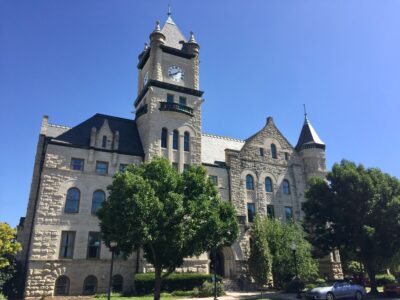
The Douglas County Courthouse is pictured in this contributed photo from June 2020.
County leaders will soon receive a report from a work group that has been studying issues with public defender services for people who are accused of crimes and cannot afford attorneys.
As part of its meeting Wednesday, the Douglas County Commission will receive the report from the Indigent Defense Services Work Group. The report includes concerns with the county’s current panel-based system, and it comes as the commission is preparing to consider proposals from two attorney groups seeking funding from the county to provide public defense services.
In February, a new nonprofit attorney group, Kansas Holistic Defenders, proposed that it help provide indigent defense for misdemeanors under a new model. In March, the county held a study session on indigent defense in the community and thereafter established the work group to discuss issues regarding indigent services for both misdemeanor and felony cases.
More recently, another attorney group, Douglas County Defense Services, has proposed that it provide public defender services for people accused of misdemeanors. As the Journal-World has reported, some local defense attorneys previously criticized KHD’s proposal, and the DCDS group includes some of those same attorneys.
The commission set aside additional funding for misdemeanor indigent defense as part of its 2022 budget, but the allocation has not yet been finalized. The commission is scheduled to review the two competing proposals on Nov. 17. The work group included the chair of KHD as well as attorneys now involved with the proposal from DCDS.
The report from the work group includes several concerns with the current panel system, including a lack of organization, transparency and accountability. Some specific concerns noted in the report are as follows:
• There is no structure for those attorneys to report data or collaborate with service providers.
• There is little to no data on the current panel system with regard to clients, caseload, performance or efficiency.
• There is no requirement for panel attorneys to learn about alternatives to incarceration, or to engage with community-based services.
• Any clients’ concerns about their attorney must be brought to a judge, leading judges to play an oversight role for defense counsel in a way that they do not for prosecutors.
The report goes on to state that the county has invested significantly in pretrial reviews, alternatives to incarceration, diversion and post-adjudication services, and there is a strong desire to ensure that clients using indigent defense services have the support to engage in these services.
The workgroup recommends that additional information be collected and analyzed, including the caseload of all attorneys, the days between assignment and first contact with clients, rates of pre-trial detention, the number of referrals provided to outside service providers, and the outcomes of cases, among several other data points.
The county provides funding for the public defense of misdemeanor cases, while the state funds felony cases. Public defense is currently provided through a panel of private defense attorneys who are appointed by the court to take on individual cases.
As part of Wednesday’s meeting, the commission will also receive comments from Chief Judge James McCabria.
In a memo, McCabria wrote in part that the court believes that the district currently provides, and has a long history of providing, well-qualified and effective counsel to indigent defendants. Yet, he states that the decision of how indigent services are paid for is the responsibility of the County Commission, and that the court appreciates and encourages efforts to improve the quality of the services.
However, McCabria also expressed concerns about potential changes and encouraged the commission to consider how to address them.
One of his concerns was that it would be difficult for the three attorneys that KHD was proposing to handle the many responsibilities required of them — appearing at hearings, doing legal work outside of court, providing services other than legal representation for clients and more.
He also wrote that there could be “numerous instances where a single holistic office could not ethically represent certain indigent defendants,” and that there weren’t many specific details on how a new public defender office would operate in the local court system.
“The presentations to date of exactly how any office plans to operate within the environment of this district have been generic and, in many instances, reflect a lack of familiarity with local processes,” he wrote.
McCabria also wrote that if the commission contracted with a particular entity to provide legal services, that entity “can and will adapt as they learn.” But he also encouraged the commission to be specific about what aspects of the current system needed improvement and to determine how those improvements would be measured.
He also expressed his appreciation for the current panel of attorneys and the commission’s work to improve services.
“We recognize there are positive and negative aspects of any method for providing indigent defense services,” McCabria wrote. “We applaud the commission for taking an interest in the issue and seeking to improve how things are done in Douglas County.”
The work group’s full report and the full comment from McCabria are available as part of the commission’s agenda packet on the county’s website, douglascountyks.org.
The Douglas County Commission will convene at 4 p.m. Wednesday for its study session and at 5:30 p.m. for its regular agenda at the county courthouse, 1100 Massachusetts St. Residents can participate in the meeting in person, virtually or via phone, and more information about those options is available at douglascountyks.org/commission/meetings.
County Government
Douglas County commissioners signal support for beginning a ‘phased approach’ of changes to the county’s zoning code
Douglas County commissioners to hear plan for updating zoning, subdivision codes in rural areas
Heartland Community Health Center focuses on staff turnover as demand for psychiatric care grows
Douglas County commissioners to consider new solid waste management plan following public hearing

Planning commissioners must produce documents within 30 days in solar farm dispute, judge rules