Douglas County commissioners approve county-run truancy program despite calls to keep nonprofit model
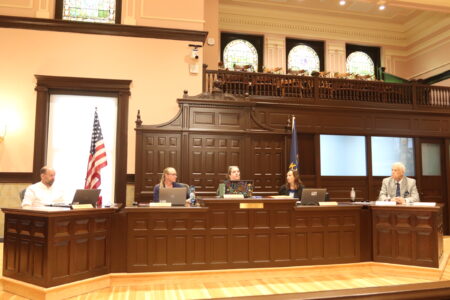
photo by: Josie Heimsoth/Journal-World
Douglas County commissioners meet on Wednesday, July 1, 2026.
Douglas County’s new truancy program will move forward despite lingering concerns about how it will serve students and families.
Since last year, the county has been working on developing a truancy program for elementary and middle school students – “EveryDay Counts” – and it will be run by Douglas County Criminal Justice Services’ Youth Services division. But there have been some concerns, even from a Lawrence school board member, about the county’s case management approach and stepping away from its agreement with the nonprofit Center for Supportive Communities.
While county commissioners approved the program on Wednesday, it wasn’t unanimous. The vote was 3-2 with Commissioners Erica Anderson and Gene Dorsey opposed, with those commissioners citing their same concerns when the program was previously considered several weeks ago, as the Journal-World reported.
There were multiple public comments from people urging the commissioners to continue funding the CSC’s truancy program SupportEd, which operates more of a “mentoring model.” Commissioner Patrick Kelly asked why the case management model was chosen over the mentoring model when county staff developed its proposal for a program.
“We were tasked with the duty to explore opportunities for any type of model that would be available to put our youth and families in a successful position and return to the school setting,” Kate Holman, Youth Service’s truancy/juvenile services officer, told commissioners.
Holman said both mentorship and case management are important in addressing truancy, and she provides case management services, which helps refer students to mentoring programs.
“I am not ever going to vote against the need for mentorship,” Holman said. “I am not ever going to go against case management. Both collaborate very well.”
EveryDay Counts was put forward after county commissioners decided to not allocate funds it previously gave to CSC to create its own in-house truancy program. The money wasn’t allocated out of concern the CSC would lose AmeriCorp funding, but the organization was told they would actually be receiving the funding weeks after the county’s 2026 budget deliberations.
The SupportEd program at the CSC operates with more than 30 trained community members and provides mental health interventions to families directly. Each student in the program is paired with an adult mentor, who teach skills, help solve problems and offer academic and social support.
Commissioner Shannon Reid said that while she thinks there’s opportunities for partnering with other community entities in the future, she thought this was a long-time coming for the county to invest in truancy programming.
Meanwhile, Commissioner Erica Anderson said she didn’t see this program as “the best practice,” adding that other groups should have been at the table. Anderson also added that the two positions listed to run the county’s program weren’t enough.
Commissioners initially considered the program in May, but only four of the five commissioners were present and it was a split vote with Anderson and Commissioner Dorsey opposed. Commissioner Karen Willey was absent.
But Willey was at the meeting on Wednesday, and she said conversations surrounding the budget and where to allocate funding for services is tough.
“I am in favor of moving forward with the program that we have asked staff to put together,” Willey said. “I think they’ve been really responsive to the conversations with partners in schools as they talk about what they want to see out of this. I think this gives us the ability to move to a different model that we need to.”
Commissioner Patrick Kelly said he was holding onto his position from May, in favor of the county program, because he respected the position commissioners put staff in to make a decision.
“I’m going to push hard on this during the budget time to be thinking about how we involve all these people who are excited about helping kids go to school,” Kelly said. “Because it’s a major issue for our schools … I want the school district to be more involved in that discussion. It may take more school district funds, it may take more county funds, but we gotta work together.”
IN OTHER BUSINESS, COMMISSIONERS:
• Held a work session with Consolidated Fire District No. 1 regarding its proposed budget for 2027. The proposed 2027 operating budget for CFD No. 1 – which provides services in rural Douglas County and the City of Lecompton – totals about $2.46 million, and it maintains the 6.0 mill levy, or property tax rate, as the Journal-World reported.
While the base budget for 2027 does not include an increase to the mill levy, CFD No. 1 asks county commissioners to consider the option of funding a staffing expansion. The biggest staffing expansion requested by the CFD No. 1 would mean an increase of 4.10 mills – one mill is equal to $1 per every $1,000 of assessed property value. The second option would increase the mill levy by 3.61 mills with the third option being a 2.15-mill increase.
Commissioners did not decide on what option they would like to pursue on Wednesday, but will revisit the discussion next Friday during budget hearings for the county’s 2027 budget. Any property tax increase for the CFD No. 1 would not be countywide, only in its service jurisdiction.
• Executed a cooperative agreement with the City of Lawrence and the Lawrence school district to help Alarm.com, a smart home tech firm, redevelop a downtown building into its new office space at 714 Vermont St. in Lawrence, as the Journal-World reported.
The agreement is for a Neighborhood Revitalization Area, with a 10-year, 80% property tax rebate. When the 10-year rebate period expires, all participating jurisdictions would receive 100% of taxes generated from the improved valuation.
Other News
Douglas County commissioners discuss tracking results of awarded funding to community partners

Baldwin High already has won $25K and is competing for $1M through national sports program

On sister city visit, delegates from Hiratsuka, Japan, see Lawrence’s friendship firsthand

U.S. Sen. Roger Marshall faces Democratic, Libertarian challengers in general election

Incumbent Douglas County commissioner and newcomer challenger face off for District 5 seat