Farm to School adds gardens at Lawrence elementary schools
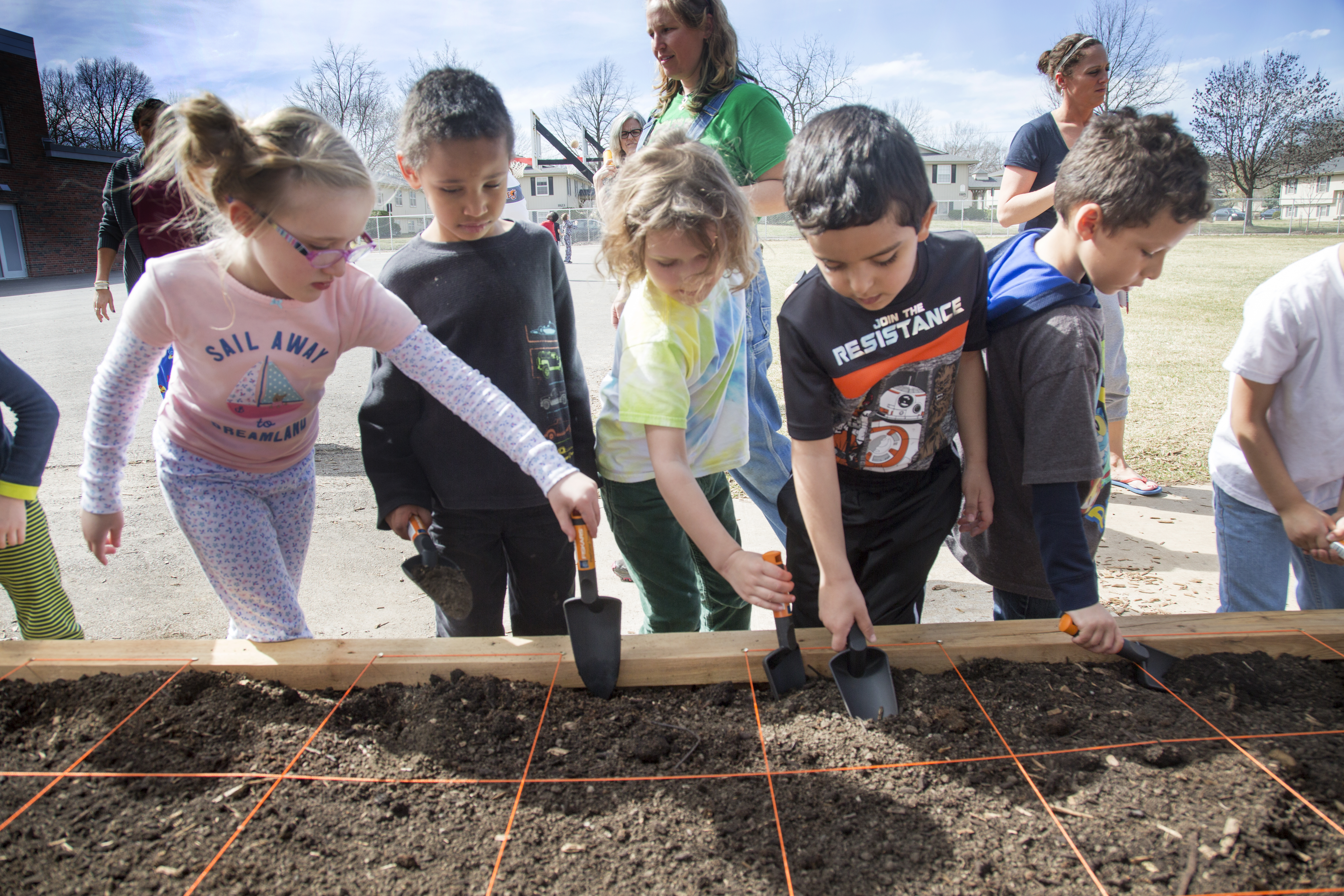
Cordley Elementary School kindergarten students plant seeds after ground is broken on a school garden, Friday, March 11, 2016, in this Journal-World file photo.
When Cordley Elementary students were handed packets of seeds for their school’s new garden Friday afternoon, some seemed unsure exactly what to do. A few students upturned the entire packet of radish, carrot or spinach seeds in a pile on top of the dirt, but others seemed more familiar.
“I like that every day we’ll get to watch it grow until it’s the full plant,” third-grader Bebel Piepergerdes said as she mixed soil and compost before planting her seeds. “I’m looking forward to picking them off the stems.”
The Cordley garden is part of the districtwide Farm to School program, one of the goals of which is to increase students’ knowledge of food and nutrition.
As students were handed seeds, Farm to School coordinator Crystal Hammerschmidt explained to them about how far apart and how deep different seeds needed to be planted. She also answered more basic questions, such as “What is arugula?” or “Why can’t we plant watermelons?” as students from each grade level stopped by to perform a task.
Cordley students aren’t alone in their effort. Across the Lawrence school district, five elementary schools are adding or significantly expanding their school gardens this year.
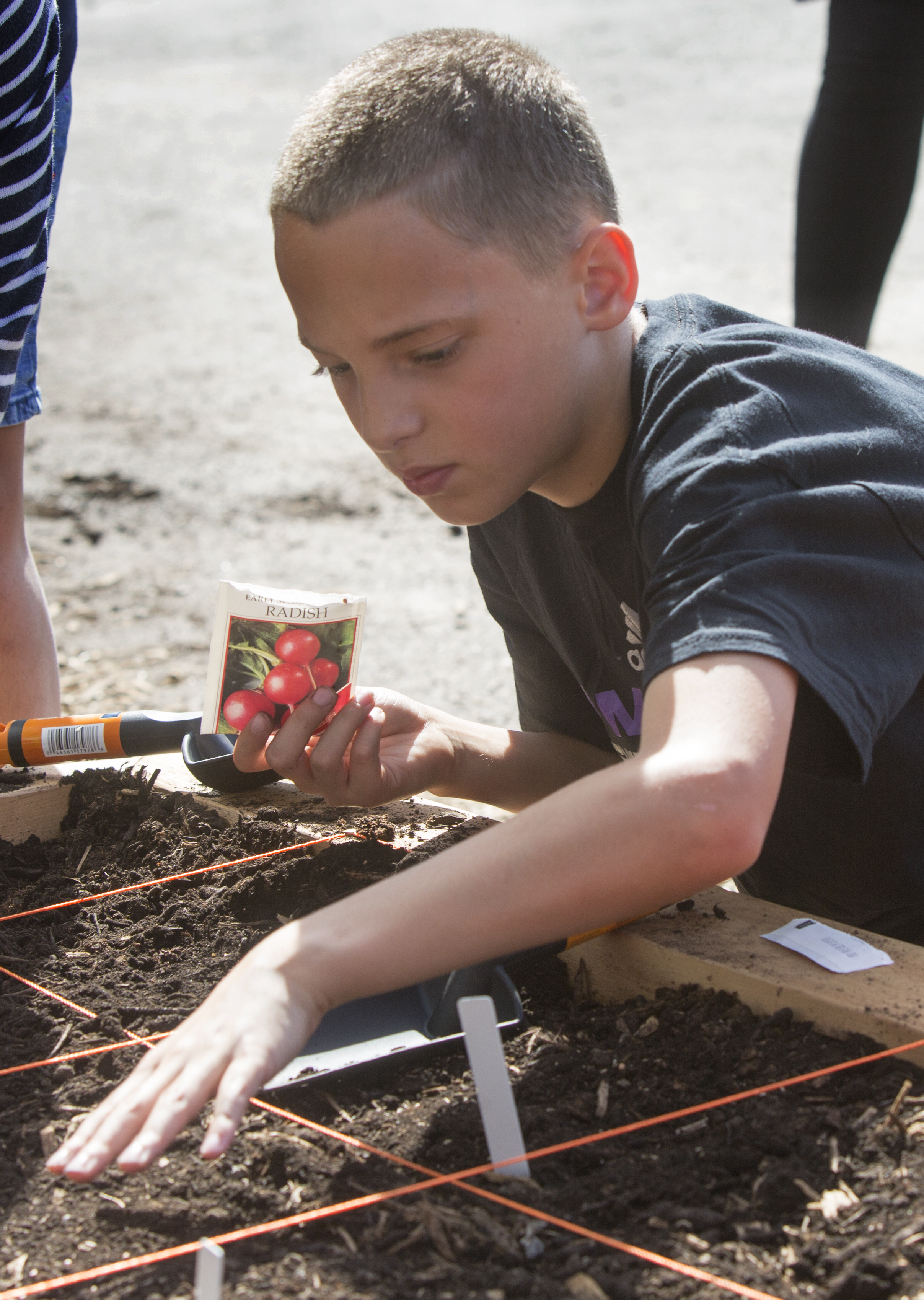
DeAnte Daniels, a fifth-grader, plants some radishes on Friday, March 11, 2016 at Cordley Elementary School.
The recent additions — at Cordley, Hillcrest, Quail Run, New York and Woodlawn — mean about half of the district’s 14 elementary schools now have gardens. Some schools also reinitiated gardens following recent construction projects.
Over the course of the afternoon, some students prepped the garden beds, some planted and others watered. The point was that every student at the school did at least something, said parent volunteer Melissa Freiburger.
“So every child is going to interact with the garden, which is what I think is the beauty of it, is that they’ll all be invested and they’ll all have pride in the garden,” she said. “We want to just build excitement with them, and I think that getting them digging in the dirt is the way to do that.”
Third-grader Channing Saint Onge was one who seemed excited. Channing talked with friends as they filled receptacles with soil and compost.
“I think it’s a really fun opportunity that we get to do this, because not all schools do this,” she said. “It’ll be really fun to watch the plant grow and see how it changes.”
The kids will also get to sample some of the produce once it’s ready, but the garden goes beyond that as well. The Farm to School program was initiated last school year, funded in part by a nearly $100,000 Healthy Living grant from the Kansas Health Foundation. As part of the program, student work in school gardens is coordinated with health, science and nutrition curriculum in the classroom.
Farm to School, a Kansas Department of Agriculture program, already helps support school gardens at all of Lawrence’s middle schools. The produce grown in the gardens is given to the school cafeterias, and middle school students also sell some of the fruits and vegetables at local farmers markets.
Although there is always a lot excitement around planting, Hammerschmidt explained the main challenge of all the gardens is having enough committed volunteers to keep them going.
“Ultimately, the more hands you have in it, the more successful it will be,” Hammerschmidt said.
If parents or teachers are interested in volunteering at a garden at their school, more information is available on the Farm to School website.
City Government
City of Lawrence seeking public feedback on its bike infrastructure plan

City to keep Community Building open through end of 2026; leaders want more data before deciding on 2027
City leaders approve incentive for 131-unit housing development near Wakarusa and Queens
Developer seeks incentive from City of Lawrence to build 131 units of housing near Wakarusa and Queens

Lawrence city leaders will consider whether to keep Community Building open, make 2 other rec centers free to access