

Planned pipeline project passes regulatory hurdle
Oil line would pass through northeast Kansas
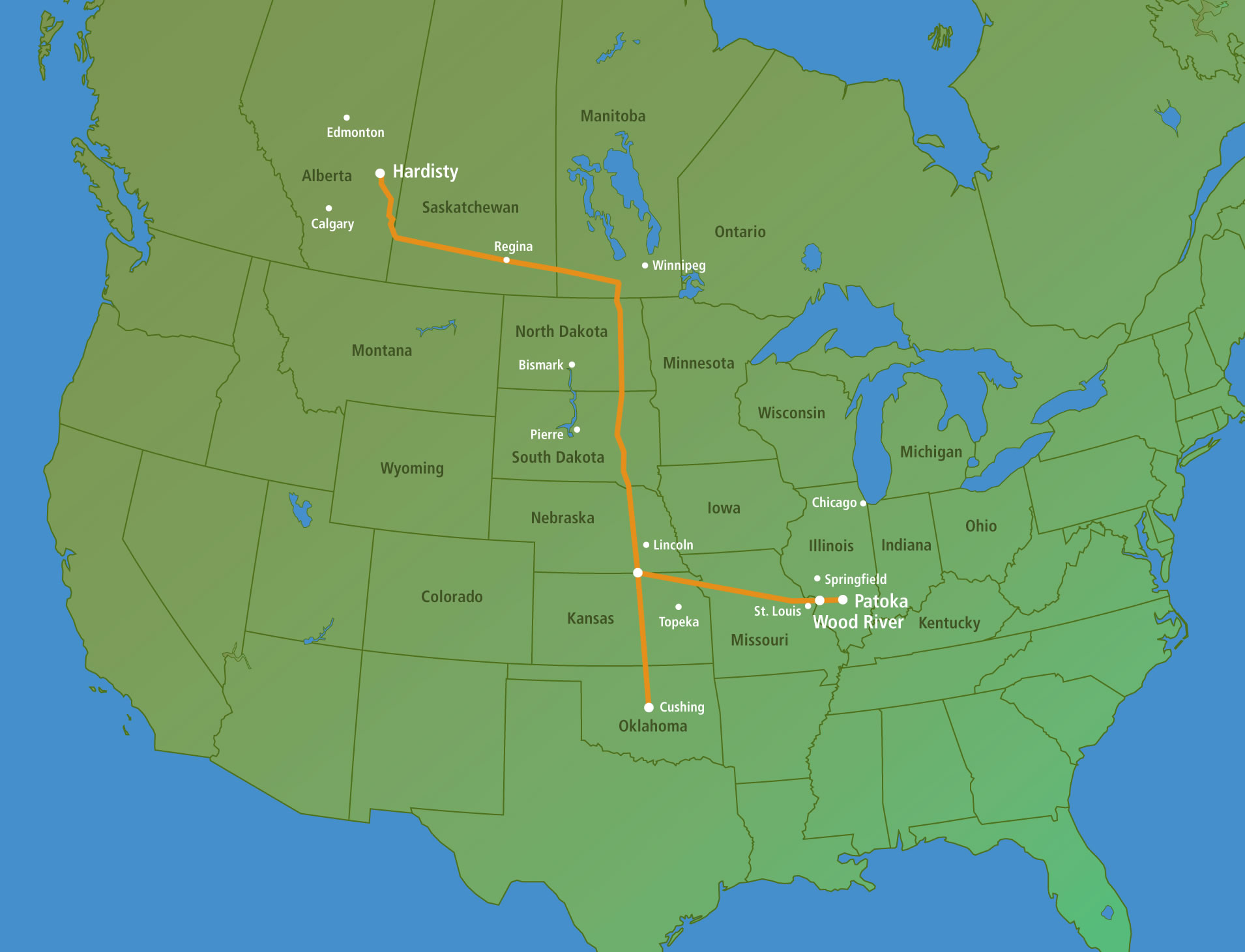
This map shows the full route for the pipeline, from Canada to markets in Illinois and Oklahoma.
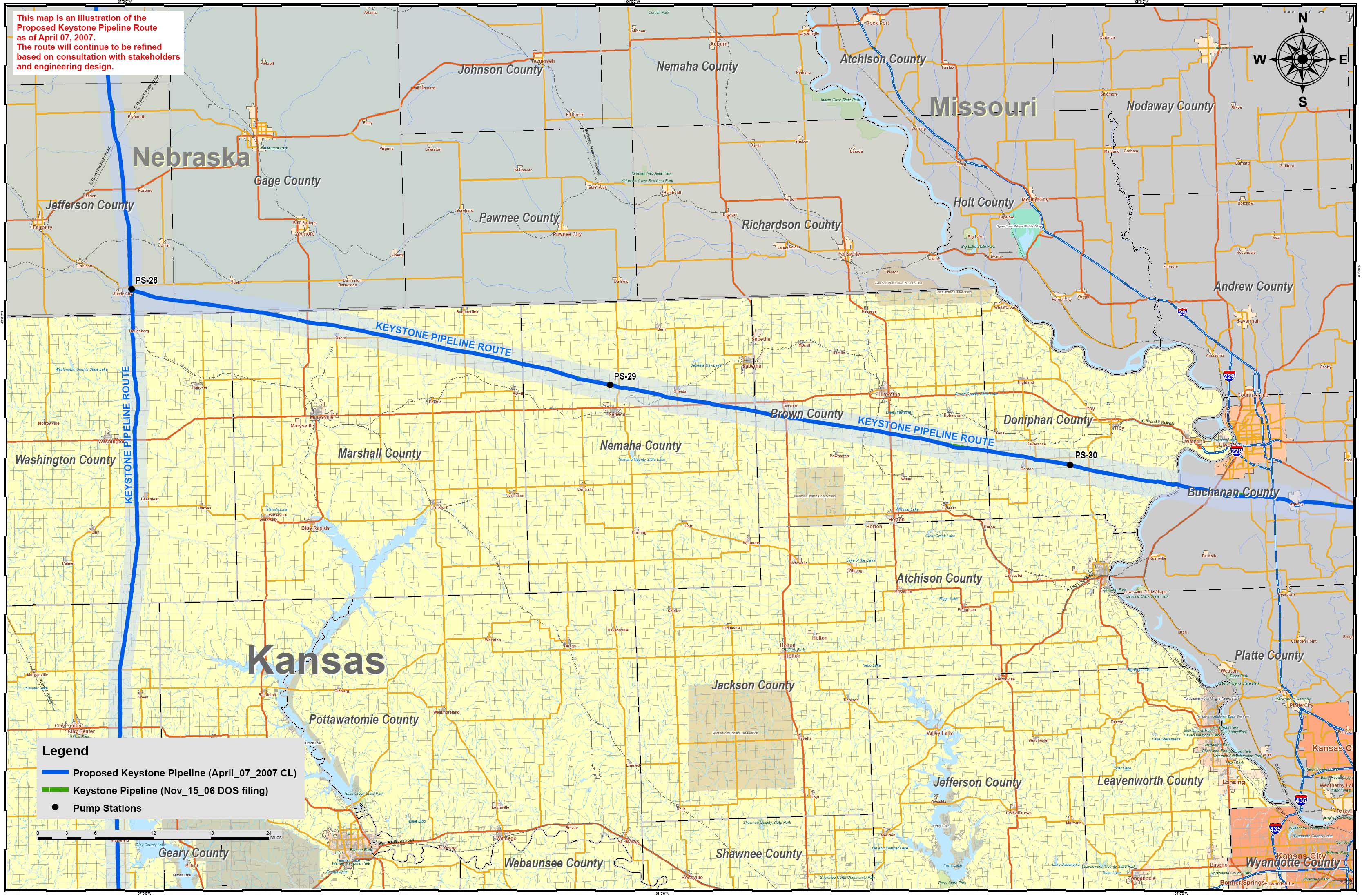
This map shows a more detailed look at where the oil would flow through Kansas, including Brown and Doniphan counties.
Oil pipeline
For more project information, visit the TransCanada Keystone Pipeline Project.
Sioux Falls, S.D. ? A proposed oil pipeline that would pass through northeast Kansas and deliver Canadian crude to U.S. refineries has passed another regulatory hurdle.
TransCanada Corp. said Friday that it has received a Final Environmental Impact Statement from the U.S. State Department that says the company’s planned Keystone Pipeline project would result in limited adverse environmental impacts.
The company said it anticipates a decision in February on a presidential permit authorizing the construction and operation of the facilities at the U.S.-Canada border crossing. The Final Environmental Impact Statement is a requirement for the presidential permit process.
“This outcome is another significant milestone in advancing the Keystone Pipeline project,” Hal Kvisle, TransCanada’s president and chief executive, said in a release.
TransCanada plans to start construction this spring on the 590,000-barrel-a-day Keystone pipeline, a 2,148-mile route passing through North Dakota, South Dakota, Nebraska, Kansas and Missouri. Construction of the Kansas portion of the project would be expected in 2009.
The pipeline actually would be in two segments in Kansas. One, which would be headed toward crude markets in Patoka, Ill., would pass through Brown and Doniphan counties in northeast Kansas. The other stretch would run north and south, passing east of Clay Center on its way to Cushing, Okla.
The Canadian government already has given regulatory approval for the route through Canada.
State Government
Kansas lawmakers hear about potential $1.1B in lost property taxes from industrial revenue bonds
TOPEKA — Kansas counties issued $18.3 billion in industrial revenue bonds to new and existing businesses ...
‘Honor of my life’: Retiring Regents leader reflects on higher education and the challenges it faces
Roger Marshall says he would refuse a Trump appointment
TOPEKA — U.S. Sen. Roger Marshall vowed to be on the Kansas general election ballot in November and to decline ...
GOP gubernatorial hopeful inflates record on voting
Kansas’ kratom ban begins July 1, and law enforcement and health officials in Lawrence are preparing
Retiring revenue secretary lauded by Kansas governor
TOPEKA — The Kansas Department of Revenue secretary plans to retire from the agency at the end of July after ...