Town Talk
Four more candidates file for Lawrence City Commission seats ahead of today’s deadline; field set at 11 candidates
Voters, get your memory caps out. Lawrence residents will have 11 different candidates to choose from during the upcoming City Commission elections.
The filing deadline was at noon today, and four more candidates threw their names into the ring.
Two of the candidates — Judy Bellome, the retired CEO of Lawrence’s Visiting Nurses Association, and Leslie Soden, a former president of the East Lawrence Neighborhood Association and owner of a pet care business — are candidates we told you to expect in yesterday’s edition of Town Talk.
But two more candidates came in just under the deadline.
William R. Olson and Nicholas E. Marlo both filed the necessary paperwork late this morning. I haven’t yet talked to either of them, but their filings give some information about both. The form asks for any place of employment during the last year, and Olson lists a management position with the R Bar & Patio in Lawrence. Marlo lists a position with Boston Financial Data Services, which folks in town may previously have known as DST Systems, the financial services company in the former Sallie Mae building near Sixth and Iowa.
I’m working to get in touch with both of the new candidates, and will add an update here when I do.
As for the rest of the field, here are the seven candidates who filed prior to today:
• City Commissioner Mike Amyx, a downtown barber shop owner;
• Rob Chestnut, a former Lawrence city commissioner and a CFO for a Topeka-based publishing company;
• Scott Criqui, a Lawrence human relations commissioner and an executive with a Lawrence-based home health care company;
• Jeremy Farmer, executive director of the Lawrence-based food bank Just Food;
• Reese Hays, chief litigation counsel for the Kansas Board of Healing Arts in Topeka;
• Terry Riordan, a Lawrence physician and former Lawrence-Douglas County planning commissioner;
• Michael Rost, an attorney for a Topeka insurance company.
As expected, City Commissioners Aron Cromwell and Hugh Carter did not seek re-election.
With 11 candidates, this will be one of the larger fields in recent memory. It is far different from two years ago when only five candidates ran for three seats. It will be interesting to see if the larger field means candidates have some burning issues they want to talk about. The election two years ago didn’t have many hot-button issues.
Voters will narrow the field down to six candidates in a Feb. 26 primary. Voters then will elect three commissioners during the April 2 general election.
UPDATE: I’ve gotten in touch with Nicholas Marlo this afternoon. Marlo is a 23-year old recent graduate of Kansas University, and he said he’ll try to bring up issues important to younger voters.
“It seemed like it would be a fun thing to do,” Marlo said of his decision to enter the race. “I felt like maybe it would be good to have a larger youth voice.”
Marlo said one issue he wants to explore is having more late-night public transportation available in the city. He said late-night public transportation service might improve safety in the community by cutting down on the number of people who are driving after going to a bar.
Marlo works for Boston Financial Data Services in Lawrence, where he is a mutual fund representative in the company.
I’m still looking to get in touch with Olson.
Solar panels on the roofs of downtown Lawrence buildings ready to start cranking out electricity
A fellow can see lots of unusual things in downtown Lawrence: A honk for hemp guy; a gauntlet of street musicians of varying skill levels; and occasionally — thankfully — a man who walks around in nothing but a full-body suit of Spandex. (Please tell me I’m not the only person who has seen that.)
But have you seen the new downtown machine that can light up 400, incandescent 100-watt light bulbs all at once? Chances are you haven’t, unless for some reason you spend time on the roofs of downtown businesses. As we previously reported, downtown landlords David and Susan Millstein had a plan to put solar panels on their Liberty Hall and Sunflower Outdoor buildings in downtown.
Well, that plan has materialized. There are now about 200 solar panels on the roof of Liberty Hall, 644 Massachusetts St., and about 65 on the roof of Sunflower, 804 Massachusetts St. Look if you want, but the panels aren’t visible from the street. If all goes well, the solar panels are scheduled to start producing electricity today.
The folks at Lawrence-based Cromwell Environmental helped with the installation. Chris Rogge, director of solar design for Cromwell, said one way to look at the installation is that the system will generate enough power to light about 400, 100-watt incandescent light bulbs. (But, of course, you would have to be some sort of environmental heretic if you are still using incandescent light bulbs, right?)
Another way to look at it, though, is that the system will produce about $5,000 worth of electricity per year, Rogge said. And that’s based on the price of electricity today. Each year, the value of that electricity is going to increase. (Unless you think the power companies are suddenly going to lower their rates, in which case, you’ve perhaps stuck your finger in the light socket one too many times.)
Kansas now has a law stating that businesses or residents can install solar panel systems, and the electric provider in the region must buy back the electricity it produces. In other words, your monthly utility bill is offset by the amount of electricity the solar panel system produces.
Lawrence has become a bit of a hotspot for solar projects. The Poehler Lofts building near Eighth and Pennsylvania streets has an entire roof full of the panels, and the new Hy-Vee convenience store along Clinton Parkway also has solar panels on its roof.
But this project is a first for downtown Lawrence. I haven’t yet talked to the Millsteins to find out whether their experience with it leads them to believe that other landlords may follow their lead.
I know the Bowersock hydroelectric power plant expansion on the northern edge of downtown has caused some people to think about how Lawrence can better promote itself as a standout in the green energy field. Having Massachusetts Street lined with solar panels may be part of a strategy.
Or we could all just start wearing green, full-body Spandex suits.
UPDATE: I chatted today with David Millstein about the installation of the solar panels. He's estimating that the system will break even in about seven years. He's hoping that the system will reduce his energy bills by 20 percent to 30 percent.
He also hopes that in a few years he'll be able to report some success back to other downtown landlords who then will give the solar systems a try. Millstein said he's been looking at the idea of solar energy since at least the mid-1990s.
"Back then the price was so prohibitive," Millstein said. "It was like a 29-year payback, and the panel only lasted like 20 years."
But as technology has improved and prices have dropped, Millstein said he started looking at the project again because the environmental appeal of solar power has always stuck with him.
"Essentially, if you scratch an old hippie, there is a solar panel under there somewhere," he said.
Compton says he thinks convention center would be good addition to downtown Lawrence
I wonder if Lawrence businessman Doug Compton is becoming the E.F. Hutton of downtown Lawrence.
Oh, what’s that? You don’t remember popular television commercials from the 1970s? (My understanding is that there are large swaths of Lawrence’s population who lived through the 1970s but for some reason don’t remember them.)
Anyway, E.F. Hutton was a prominent investment firm that ran television commercials with the tag line: “When E.F. Hutton talks, people listen.”
Given that Compton, and groups that he leads, are spending tens of millions of dollars to remake the intersection of Ninth and New Hampshire with multi-story buildings, it is feasible to think that when Doug Compton talks about downtown, people are listening.
If so, here’s a statement you may want to take notice of: “It would be great to have a convention center in downtown Lawrence,” Compton said. “I would love to see that.”
Compton last week was answering a question as part of a panel hosted by the Lawrence commercial real estate office of Colliers International. Compton was answering a question about what he would like to see in downtown Lawrence in the future.
He didn’t go into any detail about a downtown convention center, such as how large it should be or where it should be located. There are no Lawrence convention center plans on the front burner at Lawrence City Hall that I’m aware of, but it is easy to see how the idea could get some discussion in the foreseeable future. When Compton’s group completes his Marriott hotel project at Ninth and New Hampshire streets, there will be three, full-service, upscale hotels in downtown: The Eldridge; SpringHill Suites by Marriott; and the new extended stay Marriott that Compton’s project will build. Plus, The Eldridge also operates an extended stay hotel project at Eighth and Vermont streets, and has a vacant lot next to The Eldridge that it has talked about expanding into. All of those projects would be within walking distance of a downtown convention center.
It also is worth noting that Compton is a part of the group that recently took over the long-term lease for the city-owned Abe & Jake’s building. Downtown nightclub owner Mike Logan will run the day-to-operations of that facility, and he has told me that one of the goals is to get more weekday, daytime meeting business into the unique building along the Kansas River. It might be a bit of a stretch to call the building — which can accommodate around 700 people — a convention center, but it certainly will give the group a taste of what it takes to attract large meetings, trade shows and such to the city.
Lawrence architect Mike Treanor — who has been a partner with Compton on several projects — echoed Compton’s sentiments about a convention center.
“A convention center is a terrific idea,” Treanor said.
But he also reminded the crowd that convention centers are they type of project that require some public investment. The city recently has shown willingness to invest in downtown through use of tax increment financing and a special transportation development district that will allow future tax dollars to help pay for infrastructure related to the Ninth and New Hampshire projects.
“To do infrastructure in downtown is so much more expensive than to do it on a greenfield site on the edge of town,” Treanor said. “But Lawrence has a good attitude right now about those type of tools.”
Now, don’t get me wrong, I don’t think Compton and Treanor were really trying to lay the groundwork for some sort of convention center proposal in the near future. I think they were just asked a question and answered it, and maybe there was a little bit of seed planing going on as well. Regardless, it is interesting to think about.
The question of downtown’s future needs also drew an interesting response from Downtown Lawrence Inc. director Cathy Hamilton. She told the crowd that Downtown Lawrence Inc. would love to see a dedicated downtown Lawrence visitors center.
The association currently has a second-story office in downtown, but Hamilton believes a full-fledged visitors center with maps, brochures and friendly people to help point visitors in the right direction could be a real asset to downtown tourism.
“Something on the ground level where people can find a human point of contact,” Hamilton said. “It is our dream at this point, but it is something we’re working on.”
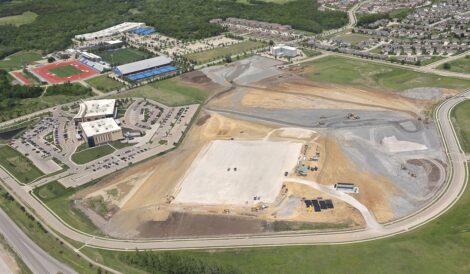
For what it is worth, Compton also used the forum to chime in on the proposed recreation center and sports park near the northeast corner of Sixth Street and the South Lawrence Trafficway. He made it clear that he didn’t think the sports park and the associated development that may occur around it would hurt downtown Lawrence. In fact, he thinks the edge-of-town development ultimately will help downtown.
“I think it will be a big asset to downtown,” Compton said. “It will bring more people to town who wouldn’t be here otherwise.
“Obviously, we’re getting ready to invest $17 million or $18 million in a Marriott, so we are excited about having more people come and stay in hotel rooms. Whenever people come to Lawrence, they always end up in downtown. I don’t think that is going to change.”
Compton — who also runs Lawrence’s First Management Construction Co. — didn’t get into any other details of the project, including what he thinks of a proposal that would allow Lawrence businessman and fellow construction executive Thomas Fritzel to match any construction bids received for the proposed recreation center.
It would be interesting to hear thoughts on that subject, but so far no area construction company has publicly chimed in on the topic.
Just as well, I’ve been busy recently sending off my investment checks to E.F. Hutton. What’s that? Son of . . . No, I hadn’t heard that E.F. Hutton is dead.
Speculation that retired health care executive and Lawrence neighborhood leader both will enter race for Lawrence City Commission
We’re dismissing questions about the upcoming Lawrence City Commission election like my wife dismisses my request to have access to our ATM PIN number.
First was whether the Lawrence City Commission race would have enough candidates for a primary? Yep. As we reported last week, there are now seven candidates in the race, which triggers a Feb. 26 primary to cut the field to six.
Next is whether any female candidates will enter the race? I’ve been told the answer soon will be yep and yep. I’ve been told to expect two female candidates to file before tomorrow’s noon deadline.
Leslie Soden, a former president of the East Lawrence Neighborhood Association and a founder of the Madre Lawrence group, confirmed to me that she will file her paperwork tomorrow morning.
Multiple sources also have told me that Judy Bellome, the recently retired chief executive officer of the Lawrence-based Visiting Nurses Association, plans to file for a seat on the commission.
Soden has contemplated making a run for the City Commission for the last several months, but a few weeks ago she told me she had decided against it. She said she was going to focus on her duties as a member of the newly created Joint Economic Development Council for Lawrence and Douglas County.
But she also told me at that time she was conflicted because she really does think there needs to be more diversity in the field of candidates.
Soden will bring a definite neighborhood perspective to the City Commission race. She has been deeply involved in neighborhood association issues over the last several years. She became more well-known in City Hall circles by serving as one of the main voices of opposition to the proposed multistory hotel/retail building at the southeast corner of Ninth and New Hampshire streets.
I haven’t yet talked to Soden in enough detail to know her positions on several of the big issues, but the Lawrence Association of Neighborhoods, which Soden has been active in, has taken positions on a couple of the larger issues: the proposed $25 million recreation center and the expansion of the city’s rental registration and licensing program.
LAN took a position expressing concern about the proposed bidding procedures and other parts of the process related to the regional recreation center project. The association also came out in support of a major expansion of the city’s rental registration and licensing process for apartments. Don’t sleep on that issue. It will be a big one for apartment owners and real executives, who historically have been good at raising money for City Commission races.
As I noted last week, it will be interesting to see how large of an issue the recreation center project becomes in the race. It is very possible the current City Commission will make a commitment on the recreation center project in mid-February, a few days before the primary election.
But a couple of candidates — Mike Amyx and Reese Hays last week — both expressed concern about portions of the recreation center proposal during their campaign announcements. Will it be an issue for Soden? I don’t know. Perhaps the biggest question left in this race, other than who is going to win, is whether there are candidates who think this recreation center business is a political haymaker with voters. I’ve heard some people suggest this election could end up being an unofficial referendum on the recreation center project. I’ve heard others say that because the decision already will have been made that it is unlikely. We’ll see.
As for Bellome, I haven’t yet gotten in touch with her to confirm her plans. But she is well-known in the social service and health care arenas in the community, and has gotten to know many community leaders who have served on the board and volunteered for Visiting Nurses Association.
We’ll see if anybody else gets into the field before tomorrow’s filing deadline. The last election two years ago produced only five candidates, so already the interest level is quite a bit higher, for whatever reason. The general election is set for April 2.
Rock Chalk Park project likely to ask for property tax abatement from City Hall; questions about for-profit ownership emerge
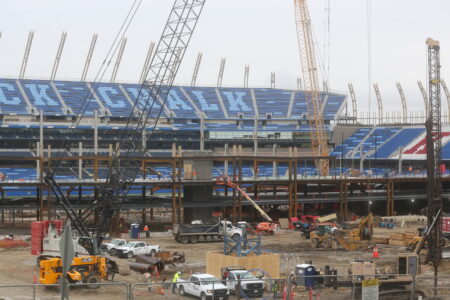
New details keep emerging about Thomas Fritzel and Kansas University’s proposed Rock Chalk Park sports complex in northwest Lawrence.
The newest one is that the developers of the project will be asking for a 10-year property tax abatement from the city. City commissioners also will be asked to provide up to $40 million in city-issued industrial revenue bonds for the project.
That request for industrial revenue bonds hasn’t particularly been talked about a lot so far, but it didn’t come up entirely out of the blue. Kansas University Endowment briefly mentioned the need for industrial revenue bonds in an Oct. 2 letter, and City Manager David Corliss recently reminded city commissioners that such a request may be coming forward. (A quick note on industrial revenue bonds. Technically the bonds are issued by the city, but they are not the responsibility of the city to pay. The city's full faith and credit are not pledged to the bonds. What City Hall ramifications there would be if there was a default on $40 million worth of industrial revenue bonds is an interesting question, but legally, the city would not be obligated to pay the debt.)
The request for a property tax abatement, however, is a new arrival on the public scene. City staff members reported in a recent memo that the current understanding is that the ownership structure of the proposed Rock Chalk Park now may preclude the project from receiving an automatic property tax exemption from the state of Kansas. If that’s the case, then the city will be asked to use its powers to grant a property tax abatement.
From a dollars and cents standpoint, I’m not sure this changes much with the project. I think there had been an assumption that the facilities at Rock Chalk Park wouldn’t pay property taxes. For example, Allen Fieldhouse and Memorial Stadium don’t pay property taxes. Thus a KU track and field stadium, soccer field and softball stadium wouldn’t need to pay property taxes either.
But this latest twist highlights that there is a difference between the ownership structure of KU’s traditional sports venues and what’s proposed at Rock Chalk Park. It essentially can be summed up in two words: For profit.
The ownership of Allen Fieldhouse, for example, isn’t controlled by a for-profit entity. As currently proposed, though, the facilities at Rock Chalk Park—we’re not talking about the city’s recreation center at the moment—would be owned by a for-profit entity, controlled by developer Fritzel.
As we previously reported, the plan is for Bliss Sports — a for-profit, limited liability company controlled by Fritzel — to own the facilities for the first 30 years and lease them back to KU. That in and of itself creates a problem with the project’s ability to get an automatic property tax exemption from the state.
But there is now another question about the ownership interest of the project. It previously has been said that KU Endowment will own the land that the facilities sit upon. Well, a land transfer of the property occurred just prior to the New Year, and the KU Endowment Association does not show up as the owner of the property. Instead, a for-profit entity, called RCP LLC, is now listed as owner. The company is so newly formed that records showing the members of that company don’t yet exist at the Kansas Secretary of State’s office.
But I did get in touch this morning with Dale Seuferling, president of the KU Endowment Association. He assured me that KU Endowment Association is the sole member of the for-profit company. He said the new entity was formed because there obviously will be a lot of activity at the site, and the association felt for liability reasons it would be appropriate to have the land owned by its own entity. He said the association has used such a structure for other active pieces of property it owns.
It is worth noting, however, that the creation of this for-profit entity to own the land is different than what had previously been communicated. An Oct. 2 letter to city officials stated “KU Endowment will purchase the tract of land.” Maybe this is a distinction without a difference. I don’t know.
I think the need for the project to receive a property tax abatement, though, will raise the level of understanding in the community that this project has a significant, private, for-profit element to it. The facilities will be owned by a for-profit company, and technically, so will the land.
Now, the question is whether there is any expectation that a for-profit entity — Bliss Sports would be the leading candidate — will be allowed to conduct activities at the property that generates revenue and profit? In chatting with Seuferling this morning, I’m still not clear on that question. But I’ll keep asking around about it, and report what I learn.
Another interesting issue is the long-term situation with property taxes at this site. A city-issued tax abatement for the property only will be good for 10 years. As proposed, Fritzel’s for-profit entity is scheduled to own the facilities for 30 years.
Will the project have to pay property taxes in years 11 through 30? It has been estimated the KU portion of the project will have a market value of about $50 million. The property taxes on that will be substantial. I asked Seuferling, and he said he didn’t know the answer to that question. He said he hadn’t specifically discussed that issue with anyone.
I’ve heard elsewhere, though, that the project — during the next decade — may seek a special piece of legislation from the Kansas Statehouse that would create a specific property tax exemption for Rock Chalk Park, even though the facilities would be owned by a private company.
I hope to get some answers, and when I do, I’ll pass them along.
City gets proposals for citywide, curbside recycling; proposed rates come in between $2 and $5 per month
The idea of adding citywide, curbside recycling service in Lawrence may get its biggest boost yet on Tuesday night.
City commissioners will get their first glimpse at proposed rates to run a curbside recycling service, and the potential increase to monthly city utility bills is coming in below the $5 range that city officials had once projected.
Depending on how you structure the service, the city has bids that would increase the monthly trash rate of residents by about $2 per month for every-other-week service to a little less than $5 per month for weekly service.
As we previously reported, the city received bids from four entities, but if the issue is based just on rates, it looks like two providers will get the most attention: Deffenbaugh Industries out of Kansas City, and a proposal from the city’s Public Works Department for city crews to provide the service.
Here’s a look at some of the proposed pricing for residential customers:
• Deffenbaugh Industries: $2.15 to $2.80 per month to run bi-weekly service; $3.51 to $4.45 to run weekly service. Under this proposal Deffenbaugh would do all collection and processing of recycled materials.
• City of Lawrence: $2.19 to $2.64 per month to run bi-weekly service; $3.50 to $3.94 per month to run weekly service. Under this proposal, city crews would do all collection, but Deffenbaugh Industries would process the recycled materials at its facility in Kansas City. The city also received proposals from Waste Management and Hamm Companies to process the materials, but those bids generally were higher than Deffenbaugh’s proposal.
• Waste Management: $2.68 to $4.01 per month for bi-weekly service; $4.94 to $5.97 per month for weekly service. Under this proposal crews from Waste Management would handle both collection and processing of the materials. Waste Management recently opened a recycling processing center in Topeka.
City officials will have a lot of information to wade through in evaluating the proposals. In addition to the current bids, the city asked each company to provide an estimate of how large of an annual increase in rates each provider would expect. In that category, Waste Management provided the best option. It estimates annual increases at 3 percent per year. Deffenbaugh estimates 3.58 percent per year, and the city estimates 4.15 percent per year.
The city also will have to determine whether there is value in having a recycling processing center close to Lawrence. If that is the case, Hamm Companies has the best proposal. Hamm is proposing to build a new recycling collection center near the intersection of U.S.. Highway 24-40 and Kansas Highway 32 on property northeast of Lawrence.
Another issue city commissioners will have to grapple with is whether the service ought to be weekly or every two weeks. Somewhat surprisingly, the city’s Public Works Department leaders are recommending every-other-week service. Most of the discussion during the city’s Solid Waste Task Force deliberations focused on weekly service. But the Public Works Department notes the every-other-week service would produce a lower cost to the customer, would require fewer miles to be driven by trash trucks and would have less impact on the environment because it would produce fewer vehicle emissions.
Concerns, however, have been expressed that people may not remember which week is recycling week, if the city goes with every-other-week service. The city also is estimating that every-other-week service would require households to have a 95-gallon cart to handle recyclables. That’s a larger cart than the city’s standard 65-gallon cart.
But make no mistake, with whatever curbside recycling option is chosen, residents are going to have another city-issued cart to care for. All the proposals are based on the use of semi-automated or fully automated trucks, which means carts would be mandatory.
All of the proposals also are based on the idea that every household in the city would have the recycling fee added to their monthly bills, regardless of whether they use the service.
And here’s another big consideration for commissioners: Glass, as in glass beer bottles and such. As I read the proposals, Waste Management and its new processing center is the only one of the proposals that is ready to handle glass. Deffenbaugh’s center does not process glass. Hamm Companies did not include glass processing in its proposal to the city, but it said it could provide an alternate proposal if the city wishes to include glass as part of the service.
It will be interesting to see whether Lawrence residents come out strongly one way or the other on whether glass should be part of the city’s curbside recycling program. Currently, there are several glass drop-off stations in the city.
Commissioners will review the proposals at their 6:35 p.m. meeting on Tuesday. How quickly commissioners act on the curbside recycling idea also will be interesting to watch. An odd state law requires the city to wait until at least June 2014 to begin the service. But the city would need to make the commitment to create the service well before then. It seems very possible that the current group of city commissioners will want to make the decision before the City Commission general election in April.
Plans filed for more apartment units at site of former Boardwalk Apartments
Another year, another set of apartment plans. Although it seemed like we spent a lot of time talking about new apartment projects last year, the number of new apartments added in the city ended up being a middling number of 184. In 2011, the city added 355 units, and there have been apartment booms in the city where we’ve left the 400-level in the rear-view mirror as well.
So, we’ll see what 2013 brings. So far, it has brought one new set of apartment plans to Lawrence City Hall. Lawrence architect Paul Werner has filed new plans for a phase II expansion of Frontier Apartments at 542 Frontier Road.
In case you aren’t familiar with that complex, it is where the former Boardwalk Apartments used to be — a block or so north of Sixth Street and a bit east of Kasold Drive.
Plans filed at City Hall call for 18 one-bedroom apartments and 18 two-bedroom apartments to be added at the site, which already has 96 apartments units that were built in phase one of the project.
Werner didn’t provide a timeline for when construction may begin, but the project already has the necessary zoning in place. New plans had to be filed at City Hall because designers tweaked the placement and number of buildings previously approved, which usually indicates developers are getting serious about starting a project. The second phase actually is smaller than what was once envisioned. Back in 2009, the project envisioned the second phase could be another 96 units worth of apartments.
The apartment project has added some unique elements to the Lawrence apartment market. The apartments are housed in three-story tall buildings that are served with elevators, and the project was designed with high-efficiency appliances, added insulation and other elements meant to meet LEED green building certification standards.
But what you may remember most about the apartment project is that it truly is a place where the grass is always greener. When phase one of the apartment project was built, about 20,000 square feet of artificial grass was installed as part of the complex’s landscaping plan.
The artificial grass didn’t meet city code, and the development group — which is led by Lawrence businessman Thomas Fritzel — and the city ended up having quite a discussion about whether the fake grass should be allowed to stay. Ultimately, city commissioners agreed to “grandfather-in” the use of the grass at the complex.
I checked with planners on this phase II development, and so far the plans don’t show the use of artificial grass for that portion of the project. City planners, the documents show, have made it clear that any use of artificial grass at the property will require special approval from the City Commission.
The documents also show that at least one utility company has expressed a concern with the use of artificial grass at the project. Knology, the cable television and Internet company in town, noted that it costs about $100 per square foot to repair the artificial turf if it has to be disturbed to make underground cable repairs.
I’ll keep an ear out for when construction may begin on the new apartments.
Attorneys watching closely as city contemplates retail zoning issue at Sixth and SLT; former planning director sounds off on city’s planning practices
Tuesday night at City Hall was a night for folks who bill by the hour.
City commissioners on Tuesday considered a request to rezone 146 acres for commercial and retail uses at the northwest corner of Sixth Street and the South Lawrence Trafficway.
In a sign that the issue is still a bit prickly, the property owners — a group led by Lawrence businessmen Duane and Steve Schwada — didn’t just bring one attorney to the proceedings. They brought two lawyers plus a court stenographer to the meeting.
As we briefly reported, commissioners sent the rezoning request and related matters back to the Planning Commission for more review. The decision still keeps the idea of retail and commercial zoning for the corner alive. But it is not the result the Schwada group was hoping for.
Attorney No. 1 for the Schwada group, longtime Lawrence land use expert Jane Eldridge, had told commissioners that now was the time for a decision on the property. The property is in a unique situation because the city already has annexed it into the city limits. It pays city property taxes, yet at the moment it has no city zoning designation, which means it can’t be developed for any use.
City commissioners asked the Planning Commission to provide a more detailed recommendation on how it would allocate the amount of potential retail development at the Sixth and SLT intersection among the four corners of the intersection. As proposed, the intersection could have up to 600,000 square feet of retail development.
Another project by the Schwadas, the Mercato development at the northeast corner, already is approved for 360,000 square feet of retail development. Figuring out where the remaining 240,000 square feet of retail development goes is one of the outstanding issues.
So, the project seems to have taken a step in the direction of rezoning the Schwada site, which, if you remember, was once the site for the proposed sports park and city recreation center before it shifted to the east side of the SLT.
But the question now is whether it was a big enough step to keep Attorney No. 2 on the sidelines. Attorney No. 2 is Mary Jo Shaney, a Kansas City trial attorney who has successfully litigated cases related to the property rights of land owners. Some of you may remember that Shaney was part of the legal team that represented Lawrence developer Doug Compton and others in the lawsuit against the city related to the Sixth and Wakarusa Walmart.
But there was at least one other attorney making some noise at City Hall on Tuesday. Price Banks, the city’s former planning director who is now a land use attorney, really criticized the city’s planning process. Banks didn’t indicate he was representing a client, so I assume he was just talking for himself, and he didn’t pull many punches.
Banks said if the rezoning is approved, it will continue “the recent pattern of replacing good planning principles with the idea of ‘let’s make a deal,’” Banks told commissioners.
He said what development group is proposing a project makes more difference than what actual planning documents recommend for an area. Banks said he thinks the city’s professional planning staff is being put in a position to find a way around city planning regulations rather than ensuring development proposals meet the plans of the city.
He said ordinary property owners are at risk from the practice.
“People should be able to invest with a reasonable expectation about what is going to happen around them,” Banks said. “That will no longer be the case if we continue to play this game of ‘let’s make a deal’ planning.” The comments rubbed some city commissioners the wrong way.
“I greatly resent some of those statements,” City Commissioner Aron Cromwell said. “We are working with a changing scenario here. I would hope people would have some respect for what we are trying to accomplish.” One of the issues with the proposed rezoning for the Schwada property is that it was in conflict with a recently approved area plan for the intersection. That plan, the West of K-10 Plan, was approved about three years ago with the idea the corner would be used for industrial or office park purposes.
But city commissioners on Tuesday said it is not bad planning to deviate from approved plans when new opportunities present themselves. KU’s strong interest in building about $50 million worth of sports facilities near the intersection qualifies as a major opportunity, several commissioners said.
“Good planning is maintaining flexibility as conditions change,” City Commissioner Hugh Carter said in response to Banks’ comments.
Planning commissioners are scheduled to take up the zoning issue at their February meeting. That theoretically would allow the City Commission to consider the issue again in March, which would be before a new City Commission takes over in April.
Cromwell won’t seek re-election to City Commission; field of candidates taking shape as filing deadline nears
The cake is nearly baked on this year’s batch of Lawrence City Commission candidates. (I said that just to see my wife jump out of her chair at the mention of cake.)
What we have been speculating on for weeks has now become official: Lawrence City Commissioner Aron Cromwell confirmed to me that he won’t be seeking re-election.
“I want to take a break this time,” said Cromwell, who was first elected four years ago. “I want to focus on other parts of my life.”
But Cromwell said he’ll also use the time to figure out his political future, which he said he very much plans to have. Cromwell said he expects to make a run for either the Lawrence City Commission or a state position in two years.
“I have enjoyed it immensely and learned a lot,” Cromwell said. “It has been fun trying to make a difference in the community. I know I’m going to need an outlet for that again.”
Cromwell, who served a one-year term as mayor, was a major player in pushing for the expansion of the Lawrence Public Library and also led the city’s task force on revamping the city trash collection and recycling system.
Cromwell’s decision means there will be at least two new faces on the Lawrence City Commission come April. Commissioner Hugh Carter already has announced he won’t seek re-election, but instead will focus on his new job with the Lawrence Chamber of Commerce.
I still fully expect City Commissioner Mike Amyx to file for re-election, and to do so soon. The filing deadline is now less than a week away. The deadline is noon on Tuesday.
If Amyx does file, that will make six candidates in the field. If the field grows to seven, the city will have to have a primary election on Feb. 26 to narrow the field to six.
As it stands, the race is shaping up to be a crowded field. Fans of political contests will get their money’s worth this year, I believe. There are at least five candidates who go into the race with either strong name recognition, a strong network of supporters or both.
Amyx will be able to run as the only true incumbent in the race, and he’s certainly one of the more tested campaigners in the city. Amyx first won election to the City Commission in 1983, went to the Douglas County Commission from 1988 to 1993 and then came back to the City Commission in 2005. And it doesn’t hurt that his job as a downtown barber shop owner allows him to see hundreds and hundreds of people every week.
Former City Commissioner Rob Chestnut also has a network of campaign supporters to draw on. He served on the commission from 2007 to 2011 and was a mayor during that term. Chestnut, who is the chief financial officer for a Topeka publishing company, also will be able to run a campaign with a heavy emphasis on controlling city fiscal matters. Chestnut had a reputation as a budget hawk during his one term on the commission.
Terry Riordan enters the race with good name recognition among some Lawrence residents who have ever had to take a sick kid to the doctor. Riordan has been a Lawrence pediatrician since 1983. It also is worth noting that Lawrence Mayor Bob Schumm was at Riordan’s announcement. I would expect Schumm, who was the top-vote winner in the election two years ago, to be a strong supporter of Riordan and to provide him some help in setting up a campaign structure.
The entrance of Jeremy Farmer, the executive director of Just Food, into the race will be one of the more interesting developments to watch. Farmer has built up some name recognition among the social service community during his nearly two years on the job. And a lot of potential voters come through the doors of the food bank.
But the more interesting element will be to see how powerful of a network the newly formed Cadre Lawrence group has become. Farmer is listed as a founding board member of the group, which started becoming active last summer. The group has a mission of helping create a more positive voice when it comes to growth and economic development in the city. When the group began, organizers told me that it wouldn’t be the type of organization that endorses candidates or raises money for campaigns. But, of course, individual members of the group can be active supporters of candidates. Already, the group has shown a strong ability to turn out people for City Commission meetings and other events; plus it has a very active social media and Web presence in the community.
Scott Criqui, an executive with a Lawrence-based home health care company, also has experience in creating networks in the community. Criqui has been fairly active in other City Commission campaigns during the last couple of election cycles, and has met a lot of people that way. Plus, Criqui understands the organizing process. He was a major player in organizing the effort that led to the city adding legal protections to its anti-discrimination ordinance for people who are transgendered. And Criqui has a head start in the race. He broke all sorts of records for being the earliest candidate to file for the race. He filed his paperwork in June, and has been raising money ever since.
Lawrence attorney Michael Rost doesn’t have some of the name recognition of the other candidates, but it sounds like he will run a campaign that features a strongly conservative financial platform. Plus, Rost is adding another issue into his race: the power and influence of campaign contributions. Rost told me recently that he is pledging not to accept any campaign contributions.
“In order to make the right decisions for Lawrence, it is crucial that the members of the City Commission speak for the community as a whole, not any particular interest groups,” Rost said.
So, the campaigns already are starting to take on their own interesting dynamics. And we haven’t even got into the issues yet.
Get ready. Election season is here. (But dear, sit down. Really, there’s no cake.)
City commissioners to consider request for more retail zoning near proposed site of recreation center, sports park
It is beginning to look more and more like Lawrence won’t just be getting a new sports complex and recreation center in northwest Lawrence, but will be getting a new retail area as well.
Tonight’s meeting of the Lawrence City Commission will go a long way in determining whether that is true. Commissioners tonight will be hearing another request from a group led by Lawrence businessmen Duane and Steve Schwada to rezone 146 acres on the northwest corner of Sixth Street and the South Lawrence Trafficway for retail uses.
Yes, that was the piece of ground that originally was going to house the city’s 181,000 square-foot recreation center and KU’s track and field stadium and soccer field. When those plans were being touted as the greatest thing since Danny Manning’s baby hook shot, city officials were in favor of allowing retail zoning on the property. The idea was that such a sports complex would need to have some hotels, restaurants and other uses to support visitors.
But soon enough, those plans fell by the wayside. The city, KU and private developer/financier Thomas Fritzel banded together and changed the plans for the project.
The project in September made a sudden change in direction when KU said it no longer was interested in the site on the northwest corner of the intersection but instead had decided on a larger site near the northeast corner that could accommodate more facilities. City commissioners said they were interested in having their recreation center be on that side of the road too.
At that time, four out of the five city commissioners said the change in direction meant there no longer was a need for retail zoning on Schwada’s property.
That left the Schwadas with a piece of property that had just recently been annexed into the city, but doesn’t have any city zoning attached to it.
Schwada ended up looking like the kid standing on the playground after the other kids had left and taken their ball with them. But Duane Schwada is one of the more successful developers in this town, and it hasn’t taken long for folks to realize he has his own ball he can bring to this game.
Over the last few months, representatives of Schwada have been making the case that nothing really has changed in regards to the need for certain types of retail development — again, think hotels, restaurants, gas stations and such — to support this sports park. If anything, since the project has become larger, the need for supporting retail has grown.
Originally city commissioners believed the adjacent Mercato development would have plenty of capacity to support the sports park. After all, it is zoned for retail already, and it is empty.
But here are the two things to remember about the Mercato development: It is controlled by Schwada, and it is zoned and planned for a specific type of retail development — big box stores. Currently, the development is the only one in the city that can boast of shovel-ready sites for new big box stores in Lawrence. That zoning and development plan was hard won, and representatives for Schwada have indicated he’s not going to change those plans simply to accommodate a hotel or a restaurant or other types of smaller users.
But he would accommodate those type of users on the 146 acres on the northwest corner of the intersection. I suspect he also could accommodate another big box store or two on that site, especially since a 181,000 square-foot recreation center won’t be taking up any space on the property. (UPDATE: As I read through some of the proposed zoning language, there may be some limitations on big box stores at the site, depending on how large you consider a big box store to be. There probably will be more details tonight.)
Whether the development ought to get that type of zoning or not, is where city commissioners are at tonight. The Planning Commission has been split on the matter. In October, it voted 4-3 to recommend denial of the retail zoning for the corner. But then in November, it passed a new recommendation that essentially asked the City Commission to send the issue back to the Planning Commission for more in-depth review.
I don’t have a good sense about what city commissioners may do tonight. But it does appear clear that there is more consideration being given to making that corner a future retail hub than what was the case a few months ago.
Now, whether retail zoning will produce any new retail development at that corner in the near future is another question. Extending infrastructure to that site is expensive because some of it has to cross the highway. City officials were going to cover a lot of that cost when the recreation center was going to be located there. It is presumed now that any development on the corner would require the developers to pay for the infrastructure extension. But that’s not tonight’s battle, and, as this project has shown, everything is subject to change.
Commissioners meet at 6:35 p.m. tonight at City Hall.
Plans filed for restaurant/retail on South Iowa site once proposed for Olive Garden
I don’t think that's the smell of Olive Garden’s all-you-can-eat breadsticks in the air, but I can’t be certain. My wife is taking no chances: She’s digging out her massive breadstick-toting purse, and she is ordering me to dust off my dinner jacket with the really big pockets.
All of this is to say there is activity at the 27th and Iowa site that once was proposed to house the city’s first Olive Garden restaurant, until that deal fell apart when city commissioners balked at providing incentives for the restaurant chain.
A new development plan for the northeast corner of the intersection has been filed at City Hall. The plans call for a 12,700 square foot building to be constructed on the largely vacant site. Half the building would be devoted to a “high turnover sit down restaurant,” while the other half would be used for “general retail shops.” The plans don’t provide any specifics on the restaurant or the retailers that may be going into the location. In case you are having a hard time picturing the site, it is where the old Plum Tree Chinese restaurant used to be, and also the adjacent site where Mazzio’s Pizza used to operate years ago.
The developer — Mission-based MD Management — is the one who proposed the Olive Garden for the site in 2011. But these plans are different than the ones filed when Olive Garden was the proposed tenant for the site. The traffic study also notes the development will produce about 60 percent fewer motorist trips on any given day than the previous proposal. Those all may be signs that we’re talking about a different restaurant, but I don’t really know. Some folks who have insight into these sort of things seem to think that too. I’m doing some asking around, and I also have a call into MD Management.
At the moment, I haven’t seen anything that indicates the development company is seeking any sort of financial incentives, such as special taxing districts or property tax rebates, to develop the site. But I’ll keep my eyes open for that as well.
The property already has the proper zoning for restaurant and retail development, so most of the approvals needed from City Hall are relatively technical ones. Perhaps the answers will reveal themselves in fairly short order.
In the meantime, I have a feeling that since our breadstick garb has been unearthed, my wife and I will be making a trip to an Olive Garden. I just hope its never-ending pasta bowl promotion isn’t going on. You don’t want to know how she makes me smuggle out pasta and marinara sauce.
Two new senior housing projects getting under way in Lawrence
There are more signs that Lawrence is growing older.
There are at least two new projects in the senior housing industry in Lawrence. City commissioners at their Tuesday evening meeting are set to finalize a sales tax exemption request for a $2.1 million construction project for Neuvant House in west Lawrence.
As we reported back in July, plans have been filed by Neuvant House to significantly expand its building at 1216 Biltmore Dr. Well, those plans are now moving forward.
At Tuesday’s meeting, Neuvant House is expected to receive industrial revenue bonds, which will allow the project to buy its construction materials without paying sales tax.
The project essentially will double the amount of space Neuvant House has to care for people with dementia and other ailments. The new building — which will be located adjacent to the company’s existing facility — will have 14 private rooms, some of which will be able to accommodate not only the patient but also a spouse.
The facility also will have several common areas, including a living room, an exercise room, a whirlpool room, a beauty shop and other amenities.
Neuvant House’s current facility specializes in treating people with dementia. The new facility will have a broader focus, according to Matthew Stephens, administrator for the Lawrence location. The company has had a waiting list at its current facility since about December 2011.
Construction is expected to begin soon, and probably will take about nine months to complete.
As for the industrial revenue bonds for the project, the state previously had a program that allowed projects like this one to apply for a special sales tax exemption on construction materials. But that program recently was discontinued, and such projects have been instructed to apply for industrial revenue bond financing instead. The city has no obligation to pay the IRBs if there is a default. And with these industrial revenue bonds, the project does not receive a property tax abatement.
The new addition is expected to pay more than $20,000 a year in property taxes, and create 10 new jobs with an average salary of about $30,000 per year. The company will save anywhere from about $55,000 to $90,000 in sales taxes with the exemption, depending on the final cost of construction.
The second project is at the longtime Lawrence retirement community Presbyterian Manor.
The entire Presbyterian Manor group recently refinanced much of its debt, and that freed up $600,000 in funds for the Lawrence facility to renovate its apartments.
The facility at 1429 Kasold Dr. has 73 independent-living townhomes and apartments. The new project is part of a multiyear funding plan to renovate the units. Rhonda Parks, executive director of the facility, said plans call for new kitchens, bathrooms, carpets, tile and other improvements. The work will be done as apartments and townhomes become vacant.
“The market has been good, and we’re very appreciative of that,” Parks said of the demand for senior housing in the community.
The new projects come at a time when the city and county are making a push to boost Lawrence’s appeal as a retirement community. Those efforts include talk of a major “intergenerational neighborhood” that would be built somewhere in the city and would include independent living and retirement home services.
More on city recreation center bids, and a possible city policy on drone use?
Tuesday night’s Lawrence City Commission meeting ended up being like a baked bean dish at this weekend’s Memorial Day barbecue: It was too much for one sitting. So, here are a couple of leftovers from the meeting.
•••
I have had some people ask me whether Tuesday’s meeting ever produced an explanation about why the city’s cost estimates for the recreation center were so much higher than the actual bids the city received from nine contractors.
After all, the $10.5 million low bid received by the city was significantly less than the $18.4 million and $20.7 million estimates produced by two architects hired by the city.
City commissioners did receive a bit of an explanation. There were several aspects mentioned, but the biggest factor was that architects didn’t account for how much some key commodity prices have fallen, and how competitive the regional construction market has become for large construction projects.
The two architects — the team of CP Sports and KBS Constructors Inc., and Lawrence-based Gould Evans — both noted that several large commodity-oriented bids came in significantly lower than expected. For instance, CP Sports said the bids for steel, HVAC/plumbing and the electrical estimates came in $6 million below its estimates. And Gould Evans said the bids for steel, HVAC and wood flooring came in $4 million below its estimates.
Several of those commodities had been in high demand because of building booms in China and the Middle East, Craig Penzler, an architect with CP Sports, wrote in a memo to city officials. But “with international booms slowing, the large commodity materials are more readily available,” Penzler wrote. “We believe we are seeing an impact upon the pricing for larger projects.”
One of the more interesting outcomes of the bidding process was the bid the city received from Crossland Construction. Gould Evans hired Crossland to produce a mock bid for the project a few months ago. It provided an estimate of $16.8 million. When Crossland bid the project for real, its price was $10.7 million. Granted, the building’s design at the time Crossland provided the mock bid wasn’t exactly the same as it was at the time of the real bid, but it was pretty close. The two bids were not.
The explanation seems to be that conditions have changed rapidly in the past month or two. Or, in some cases, even in just a few hours. In his memo to city officials, Penzler said he had a conversation with one Topeka bidder who said subcontractors on the project aggressively started cutting their prices in an effort to win the job. According to Penzler, two hours before the bid was due to the city, the Topeka contractor believed his total bid for the recreation center was going to be about $16 million. Over the next hour, the bid had dropped to $14 million. And then just before the 2 p.m. bid deadline, it had dropped to just under $13 million.
Clearly, there is a lesson to be learned here: If the city had set the bid date a few hours later, contractors would have been paying the city to build the project.
Well, maybe that’s not quite the takeaway here. But it does show the power of bidding. As has already been reported, the city isn’t going through a competitive bid process on the infrastructure portion of this project. At Tuesday’s meeting, Public Works Director Chuck Soules said he is looking over the previous $8.3 million estimate for infrastructure. (It really is closer to a $9.3 million estimate when you include some site work and other items that aren’t technically called infrastructure but are part of the no-bid package.) Soules is comparing the cost estimate with bid prices the city has seen for similar work, such as the bids received for the Farmland business park project and the Iowa Street reconstruction project.
Soules said his preliminary analysis shows that it is unlikely that the infrastructure work should come in any higher than the $8.3 million estimate. But, as we reported, the city now wants to hear what developer Thomas Fritzel, who is building the infrastructure, says. They’ve asked Fritzel to provide a firm quote on the infrastructure costs within the next two weeks.
•••
One last leftover from Tuesday’s City Commission meeting. And this one really is just a crumb. But it appears that next week’s City Commission meeting may produce a conversation about the use of drones in Lawrence airspace.
City Commissioner Terry Riordan said he had been approached by some citizens who want to discuss a city drone policy. Of course, the city doesn’t have drones. But apparently there are some people in the city who are concerned about future use of drones in Lawrence airspace, I presume by the federal government.
Commissioners indicated they weren’t going to put the topic on their regular agenda. It would seem unlikely that the city would have any influence over the federal government on the topic. But anybody is free to come and speak during the commission’s open public comment period at the end of each meeting. It sounded like some representatives of the group may do that at next week’s meeting.
You can bet I’ll keep an ear open for that.
UPDATE: I've talked this afternoon with Ben Jones, a Lawrence resident who is part of a group of about dozen or more people who have started meeting about the drone issue. He said the group will ask the city to consider an ordinance that would limit the city's use of drones — such as for police department surveillance and other such activities — until standards can be developed. He said the ordinance would be modeled after one passed in Charlottesville, Va..
The group does plan to speak at Tuesday night's City Commission meeting. Jones said the group, which crosses political lines, isn't expecting Lawrence to get into the drone business any time soon, but it thinks a resolution would be a good opportunity for the city "to get ahead of the curve."
Wicked Broadband project seeks $500,000 city grant; downtown hotel project seeks adjustment to incentives package; historical society seeks $20k for new exhibit
Reading the agenda for Tuesday night’s Lawrence City Commission meeting is kind of like reading my household’s credit card bill: There are plenty of questions, and all the answers seem to have dollar signs.
There are three outside organizations requesting financial assistance from the city, with two of them each asking for a half-million dollars.
We’ll try to fill in more details later, but here’s a look at the basics of the requests:
• Lawrence-based Wicked Broadband announced last month that it will start a pilot project to bring super fast 1-Gigabit Internet service to a neighborhood later this year.
A kick-off event for the project spelled out a lot of details about how the company, which previously did business as Lawrence Freenet, could bring the same type of high-speed Internet service to Lawrence that Google Fiber is bringing to Kansas City. At that event, the idea of financial incentives from the city wasn’t envisioned. Well, it is now.
The company has filed an application for a $500,000 economic development grant from the city, plus is asking to receive up to a $20,000 a year rebate in franchise fees it pays to the city. It also wants to have the right to enter into $10 per year leases to use a portion of new fiber optic cables that the city plans to install throughout the community in future years.
Joshua Montgomery, co-owner of Wicked Broadband, said there are several factors that have caused him to rethink the need for city incentives for the project. But perhaps the largest is that he’s been contacted by several significant New York-based capital investment companies that are interested in investing in a locally owned, high-speed Internet service. Those investors have made it clear that the city of Lawrence needs to do something to show that it is committed to the idea of bringing a high-speed network to the city.
“If the city says that it is behind it 100 percent, that opens the door for the next $30 million in private funding that will be needed to spread this service to the rest of the community,” Montgomery said.
Montgomery said the $500,000, one-time grant would allow the service territory for the pilot project to grow to 1,000 households, up from 500. The neighborhood or neighborhoods haven’t been selected yet. Wicked is taking pre-registrations for the service on its website. The neighborhood with the highest percentage of residents pre-registered will serve as the pilot project. An announcement is expected June 15.
Montgomery said he and his business partner and wife, Lawrence school board member Kris Adair, are putting up $500,000 in private money for the pilot project.
City commissioners on Tuesday aren’t being asked to approve the request. Instead, Tuesday’s vote is just to direct city staff to begin analyzing it.
Wicked Broadband’s service will be a direct competitor to existing Internet providers, such as Knology and AT&T, which generally do not receive such city subsidies. So, it will be interesting to hear what those companies have to say as the process unfolds.
As for Montgomery, he said he’ll argue that the city won’t be making an investment in a private company as much as it will be making an investment in a new infrastructure system that will be critical to future commerce. “It is an economic enabler,” Montgomery said.
•••
The second request comes from a group led by Lawrence businessman Doug Compton, which is seeking to build a new hotel at the southeast corner of Ninth and New Hampshire.
It is a bit more complicated to understand, and I’ll try to get a better handle on the numbers before Tuesday’s meeting. But the request seeks to raise the amount of Tax Increment Finance dollars the hotel is eligible to receive to $4 million, up from $3.5 million.
Unlike the Wicked Broadband request, this doesn’t involve the city writing a $500,000 check to the development. Instead, a TIF allows the project to get a rebate on a certain percentage of the property taxes it pays. It is kind of like a tax abatement, except the money has to be used to pay for infrastructure type of expenses. In this case, that includes a private parking garage for the hotel.
What makes it a bit complicated is that the developers also have proposed a multistory apartment/office project for the northeast corner of the intersection. It also uses Tax Increment Financing. It looks like a likely option is to increase the amount of TIF money available for the southeast corner hotel project by reducing the amount of projected TIF revenues available to the northeast corner apartment project.
If that is ultimately what happens, then the overall amount of incentive basically would be a wash. We’ll have to see how those details work out.
The more interesting part is what developers have said about the hotel project. It has had its necessary building approvals for months, but hasn’t yet started construction. A letter to the city now makes it clear that there are financial questions the investors are trying to answer.
Bill Fleming, an attorney for the development group, told the city in a letter that “the hotel investors are keenly interested in the ‘cost per key,’ which is the average cost for each hotel room.”
If the additional $500,000 in TIF money is not available to the hotel project, then that will raise the average cost per room the investors must pay.
“The investors may conclude the project is not feasible at that cost per key, and the project in that case will not proceed,” Fleming wrote.
That would be a major turn of events for the project, which faced stiff opposition from the adjacent East Lawrence neighborhood, and had to fight hard to win city approval.
•••
Maybe the folks at the Douglas County Historical Society are more than just masters of history. Perhaps they also are masters of timing. After those two big-ticket items, they are asking for a mere $20,000 in city funding. The money will be used to help fund a permanent exhibit on the second floor of the Watkins Museum commemorating the 150th anniversary of Quantrill’s raid on Lawrence.
The new exhibit is set to open on Aug. 17, and will “explore Douglas County’s history, issues that shaped the development of the community, and events that made it a focus of national attention.”
Ultimately, the exhibit will be expanded to the third floor of the museum. The bulk of the nearly $257,000 in exhibit costs has come from private individuals, businesses and grants.
City staff members are recommending approval of the $20,000 in funding. The money would come from the city’s guest tax fund, which receives its revenue from the guest tax charged at hotel and motel rooms.
Commissioners meet at 6:35 p.m. Tuesday.
Lawrence ranked second-worst-performing small metro area, according to new national economic index
Call it a rankings rut, and this one is pretty deep for the city of Lawrence.
A new national study has ranked Lawrence as the second-worst-performing small metropolitan area in the nation, based on a variety of economic measures. The Milken Institute ranked Lawrence 178 out of 179 metro areas in its most recent Best Performing Cities index. A web site for The Atlantic this week had an article analyzing the results.
This latest report adds onto the negative news released earlier this month by the U.S. Bureau of Economic Analysis about Lawrence’s gross domestic product. It ranked 339th out of 366 metro areas, and was shrinking.
The Milken report uses some of the same types of economic numbers to create its index. But it places a particular emphasis on an area in which Lawrence is supposed to be positioned to excel: high-tech, knowledge-based jobs.
Simply put, the report found we aren’t excelling in that area. In fact, Lawrence didn’t excel in any area.
Over the course of the past year, Lawrence’s ranking in the report fell 79 spots, from No. 99 in the 2011 report to No. 178 in the most recent index. Only three other cities — Ithaca, N.Y., Great Falls, Mont., and Hot Springs, Ark. — had sharper declines than Lawrence’s.
The report takes a look at nine different categories, and Lawrence didn’t crack the top 100 in any of them. Here’s a look:
• Five-year job growth: No. 107
• One-year job growth: No. 172
• Five-year wage growth: No. 101
• One-year wage growth: No. 158
• One-year job growth percentage: No. 156
• Five-year high-tech GDP growth: No. 170
• One-year high-tech GDP growth: No. 151
• High-tech GDP as part of overall GDP: No. 164
• Concentration of high-tech companies: No. 148
I know how you all like comparisons, so I have gathered the rankings for several regional communities. I would ask for a drumroll, but the drama already has been sucked from this. Since Lawrence is second to last — last place was Carson City, Nev. — I’m guessing you’ve already deduced that every city in the region ranked ahead of us.
On a positive note, Manhattan, which has been on a roll in these type of rankings, wasn’t included in this index, likely because its population wasn’t quite large enough to qualify. But fear not, here is something for you to gnash your teeth over: Columbia, Mo., ranked No. 10 on the small cities list. Here’s a look at others:
• Iowa City, Iowa: No. 16
• St. Joseph, Mo.: No. 29
• Waco, Texas: No. 31
• Joplin, Mo.: No. 44
• Ames, Iowa: No. 61
• Topeka: No. 144
Several of the cities Lawrence often compares itself to, or at least watches, were included in the list of 200 large cities. Here’s how some of those cities fared in the rankings:
• Fort Collins, Colo.: No. 12
• Boulder, Colo.: No. 15
• Lubbock, Texas: No. 20
• Oklahoma City: No. 32
• Madison, Wis.: No. 71
• Lincoln, Neb.: No. 81
• Kansas City: No. 104
• Tulsa, Okla.: No. 118
• Springfield, Mo.: No. 144
• Wichita: No. 146
Take these rankings for whatever you think they’re worth. These indexes all have their own biases about what they think are the most important economic indicators. This one seems to be heavily focused on wages and high-tech business indicators. For what it is worth, those are two areas I hear local leaders emphasize a lot as well.
Another factor to remember is that this index — like all of them — is based on data that sometimes has some age to it. Most of the job growth numbers date back to 2011, and some of the wage numbers date back to 2010. It was no secret that Lawrence struggled during those periods. It also is worth remembering that Lawrence basically has entirely revamped its economic development team since that point.
Plus, some recent indicators have been more positive. Retail sales tax collections in 2012 had their best growth since the mid-1990s, there’s been a significant decline in Massachusetts Street vacancies, Hallmark Cards is in the process of shifting about 200 workers to its Lawrence plant, and even home sales and building permits have showed signs of a rebound.
Yes, I’m trying to put a little cheer in your Kool-Aid. But only for a moment. I’ll leave you with a finding from the report that ought to leave Lawrence leaders scratching their heads. The authors of the report noted that there were two types of communities most likely to do well in this year’s index: communities benefiting from the country’s new natural gas and oil exploration; and communities with “high concentrations of public-sector employees, especially in prominent universities.”
That second one sure sounds like us. But maybe our definition of prominent is a bit different from others. The top ranked small city, for the second year in a row, was Logan, Utah, home to Utah State University. Prominent? I don’t know. But I’m pretty sure our basketball team can beat theirs.
City estimates it may cost hundreds of thousands of dollars per year to keep concealed weapons out of city buildings
It appears the city soon will have to buy hundreds thousands of dollars worth of security measures. Either that, or the city will have to learn to live with a new state law that would allow concealed-carry permit holders to bring firearms into City Hall and other city buildings.
City commissioners at their Tuesday evening meeting will consider formally asking the Kansas Attorney General for an exemption from the new state law until Jan. 1, 2014. The state law — approved by the legislature and signed by the governor this session — essentially contains an automatic one-year exemption period for local governments. The city also may be able to get three additional one-year exemptions, although that is less certain.
The law no longer allows city or county buildings to be posted with the "no gun" signs that make it illegal for anyone, including concealed-carry permit holders, to bring a concealed weapon into the buildings. Under the new law, governments can only post those signs if the buildings have adequate security measures, such as metal detectors and security officers.
Lawrence city officials have begun calculating the cost to purchase and staff such metal detectors. A memo from City Attorney Toni Wheeler estimates it will cost about $5,000 for each metal detector, plus at least $42,000 a year for a single police officer to staff the metal detector—and the Lawrence Police Department, Wheeler wrote, believes two officers may be necessary for each detector. That would place the annual operating costs for the program at more than $84,000 for each building with a detector. And the cost may be even greater, because the personnel numbers represent starting salaries and don’t factor in benefit costs or other costs to equip a police officer.
Wheeler says at least three city buildings — City Hall, Lawrence Municipal Court and the public access area of the Police Department’s Investigations and Training Center — all warrant consideration for security systems. Beyond those three, city commissioners also would have to decide whether recreation centers and other city offices need the security measures.
New security costs for the city are expected to be addressed in the City Manager’s recommended 2014 budget, which is scheduled to be released in July. The costs could add up. If the city decided to include recreation centers in the program, there would be a total of nine buildings to equip and staff. At a minimum of $42,000 per building, that's almost $400,000 a year, plus the cost of the metal detectors. At $84,000 per building — which would be the case if two officers are required — it would be more than $750,000 a year.
But say you wanted to have security measures in place for every city-owned building that currently prohibits concealed firearms. The city currently has 47 buildings listed in its administrative policy, which means it would cost $3.9 million to provide a two-member security detail at every location. That, of course, is not going to happen. It probably would be a bit odd to have a metal detector at the city’s Landscape Shop or the Wastewater Treatment Plant, for example. Those places probably will become buildings where concealed-carry permit holders can have a weapon.
It will be interesting to see how city commissioners react to the new legislation. The previous City Commission sent a letter to the legislature objecting to the bill while it was under consideration. Whether the city’s objections rise to the level of spending more than a half-million dollars on security each year, I don’t know. The city already spends some money on security: a police officer attends each Lawrence City Commission meeting, and a bailiff is employed by the Lawrence Municipal Court.
If the city gets serious about installing metal detectors, there will be quite a few items to discuss. It probably would require the public entrances at City Hall to be changed significantly, since there are three ways for the public to enter City Hall. The city also could have a discussion about whether security officers — rather than fully sworn police officers — would be appropriate to staff the metal detectors. That may reduce the personnel cost for a security program.
And then there are city buildings such as the Lawrence Public Library and the Lawrence Arts Center that attract large crowds on a regular basis. How would they be secured and staffed?
Of course, the city always could have the discussion of whether any harm would come from allowing licensed individuals to carry a weapon in city buildings. According to the Kansas Attorney General’s office, it already is legal for concealed-carry permit holders to carry a weapon on various pieces of city property. Every city-owned park, for example, is a place where concealed-carry permit holders are entitled to have a weapon. “Parks, parking lots and other open public property" are no longer able to be restricted through signs, according to the Attorney General’s Web site. That didn’t always use to be the case, but the law was changed, I believe, during the 2010 legislative session.
City commissioners won’t be the only ones that get to have this fun. Douglas County also will have to go through the same exercise with its buildings, although it already has a metal detector for the Judicial and Law Enforcement Center. Public schools won’t have to install metal detectors under the new law. School officials can continue to post the "no gun" signs on school buildings, which will make it illegal for concealed-carry permit holders to bring a weapon into the building.
Knology changes its name to WOW!; lifts usage caps on Internet service
The changes keep on coming in the Lawrence Internet market.
The largest Internet service provider in Lawrence has just announced that it is removing all of its usage caps from its Internet service packages, as the company changes its name from Knology to WOW! That means customers no longer will be charged for going over their usage limits, according to a press release by the company.
Englewood, Colo.-based WOW purchased Knology back in July, but it had not converted Knology over to the WOW brand until today. Signs for the company around town are being changed today, according to WOW.
But the changes related to Internet usage caps are likely to garner more attention from hard-core Internet users. The caps had generated concern among many users because customers’ standard monthly rates could rise depending on how much Internet usage they had in a particular month.
The change in the cap policy comes at a time when both private and public officials have been talking about shaking up the city’s Internet service provider market.
A city-hired consultant recently completed a report that found that current broadband offerings in Lawrence generally are “costlier, slower and more limited than in other comparable communities.” City officials had the report commissioned because they have been interested in possibly allowing private companies to have access to a growing ring of fiber optic cable owned by the city.
On the private front, Lawrence-based Wicked Broadband — formerly known as Lawrence Freenet — has made a proposal to the city to further tap into that ring of fiber. (Ring of Fiber: Johnny Cash used to sing that song in his old age.)
At their meeting tonight, city commissioners will receive a request from Wicked for low-cost fiber leases with the city, and a one-time $500,000 grant to help the company build new broadband infrastructure in the city. The request is part of a pilot project Wicked is launching to bring to one Lawrence neighborhood the same type of superfast Internet service that Google Fiber is bringing to Kansas City. If successful, Wicked Broadband wants to extend the high-speed broadband project to all of the city.
So, we’ll see what cards the folks at WOW start playing in what appears to be an increasingly competitive game in Lawrence. Consumers, I suspect, will be keeping an eye on whether the competition starts having an impact on rates.
City recreation leaders not in favor of lighted tennis court plan near Lawrence High
All we need now is John McEnroe, or absent that, somebody in white 1980s-style tennis shorts with an excitable personality.
Yes, we’re talking about the looming tennis court debate that will be coming to Lawrence City Hall. As we reported last week, city commissioners have decided to reopen the issue of whether eight tennis courts near Lawrence High School should be lighted.
At the time, however, we didn’t have a date for when the commissioners were to have a public hearing on the issue. Well, the commission now has a tentative hearing date of June 4, at its 6:35 p.m. meeting at City Hall.
There’s been one other development in the matter: The city’s Parks and Recreation Advisory Board brought up the issue of lighted tennis courts for the site, and it is clear recreation officials aren’t on board with the idea, largely because of concerns about cost.
In case you have forgotten, members of the Lawrence Tennis Association believe lights should be added to the courts to make up for lighted courts that were lost when LHS renovated its campus. Neighbors in the area have opposed the lighting plan, expressing concern that it will be just one more example of LHS facilities creating a neighborhood conflict. They think the light will spill onto their properties.
City officials already have agreed to build eight outdoor lighted tennis courts as part of the city’s recreation center in northwest Lawrence. Several city officials thought that put an end to the issue, but members of the tennis association said they still see value in having lighted courts in the LHS area.
But at a recent meeting, the top officials at the city’s Parks and Recreation Department said they couldn’t support the idea of lighting the LHS courts and building the eight lighted courts at the recreation center. Cost was one reason they cited. They now estimate the cost of installing lights at the courts — which are on the property of the former Centennial Elementary school — at about $240,000, if done in a way to minimize light spillage. When the project was first proposed a couple of years ago, the department was planning on spending about $100,000 to light the courts.
Plus, the city would have to enter into a maintenance agreement with the school district to help make any future repairs on the courts. Parks and Recreation officials aren’t sure they want to do that, because two of the courts already are showing signs of needing significant repair. Currently, all maintenance is the responsibility of the school district. (In case you are wondering why it wouldn’t be the school district’s responsibility to add lights to courts it owns, the answer is because the district says it doesn’t really need the lights for its high school programs. The lights mainly would accommodate city residents that use the courts.)
Members of the tennis association are passionate about the issue and well-organized. They also note that the needs in the area are changing because KU will be losing most of its public courts on campus when the new School of Business building is constructed.
So, we’ll see how the debate goes. Let the volleying begin.
Oklahoma City tornado sparks discussion of building code standards at Lawrence City Hall
It didn’t take long for the tales of tragedy in Moore, Okla., to cause at least one city leader to begin asking questions of whether Lawrence is adequately prepared for a similar natural disaster.
City Commissioner Jeremy Farmer raised questions at last night’s City Commission meeting about whether Lawrence’s building codes for public buildings, like schools, are adequate when it comes to providing shelter from tornadoes.
“I think it would behoove us to look at ways to make our school buildings safer,” Farmer said. “If we don’t, shame on us.”
Farmer's comments Tuesday night came after he first broached the subject on his Facebook page earlier in the day. From his page: “I understand that natural disasters happen. I understand that we have better things in place to enhance warnings. But if we parade children into a hallway and tell them to cover their necks with their hands, and an EF-5 comes rolling through town, it won't matter. It’s time we stop making excuses for lives being taken because we were too irresponsible to think outside of a box, or too cheap to make sure this NEVER happens again.
“Reinforced tunnels, underground schools. Something. Smarter people than me are thinking about this. We have to figure something out. Innocent lives being taken because we didn't act when we possessed the innovation to stop it is unacceptable to me.”
Commissioners asked Planning Director Scott McCullough to produce a report summarizing what Lawrence’s building codes require in the way of storm shelters in public buildings and whether there are feasible additions that could be made to the code.
I would look for that report in the next few weeks.
As for what is really possible, I don’t know. Lawrence Public Schools spokeswoman Julie Boyle told me Lawrence public schools don’t have FEMA designated safe rooms, but obviously they do have plans to locate students and staff to interior portions of the buildings, which are better designed to withstand severe weather.
We’ll see how much, if any, serious discussion the idea of stricter building standards gets at City Hall.
Tuesday’s discussion arose after Mayor Mike Dever asked whether the city was planning to send any personnel to the Oklahoma City area to assist with the devastation following this week’s tornado.
City Manager David Corliss said the city hadn’t yet been asked for any assistance, but he plans to spread an offer of assistance to public administration officials he knows in the Oklahoma City area.
“I certainly will make it clear that we are available to do that,” Corliss said.
As planners debate Menards project, new study finds retail vacancy rate at 7.2 percent citywide
Let the number games begin. As we’ve previously reported, the Lawrence-Douglas County Planning Commission is set to debate a proposal by Menards to locate a new store adjacent to Home Depot near 31st and Iowa streets.
As we’ve also reported, one of the factors that planners are supposed to take into consideration when considering such large retail projects is the city’s retail vacancy rate.
But at the time Menards filed its plans with City Hall, the last time the city had conducted a retail vacancy rate study was in 2010.
Well, there are now new numbers. The city recently has completed its most recent Retail Market Report, which looks at vacancy rates as they were in December 2012. Here’s a look at some of the findings:
• Citywide, the retail vacancy rate was 7.2 percent, down from the 7.3 percent found in the city’s 2010 report and up from the 6.9 percent found in the 2006 report. In other words, there hasn’t been much change in the overall number.
• Downtown had a vacancy rate of 9.4 percent, up from 9.1 percent in 2010; South Iowa had a vacancy rate of 7.8 percent, up from 2.7 percent; East 23rd had a vacancy rate of 10.4 percent, down from 13.6 percent; West 23rd Street had a vacancy rate of 6.1 percent, down from 6.7 percent.
• The 19th and Haskell area had the highest vacancy rate in the city at 30.2 percent. North Lawrence was second at 16.4 percent, although the numbers indicate a turnaround is happening in the area. In 2010, it had a vacancy rate of 27.5 percent.
• Turnarounds happened in a couple of other areas too. The Bob Billings Parkway and Wakarusa area has a vacancy rate of 7.8 percent, down from 26.4 percent in 2010.
• The report also provides information about the type of retail uses in downtown. The report found 116 merchant-based retail businesses in downtown, which is down from 126 in 2006. Restaurant and beverage oriented uses grew to 83, up from 68 establishments, during the same time period.
The report is an interesting one for people who watch Lawrence’s commercial real estate market. Perhaps the most interesting part about it, though, is how different it is from a private report that was put together during roughly the same time period.
The Lawrence office of Colliers International released a report in January that measured vacancy rates for late 2012. It found an overall retail vacancy rate of 5.4 percent, compared to 7.2 percent in the city’s report.
In downtown, Colliers found a vacancy rate of 4.4 percent compared to 9.4 percent in the city report.
The differences, I believe, come down to the methodology of the two reports. I don’t know all the differences but I think a lot of it comes from how the two studies define retail space. For example, the city study counts some industrially zoned space as potential retail space because the city’s development code would allow for retail to be located in the space. Also, there are places like the former Riverfront Mall building. Whether that space is counted as retail space, which is what it was built for, or office space, which is how it is pretty much being marketed now, makes a difference in the vacancy rate calculations.
Vacancy rates: They’re like my kids saying they’ve “cleaned” their rooms. It is a subject where interpretations and definitions matter.
As far as the Menards project goes, we’ll see how much weight planners, and ultimately city commissioners, give to the vacancy rate subject.
The city’s comprehensive plan, Horizon 2020, says large retail projects shouldn’t be approved, if there is evidence the project will push the city’s overall retail vacancy rate above 8 percent.
If the 190,000 square foot Menards store and the 65,000 square feet of outlying parcels — restaurants and other smaller retailers surrounding the store — were built and then were entirely vacant, the city’s vacancy rate would rise to 9.7 percent. It would be odd, however, for Menards to build a store and then not occupy it, but technically that is the assumption city planners are supposed to make under the rules of Horizon 2020.
Several planning commissioners the last time they considered this issue, however, indicated concern with making that type of assumption. The city also is in the process of rewriting that portion of Horizon 2020, but those changes haven’t yet been made. So, it is possible that planners may discard the idea that they should assume the new Menards building will be vacant after it is built.
Staff members put together another calculation that shows what would happen if the Menards building is occupied but all of the 65,000 square feet of surrounding retail is vacant. The result would be the citywide vacancy rate would rise to 7.7 percent, which is still below the 8 percent threshold that Horizon 2020 says is critical.
So, we’ll see what comes of all this. I’m not sure how much this retail market study is going to play into the Menards decision, but this report likely will play into future debates about whether Lawrence has too much or too little retail space for a community its size.
The Menards discussion will take place at 6:30 tonight at City Hall.
- Wildflower Walk set for Saturday May 24, 2013
- Long-term plan suggests toll lanes on K-10 corridor May 23, 2013
- FSHS softball season ends in extra-inning heartbreak at state May 24, 2013
- Former Lawrence resident Sri Srinivasan confirmed for prestigious D.C. Court of Appeals May 23, 2013
- Senate Republicans approve sales tax increase, cuts in income tax rates, lower food sales tax May 23, 2013
- Editorial: Development shift? May 24, 2013
- Kobler to lead shift toward 'technology-rich' classrooms May 23, 2013
- Basketball notebook: UNC hires son of ex-KU athletic director May 24, 2013
- 100 years ago: 'The vulturous Kaw triumped' over Billie Bob Atkinson May 23, 2013
- Opinion: Obama shares strong message May 24, 2013


and 18 others
and 17 others
and 3 others
and 6 others