Transgender issue less urgent now, state education board member says
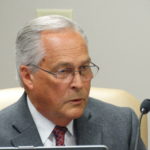
photo by: Peter Hancock
Kansas State Board of Education member Ken Willard.
TOPEKA — A member of the Kansas State Board of Education said Monday that he thinks it’s no longer urgent for the board to make a statement or take action on new federal guidelines for dealing with transgender students in public schools.
But Ken Willard, a Hutchinson Republican, said he does want the State Department of Education to issue some sort of guidance on the issue for local school districts.
The state board is expected to resume a discussion about transgender issues when it holds its regular monthly meeting next week, June 14-15.
“There are going to be questions that come up, without any doubt,” Willard said. “Ultimately, it’s a local issue, and I think it ought to be handled locally.”
Willard initially called for the state board to respond during its regular meeting in May, which came only a few days after the U.S. Departments of Justice and Education issued guidelines, directing all public schools to allow transgender students to use restrooms and locker rooms and to participate in other sex-segregated activities that correspond to their gender identity.
Willard called those guidelines “an infringement on states’ rights” and “a violation of the Kansas constitutional provision for local control of public schools.”
He also made a motion calling on the Legislature and Gov. Sam Brownback “to take whatever legal measures deemed necessary to protect and defend” the state from what he called “this unprecedented overreach of federal executive authority.”
On a 6-4 vote, however, the board chose to put off any action until the June meeting.
Since then, though, Kansas Attorney General Derek Schmidt has announced that his office will join a multistate federal lawsuit filed in Texas challenging the new guidelines. And that same day, the Kansas Senate passed a resolution condemning the new guidelines and encouraging Schmidt to fight it in court.
Willard said Monday that those actions satisfy most of what he had been seeking, but he still thinks the state education agency should offer local districts some guidance.
“I think in our role as chief supervisors of public education in Kansas, we ought to be able to provide some guidance and help for situations that are maybe a little difficult to handle,” he said.
Also at next week’s meeting, the board will be asked to give final approval to a sweeping overhaul of the way public schools in Kansas are accredited.
The new system calls for accrediting each individual building rather than school districts as a whole.
Those schools also will be reviewed on a five-year schedule rather than annually, and the reviews will encompass much more than just how well students are performing on the state’s standardized English language arts and math tests.
The new accountability standards for schools are being called the “Five Rs”: “Relationships” among staff, students, families and communities; “Relevance” of the curriculum and instruction; the “Responsive culture” of the school system; “Rigor” of the academic standards; and the “Results” produced by the time students graduate.
City Government

Opinion: Local government made a small mistake. Taxpayers shouldn’t be on the hook to fix it

As club cancels ‘Beetlejuice’ screening at Oak Hill, city says there are no specific rules about events at cemeteries

Opinion: An $80 million Hail Mary that combines Costco and Lawrence’s love of trails
Lawrence Police Department receives KDOT’s top traffic safety award for second straight year
Lawrence City Commission approves extra layers of oversight for data centers, asks for patience on further regulations