

Jurors find McLinn eligible for ‘Hard 50’ sentencing

Sarah Gonzales McLinn
Jurors on Friday found Sarah Gonzales McLinn, 20, of Lawrence, guilty of the premeditated, first-degree murder of Harold “Hal” Sasko. Monday morning, they decided the killing was committed in an “especially heinous, atrocious or cruel manner,” allowing a judge to sentence McLinn to a “Hard 50.”
Because jurors determined the crime was committed with one or more “aggravating factors,” District Judge Paula Martin will be able to depart from the Kansas Sentencing Guidelines and sentence McLinn to a mandatory minimum of 50 years in prison without eligibility for parole.
A sentencing hearing is set for April 29. McLinn’s attorney Carl Cornwell said he will likely present further evidence and witnesses then to dissuade Martin from the 50-year sentence.
The jury deliberated for nearly five hours Friday before determining that McLinn was able to form intent when she used a long, black knife to slice the neck of Sasko, 52, of Lawrence, on Jan. 14, 2014. In a post-arrest interview shown to jurors last week, McLinn told investigators she committed the gruesome crime because it was something she “always wanted to do” and that she “wanted to see what it felt like to kill someone.”
After the killing, McLinn fled to Texas, then to Florida, stopping along the way at tattoo parlors. On her ribcage, McLinn had tattooed the macabre quote, “Beware the dark pool at the bottom of our hearts. In its icy, black depths dwell strange and twisted creatures it is best not to disturb,” from the Sue Grafton murder mystery novel, “I is for Innocent.”
McLinn lived with Sasko at the time of his death and had previously worked for him at Sasko’s CiCi’s Pizza restaurant. To find McLinn not guilty by reason of mental disease or defect, as McLinn’s attorney asked, jurors had to find that she was “incapable of possessing the required culpable mental state” to plan and intend to kill Sasko.
Before jurors began deliberating Monday on whether Sasko’s murder was committed with one or more aggravating factors, Assistant Douglas County District Attorney David Melton showed jurors a gory photo of Sasko’s body at the crime scene.
Melton said McLinn used a hunting knife rather than a gun to get the most out of the murder.
“She felt his hot blood all over her arms and hands,” Melton said. “She wanted to maximize her enjoyment of that murder.”
District Attorney Charles Branson said the crime was so ruthless in nature that it shook Lawrence.
“Every murder is horrific, however the extreme brutality of the method of his murder was shocking to everyone in our community,” Branson said.
Cornwell said jurors should not find the case had aggravating factors because “Hard 50” sentences should be given only in cases of harsher crimes.
“This isn’t a Hard 50 case,” Cornwell said. “Hard 50 should be reserved for somebody who is kept alive and tortured.”
Juror Linda Smith said that it was McLinn’s “overkill” of Sasko that led her to her guilty verdict. During a recorded confession, McLinn said she stuck the knife in as far as it would go, hitting the carpet beneath Sasko’s head, and sawed the blade toward herself through his throat. Then, McLinn said she wiped Sasko’s blood on the wall and used her finger to scrawl out “FREEDOM” in the smear.
“She could have stopped after just putting the knife in,” Smith said. “The smearing the blood. It was overkill.”
Smith said McLinn’s straight-faced confession shown to jurors convinced her that McLinn had the mentality to form intent.
“We saw the entire confession and there wasn’t any inconsistencies in the way she confessed,” Smith said.
Cornwell had said that McLinn had Dissociative Identity Disorder, or multiple personalities, after a childhood molestation and teenage rape and thus could not form intent. Psychologist Marilyn Hutchinson testified that one of McLinn’s sub-identities, “Alyssa,” killed Sasko “as an act of love” toward another of her personalities.
Branson questioned whether McLinn was malingering, or falsifying symptoms of a mental disorder for secondary gain. McLinn had been reading psychology books in her jail cell since she has been incarcerated, Branson said, and some of McLinn’s psychological tests were inconclusive because of “over-reporting” symptoms.
Smith said that some of her fellow jurors “had reservations because of (McLinn’s) mental state,” but ultimately agreed that the young woman had the capacity to form intent. If one of McLinn’s personalities had the propensity to kill, Smith said, couldn’t it come forth again?
“Whether she had that mental disorder or not, she still committed the act,” Smith said. “If the (Dissociative Identity Disorder) existed, what’s to say she wouldn’t do it again?”
After the jury sided with the prosecution on Monday, Sasko’s brother, Tom Sasko, said there “are no winners.”
“(Sasko’s 18-year-old daughter) Amanda loses the most. Sarah’s family loses second-most,” Tom Sasko said.
Reporter Caitlin Doornbos can be reached at 813-7146 or cvdoornbos@ljworld.com.
More coverage:
• Years of sexual abuse caused multiple personality disorder, defense says
• McLinn describes killing Sasko in police interview
• Psychologist: McLinn has multiple personalities, compares herself to Jeffrey Dahmer
• Jury finds McLinn guilty of first-degree murder
City Government
As they approve bikes plan, Lawrence city leaders ask about data collection, Kentucky and Tennessee streets
Lawrence city leaders want to toughen tobacco licensing rules ‘sooner than later’
Algerian government invites Mayor Brad Finkeldei, Lawrence delegation for a visit
Construction on Wakarusa Drive to resume; city manager says KDOT’s secretary has apologized for delay
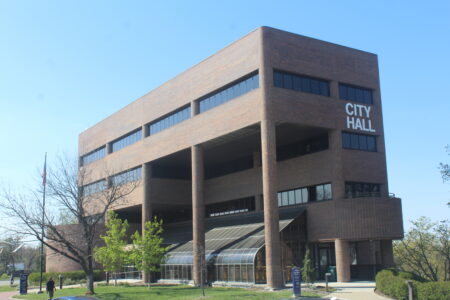
Evacuation drill planned Tuesday at Lawrence City Hall
