
Information on health risks of e-cigarettes key to youth prevention
Chocolate mint chip, candy cane twister, watermelon bubble gum: These are all flavors of e-cigarette liquid. Such sweet flavors are one of the reasons some researchers think teenagers are choosing e-cigarettes over traditional ones.
In 2014, for the first time, the national Monitoring the Future study, which tracks trends in substance use among teens, found more teenagers use e-cigarettes than smoke tobacco ones. Nine percent of eighth-graders, 16 percent of 10th-graders and 17 percent of 12th-graders reported using an e-cigarette in the past month.
The study also found that teens perceive the health risks of e-cigarettes as low. Only 15 percent of eighth-graders think there is a great risk of harm with regular use of e-cigarettes, according to the study.
Lawrence schools have only recorded a handful of incidents involving e-cigarettes, said Julie Boyle, communications director. Last school year, there were three e-cigarette incidents involving high school students, and the one e-cigarette incident so far this year involved a middle schooler.
But given the national trend of appealing flavors and misconceptions about the health risks, some education and prevention efforts have begun.
“In educating students about e-cigarettes, our primary focus is accurate information on the dangers to health,” said Diane Ash, Lawrence High School prevention specialist.
“Health-wise, the kids are just under the impression that if there’s no smoke then it can’t be harmful,” she said.
In the past couple of years, three e-cigarette shops have opened in Lawrence. Sales of e-cigarettes are prohibited to minors, but because e-cigarettes are currently unregulated, they can be bought without proof of age on websites like eBay, Amazon or from online e-cigarette chains.
This was the first year that elementary students in several schools asked about e-cigarettes during tobacco-education panels, and many had misconceptions, Ash said. As a result, the students in the FYI Club who host the panel recently added information on e-cigarettes, Ash said.
“That was a real wake up call for the group to include that in their presentations, because the students at fourth-grade level were saying that they heard it was safe,” Ash said.
Students in the Free State and Lawrence High FYI Club present the tobacco education panel to all fourth-graders in the district.
A primary concern with e-cigarettes is that once a user becomes addicted to nicotine, it could be a gateway to other tobacco products, said Janelle Martin, director of education at Lawrence Memorial Hospital.
“That may lead them to using cigarettes or other forms of smokeless tobacco and becoming even more addicted,” Martin said.
E-cigarettes heat and vaporize a fluid typically containing nicotine that users inhale. The contents of the vapor are not currently regulated, but the U.S. Food and Drug Administration conducted a preliminary analysis of two leading brands that found the product contained carcinogens and toxic chemicals.
Chemicals are released from the plastic when it’s heated, and it lets off toxins that are then absorbed through breathing in the air, Martin said.
“It’s a concern that people are lulled into thinking that this is a way that’s not quite as harmful to be using nicotine,” she said.
Lawrence students receive information on tobacco in health class. Because e-cigarettes are so new, they are not yet included in the district’s health books, but students or teachers often bring up the topic in class discussions, said Denise Johnson, Lawrence Public Schools health and wellness curriculum coordinator.
“Kids talk about it because they see their peers using it in high school or they see a parent or someone else using it,” Johnson said.
The Kansas Communities That Care student survey is asking about e-cigarette use for the first time in its current survey, which will provide statistics for Douglas County.
In the 2013-14 Kansas Youth Tobacco Survey, 2.2 percent of middle school students said they had tried e-cigarettes, and about half of those reported current use.
The LHS FYI Club will be participating in National Drug Facts Week, Jan. 26 through Feb. 1, which will include a focus on e-cigarettes for the first time, Ash said.
“It’s always just about making sure you’re putting out accurate information and correcting any myths that students might hold,” Ash said.
City Government

Lawrence City Commission to elect new mayor, vice mayor next week
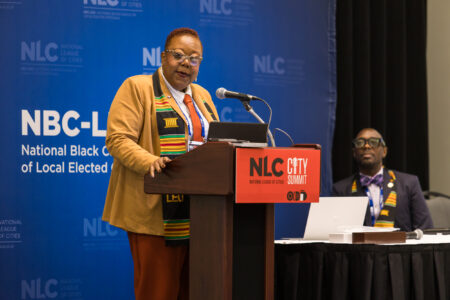
As NBC-LEO president, Lawrence’s Amber Sellers wants to create ‘a safe space’ for Black leaders to learn from each other
Opinion: How we pick the mayor is up for discussion again, but Lawrence’s DNA may not even want a mayor
Many of the metrics in Lawrence’s last strategic plan aren’t on track to meet their targets, city data shows; new goals will soon be set

City commissioners praise Wakarusa River valley plan, say it could help bring in grant funding