Nontraditional commute: Biking to work both cost-effective and eco-friendly
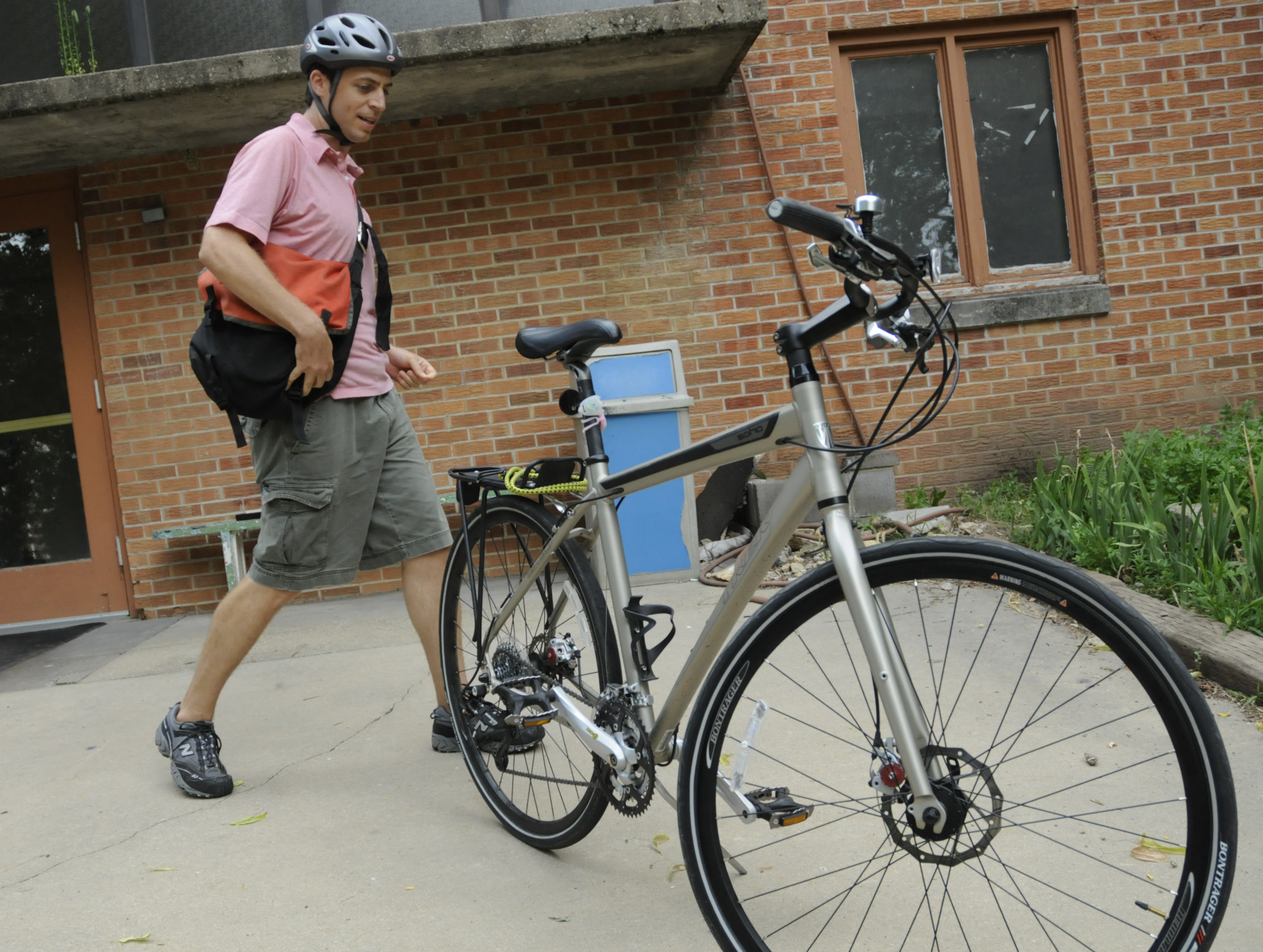
Brendan Lynch, who works for University Relations at KU, leaves work recently for a bicycle ride home. Lynch has been commuting to work by bike for 10 years.
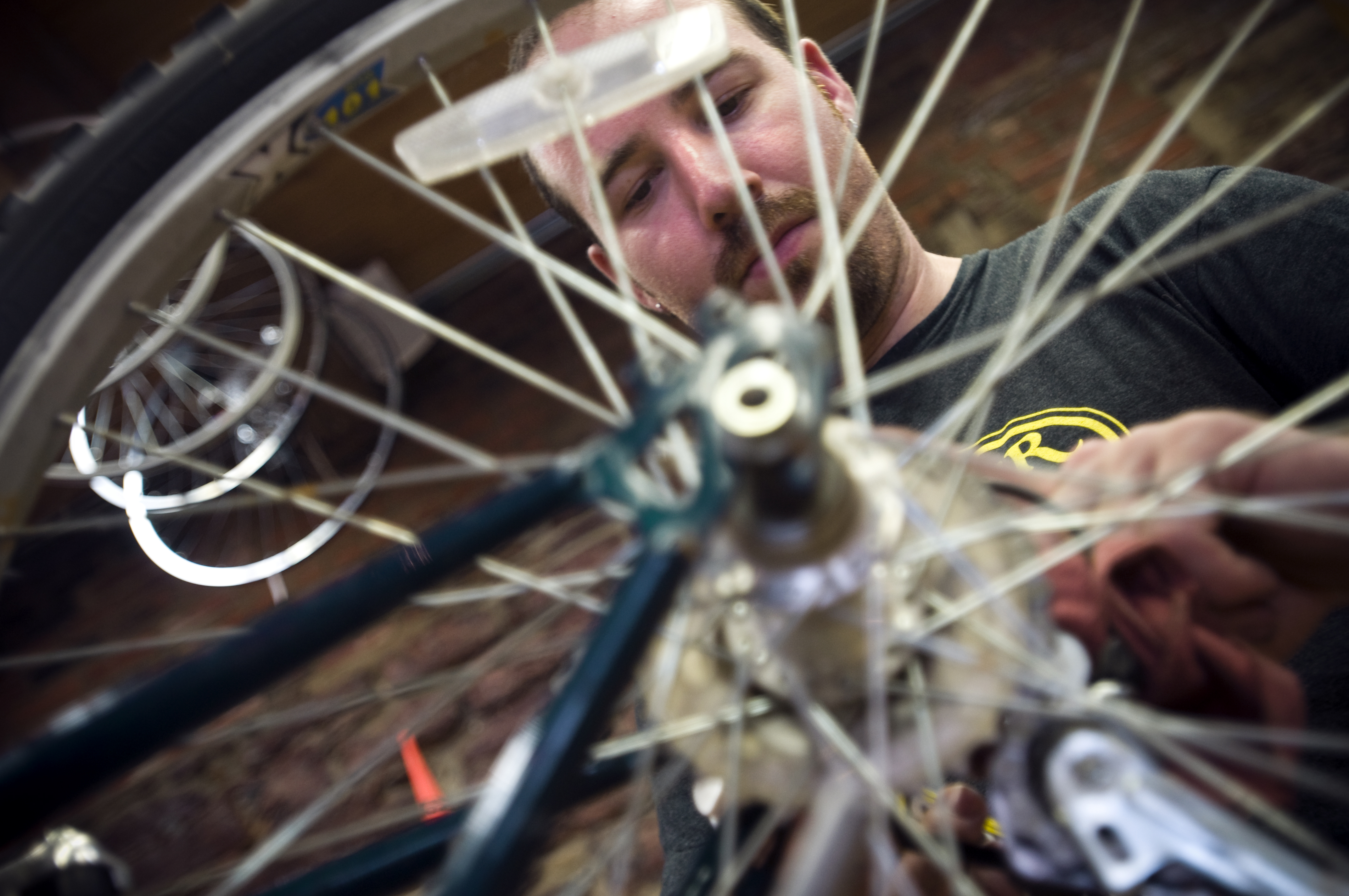
Sunflower Bike Shop manager Adam Hess works to repair a bike Tuesday, July 22, 2008. Hess explained that he seldom drives a car and has used his bike as a primary mode of transportation since he was young.
Green Transportation
Call Brendan Lynch a trendsetter.
For the past 10 years, Lynch has biked to work. He’s done it in Boston and in Lawrence. On cold days and hot ones. Had flat rides and steep ones.
“The benefits are really parking, expenses in terms of parking and gasoline, exercise – it’s environmentally friendly,” Lynch said. “The great thing about being a bicyclist is that sometimes you’re like a car and sometimes you’re like a pedestrian and you can kind of transition between the two at will. You can hop off your bike and use a crosswalk, whereas you’re always stuck in a car.”
These days, he’s getting a lot more company.
Local bike shops are backed up in workshop orders to repair bikes. Their supplies of commute-friendly accessories – bags and baskets – are regularly being wiped out, and they are seeing an increased interest in commuter bikes by folks looking to save money in a world with $4 per gallon gasoline.
And more and more, folks are digging out 20-year-old bikes, lacing up their walking shoes or getting familiar with the T’s bus routes to get to their jobs around town.
“We’ve seen a real dramatic increase in sales and shop work – almost to the point where we are having trouble just keeping up with it,” said Adam Hess, manager at Sunflower Outdoor & Bike Shop, 802 Mass. “It’s a good problem to have, but at the same time, we want to serve people as best as we can and we want to have a understandable turnaround time in our repair shop. People want to ride the bike, they want to be out there and they want to be saving money, but if they have to leave their bike somewhere for two weeks while it gets worked on, that could be a problem, you know, for them.”
Hess said people who aren’t biking should be extra careful when sharing their morning commute with someone pedaling beside them. Some bicyclists may be out there, biking to work for the first time and not understand the best ways of being defensive.
“You’re going to see a lot of inexperienced riders out there now with the gas price thing. That really should be a concern to motorists out there,” Hess said. “A lot of the people out there on bikes or mo-peds are inexperienced and they’re not used to riding out there and they’re going to act like they have a right to the road when in reality, if you get hit by a car, you don’t have any rights to the road, you know what I mean. Yes, you have your rights, but you have to play defensive out there; you can’t play offensively on a bike.”
Warns Brian Shay, owner of the Re-Cyclery, 2301 La.: “Just never assume that anybody sees you.”
Going without a car
At 23, Jordan Ferrand-Sapsis has never had a driver’s license. No need; she’s got perfectly good feet.
Ferrand-Sapsis grew up in New York, where having a car is a real expense. Walking, biking and taking the subway were the way to go.
Moving to Lawrence a few years ago, she didn’t want to change her way of life. And she didn’t, though she did have reservations at first.
“There was definitely a moment of ‘Oh gosh’ when I got out here, it was kind of like, ‘Wow, everything is a little farther away than I thought,'” Ferrand-Sapsis said. “But it ended up working out OK.”
But she adapted quickly, finding jobs that were close to where she lived so that her commute would be easier.
“I’ve always lived kind of close to downtown, so I’ve always tried to tailor my jobs as close to downtown as possible,” Ferrand-Sapsis said. “I’ve worked out on 23rd Street before, but that’s a fairly easy bike ride. That’s probably the farthest I’ve ever worked.”
She currently works as a member of the East Side People’s Market.
When needed, she’ll take the T or have a friend take her by car somewhere – but not for her commute. Even sticky situations can be resolved without a car, she said.
“There have been times when it would have been great (to have a car),” she said. “We’ve had to do a hospital run at 2 in the morning and you have to find somebody with a car to do that, but I’ve also done it on my bike. Hauling stuff has always been the real issue, like when we have big stuff to move. When I had to move the last time – my friend Eric builds bikes that have shopping carts attached to them – and I borrowed his shopping cart bike to move almost all of my stuff.”
Hess, who commutes to work by bike daily, recently found a reason big enough to buy a car after six car-less years: his Kansas City-based girlfriend.
“I would not have a car, if not for this thing called a girlfriend, who lives in Kansas City,” Hess said. “She got a little tired of driving here to hang out with me all the time, so I had to get a car to go see her, so it’s for a good cause.”
Just because he has a car doesn’t mean he enjoys it. It is for Kansas City trips only, and he acts “car-less” despite it, riding his bike everywhere.
“I don’t like to drive. I think it’s really frustrating,” he said. “I like to be on a bike where I really don’t really have to stop too often. I’m more maneuverable. I can take alternate routes or alternate paths if I see traffic coming.”
Saving money, adding time
Whatever the reason, keeping the car in the garage can pay cash dividends even if it’s just for your daily commute, say local retailers.
Sunflower Bike owner Dan Hughes said you don’t have to buy anything expensive, whether it’s comfortable shoes or even a new bike to make your commute something environmentally and pocketbook-friendly.
“I think most of the new bikes we’ve been selling for that purpose (commuting) have been in the sub-$500 kind of range, $300 to $500. The way I think of it, at least, is, if it’s a $300 bicycle, and you’re driving an SUV, it’s $300 but it’s like six or less fill-ups,” Hughes said. “I think the price of gas has gotten so high that if you put it in terms of filling up your tank, a one-time purchase of a bicycle is actually pretty cheap.”
But one thing that a commute by foot, bike or bus might cost you is time, Ferrand-Sapsis said.
“You need to allocate more time for the commute and don’t try to push things as close together as you had with a car,” Ferrand-Sapsis said. “That’s the big change I think for a lot of people – before when it took you five minutes to get across town, it’s probably going to take you 20 now. You have to slow down a little bit and put a little bit more time between things that you are scheduling.”
But the benefits definitely outweigh the negatives for Lynch, who loves his morning and afternoon commutes to Kansas University, where he works as a research writer and producer.
“I think it’s a good way to start your day,” Lynch said. “You’re out of doors and you’re breathing fresh air and it’s just nice; it’s a nice way get home, it’s a nice transition between work and home.
“You don’t really get road rage on a bicycle.”
City Government
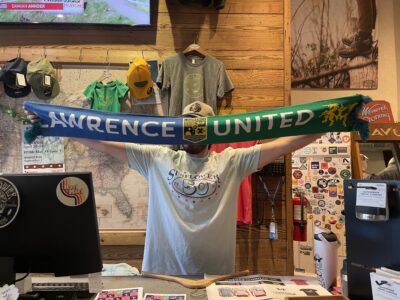
Soccer gear honoring Lawrence history’s all-star team is now on sale as part of city’s public art exhibition
To honor public servants, Lawrence’s July 4 celebration will have a whole gallery of their photos on display; submissions open now
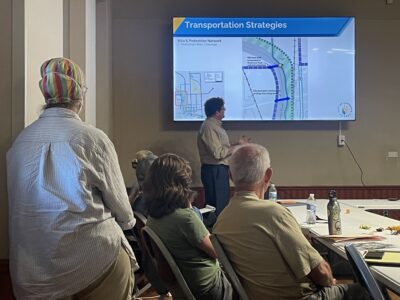
North Lawrence study consultants look at possibilities for a grocery store, food truck park, traffic calming and more
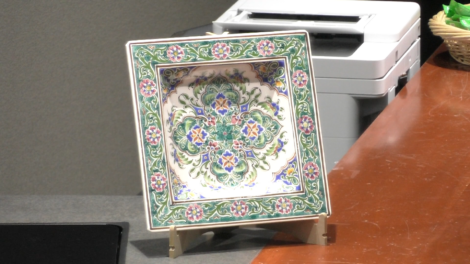
Algerian ambassador gives Lawrence a gift for supporting national team – a piece of art
Lawrence City Commission approves incentives for Alarm.com’s office project in downtown building