

Simons: University requests for maintenance funds deserve scrutiny
One of the major issues facing Kansas legislators when they gather in Topeka in early January to begin the 2007 legislative session will be how to fund the many requests by various educational entities.
K-12 advocates will be pressing to see how lawmakers fund the multi-year school-funding package mandated by the courts and crafted by the 2006 Legislature. Spokesmen for the state’s Kansas Board of Regents universities will have a lengthy list of needs. Included in their list is money not only for faculty salaries but also for more than $700 million to get neglected facilities on the various campuses back up to par.
It would be natural for the average Kansas taxpayer to assume these millions of dollars would be earmarked for academic buildings or facilities on the campuses. However, looking at the 2006 “Calculation of Building Renewal” needs, at least for Kansas University, it is surprising and interesting to see that money is being sought for many buildings that would not necessarily match what a Kansas taxpayer might consider an “academic” building.
Some of these, included in the total $181,930,636 KU officials are seeking to repair or upgrade buildings on their campus include:
Allen Fieldhouse, $8,176,385; Anschutz Sports Pavilion/Anderson Strength, $1,780,272; chancellor’s guest house, $55,136; chancellor’s garage, $29,872; chancellor’s residence, $522,019; Facilities Operations storage buildings, their main building and shops for a total of about $1.4 million; hangar buildings at the Lawrence Municipal Airport, $378,635; the Horejsi Family Athletic Facility, $170,854; KU’s Memorial Stadium, $3,267,171; the Parrott Athletic Center, $508,700; the Wagnon Student Athlete Center, $833,420; and other facilities that, in the public’s mind, might not be essential to the academic scene at KU.
Granted, there are many buildings and facilities in bad need of repairs and upgrading. These buildings and facilities have been neglected over a long period of time. Who’s at fault is open for debate. Nevertheless, the need exists.
One question that might be asked is who, or what office, made the survey of the KU campus relative to repairs and renovations. It is hoped the survey to determine what buildings should be included and the cost of the work was a careful exercise on the KU campus, as well as at the other state universities.
As has been said so many times, it is so easy to spend someone else’s money when, in fact, those dealing with public money should be more careful in how they spend taxpayer money than they would in spending their own.
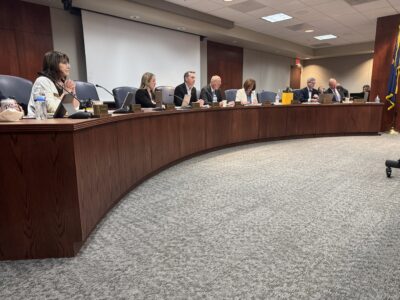
Maybe every proposed need noted above is, indeed, critical to the academic mission of KU. On the other hand, it is hoped KU officials will develop a list of priorities and that regents, who are so quick to say they don’t want to micromanage affairs at KU, will become well acquainted and submit their own priorities to state legislators, who have the final say on funding.
Unfortunately, some state legislators say they don’t want to micromanage affairs on the KU campus, so it looks as if KU officials can request just about anything they want and stand a pretty good chance of getting a large percentage of their wish list. If this happens at KU, it is reasonable to believe it also takes place at other Board of Regents universities.
What does it take for regents and state lawmakers to take more interest in what is going on at the state universities?
For example, how much of the overall $700 million-plus on the wish list presented by the KU chancellor and presidents of the other state universities is the responsibility of state taxpayers? In the case of KU, should taxpayers be expected to pick up the costs of work at the stadium, weight centers and maybe even the garage at the chancellor’s residence? Granted, many projects may be needed, but how much should the cash-flush KU athletic department be expected to pay for stadium or weight center repairs? Who determines the priority of the chancellor’s garage vs. an outdated and dangerous laboratory situation? Who does the “micromanaging” in simple matters such as this?
It would be great if a magic wand could be waved and all the long-overdue repairs could be made at the state’s universities. But where will the money come from? It is hoped someone or some group will give special attention to the wish lists submitted by each school and assign a hard-nosed priority ranking to each request.
Maybe every one of the hundreds of requests for funding are badly needed, long overdue and totally justified. Nevertheless, some requests on the KU wish list raise some questions. At a time when the public is concerned about how its education dollars are being spent, and at a time when educators are asking for more and more funding, it would seem wise for school officials and the Board of Regents to be extra careful, perhaps overly careful, not to include projects that cause taxpayers to wonder what is going on. For example, why should Kansas taxpayers be asked to foot the bill for work at KU’s Memorial Stadium? In other cases, it is a matter of priority. Maybe the chancellor’s garage is badly in need of repair, but how does this project stack up on a priority list of critical needs?
Someone needs to micromanage, even if this is at an extremely low level of oversight.
KU
KU professors would be limited in how they could present the idea of systemic racism in future classes

The annual summer solstice tour of the KU Native Medicinal Plant Garden will be held later this month

KU Homecoming parade to return to campus after seven-year absence
‘Backyard’ allows even more fans to cheer on Jayhawks

Dole Institute of Politics announces summer lineup celebrating America’s 250th anniversary
KU Hospital Authority says CVS stole nearly $62M in drug savings
The University of Kansas Hospital Authority is suing CVS and its subsidiaries, alleging the mega pharmacy company ...